











-
TEMPLE AND THE PEOPLE
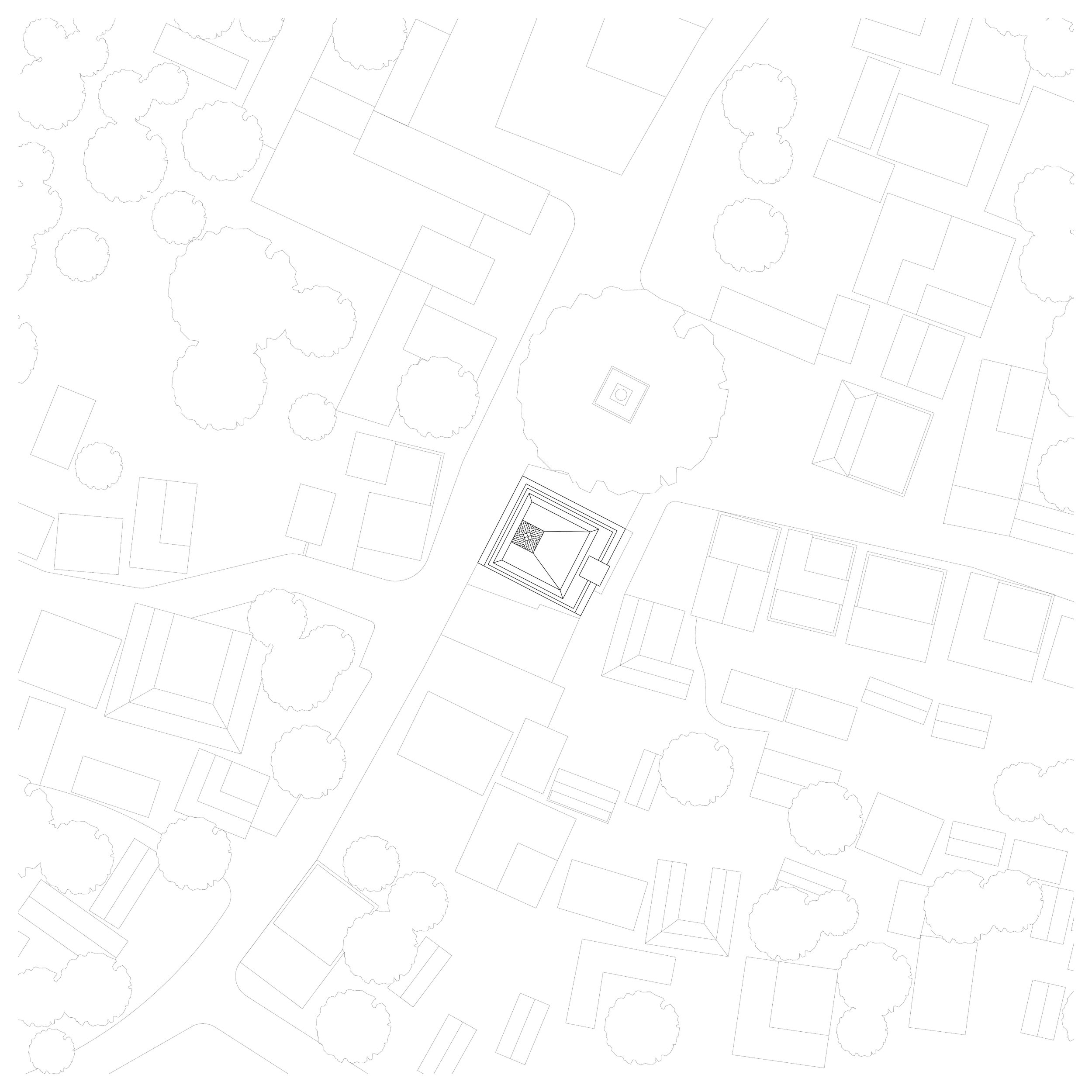
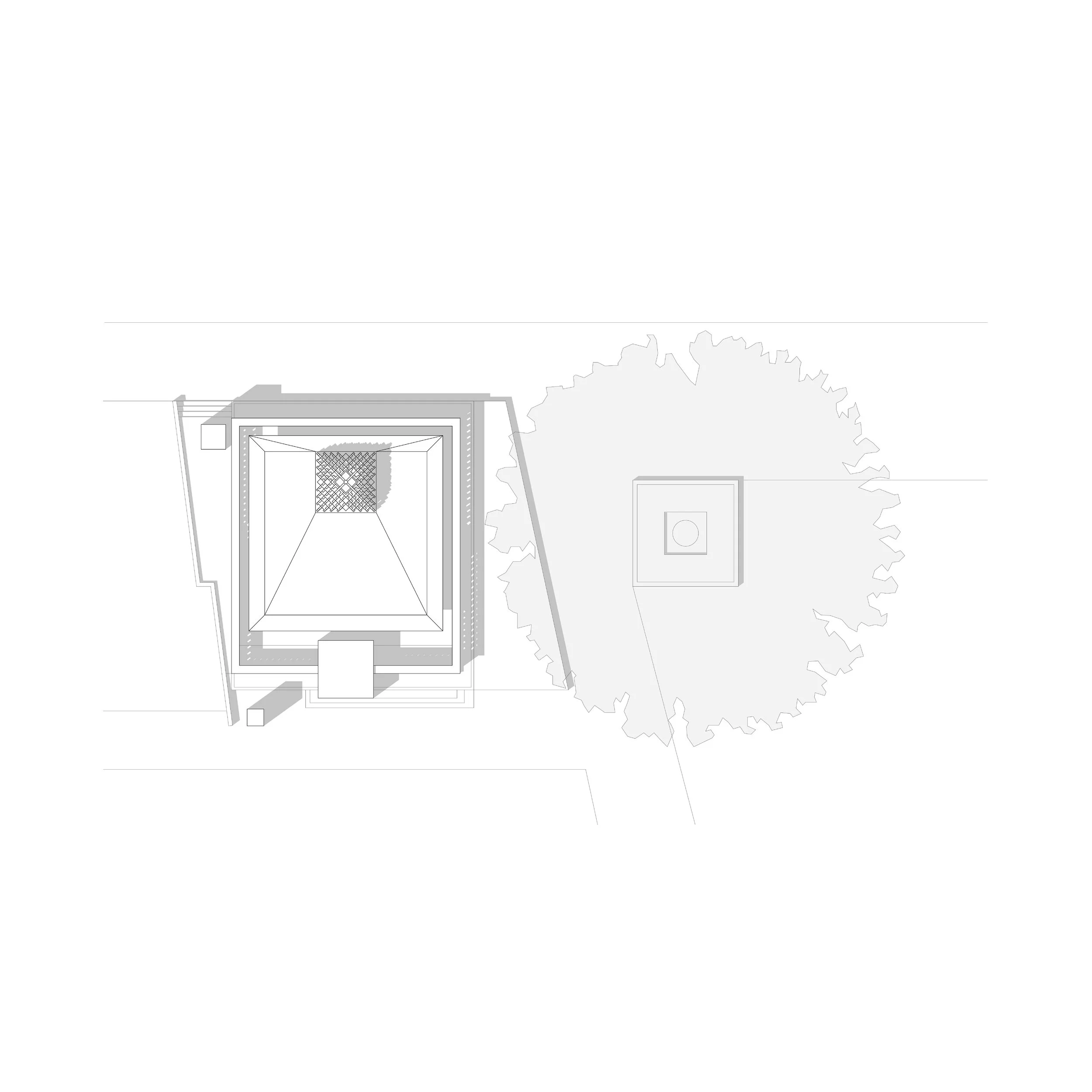
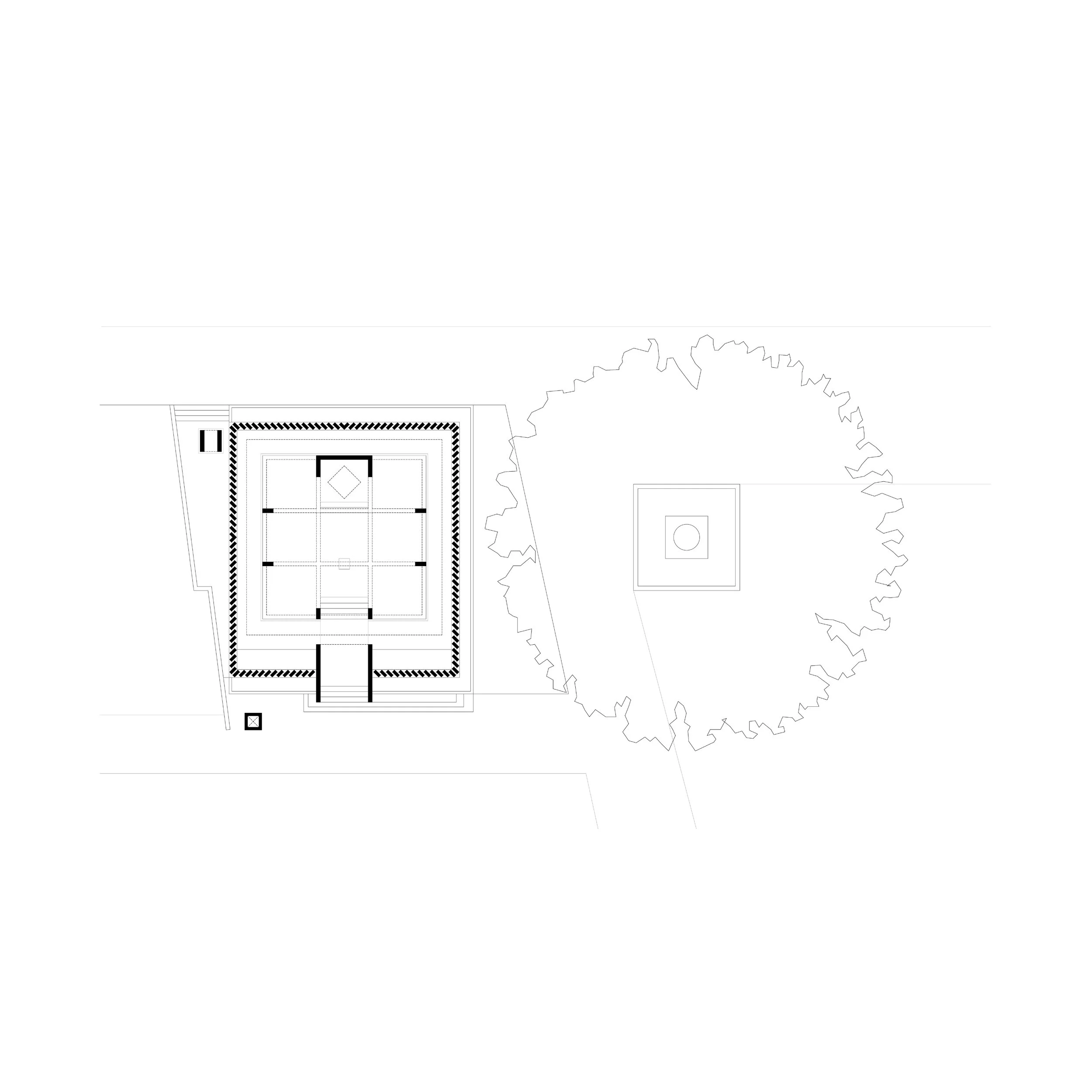
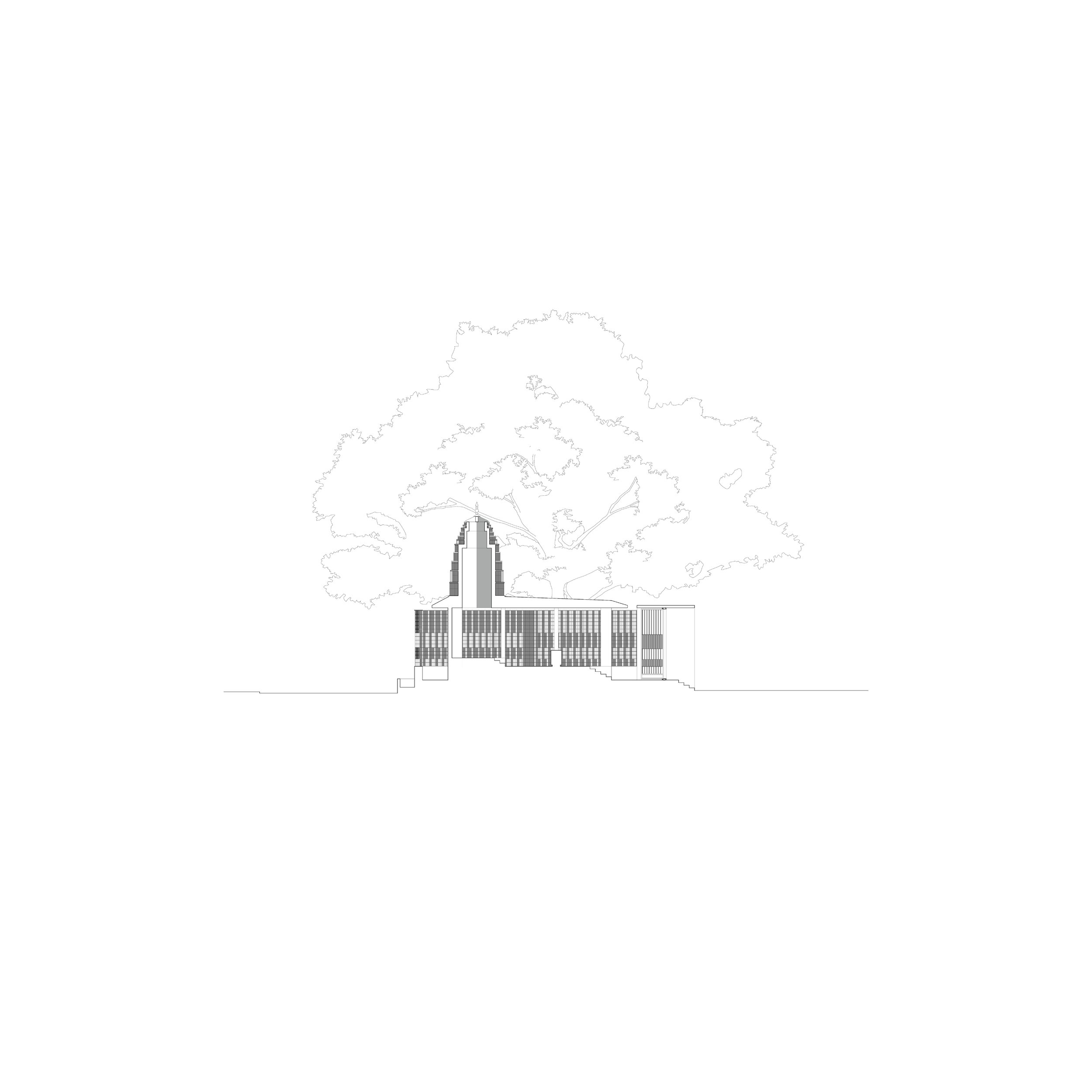
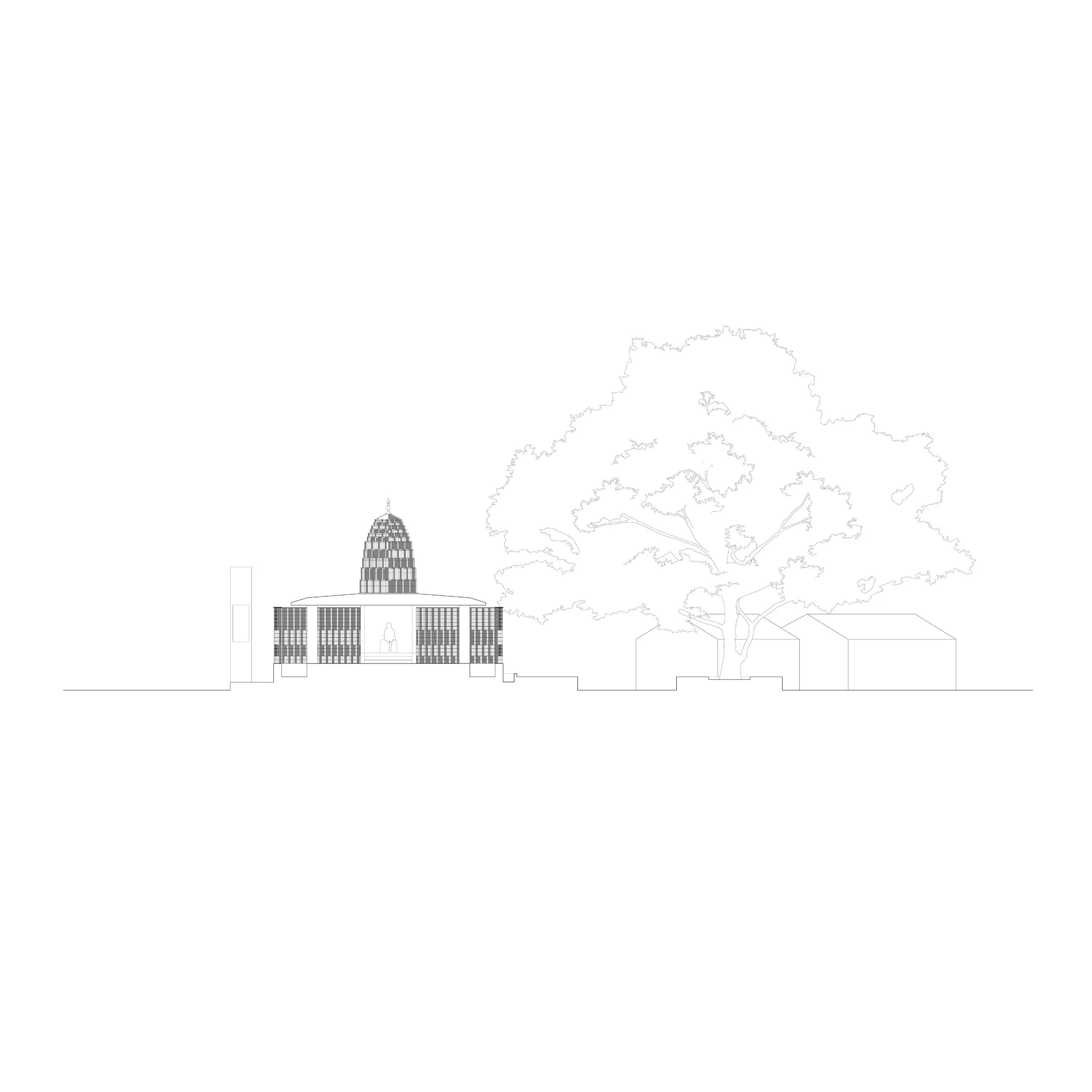
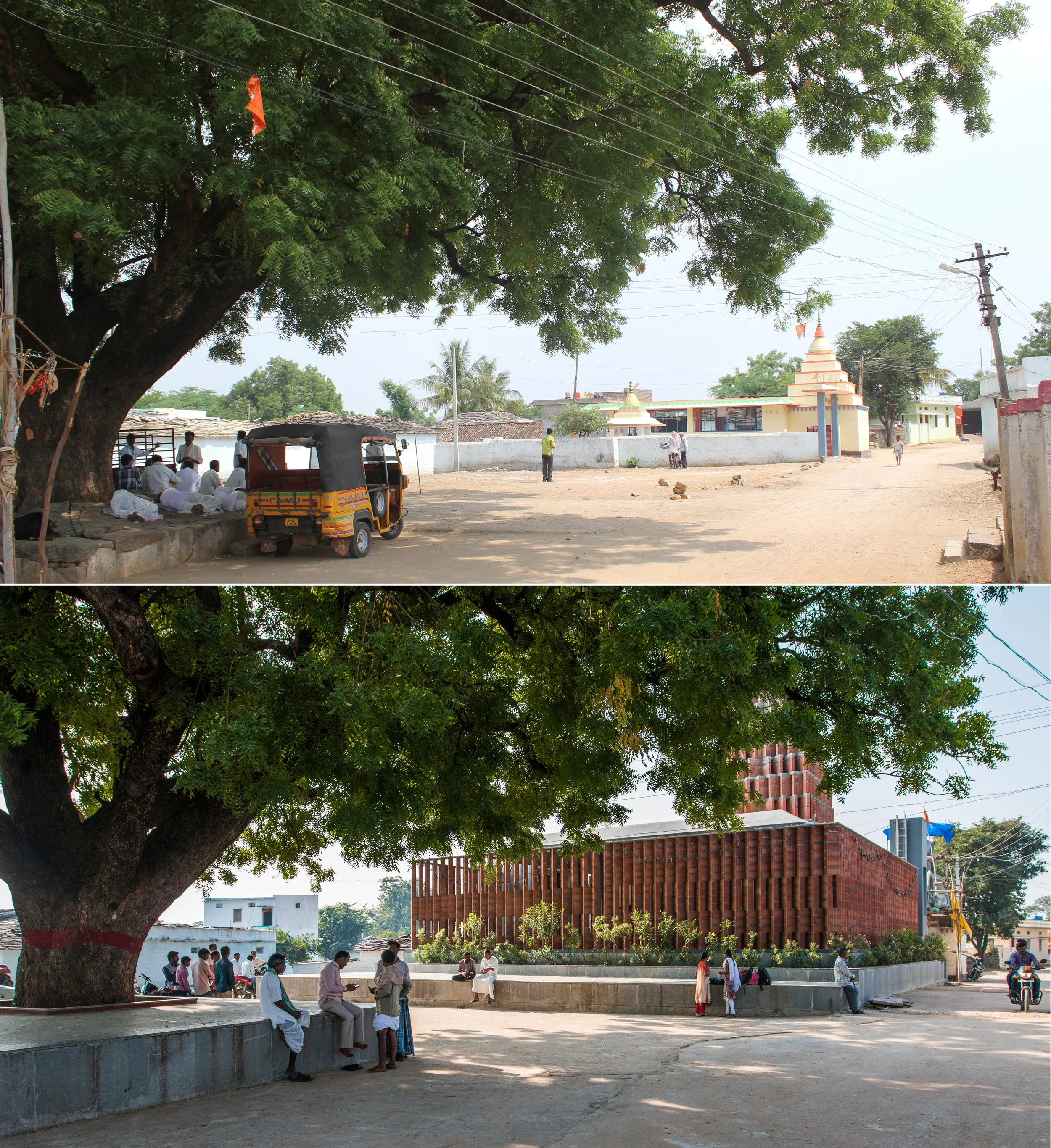
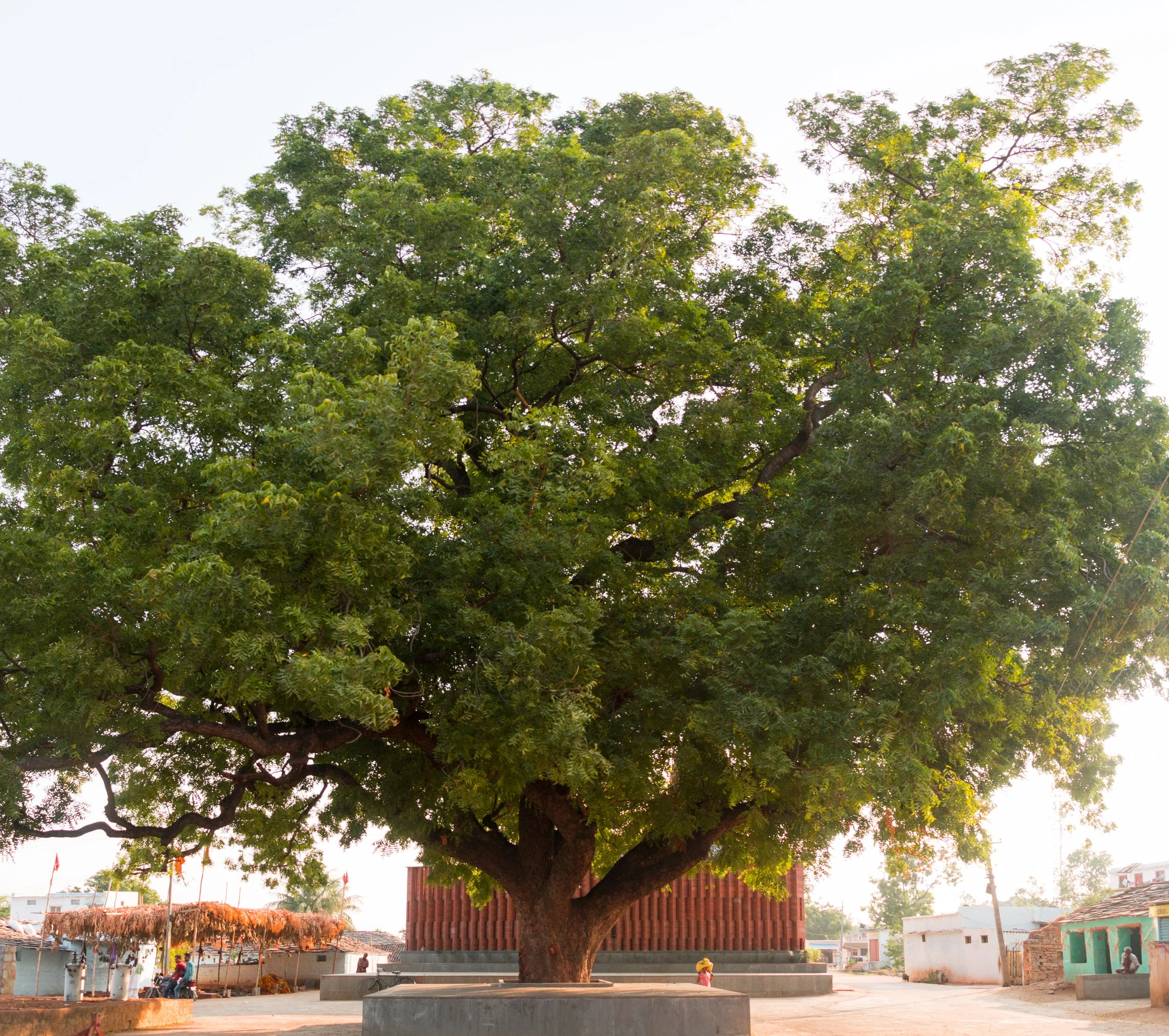
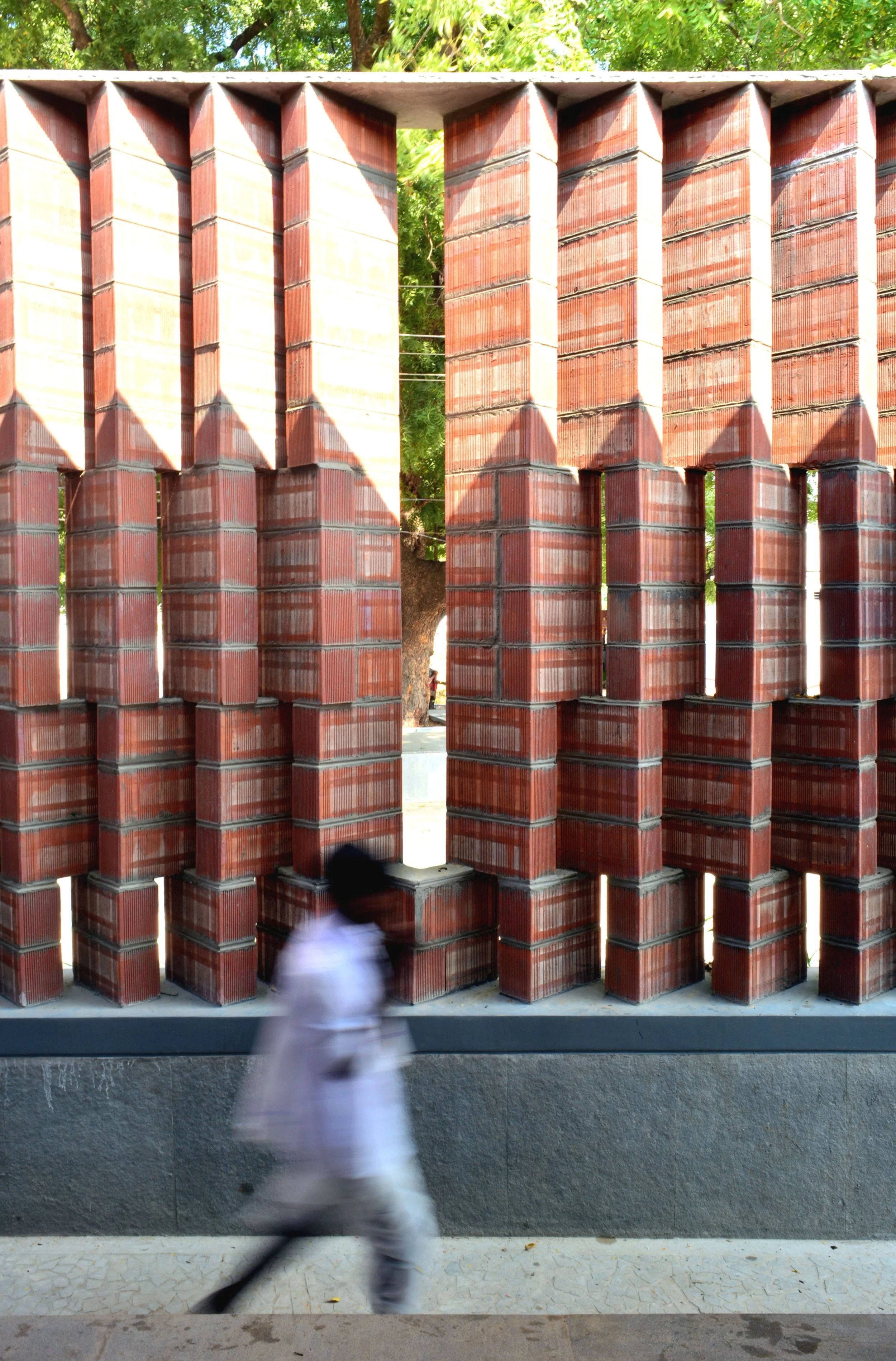
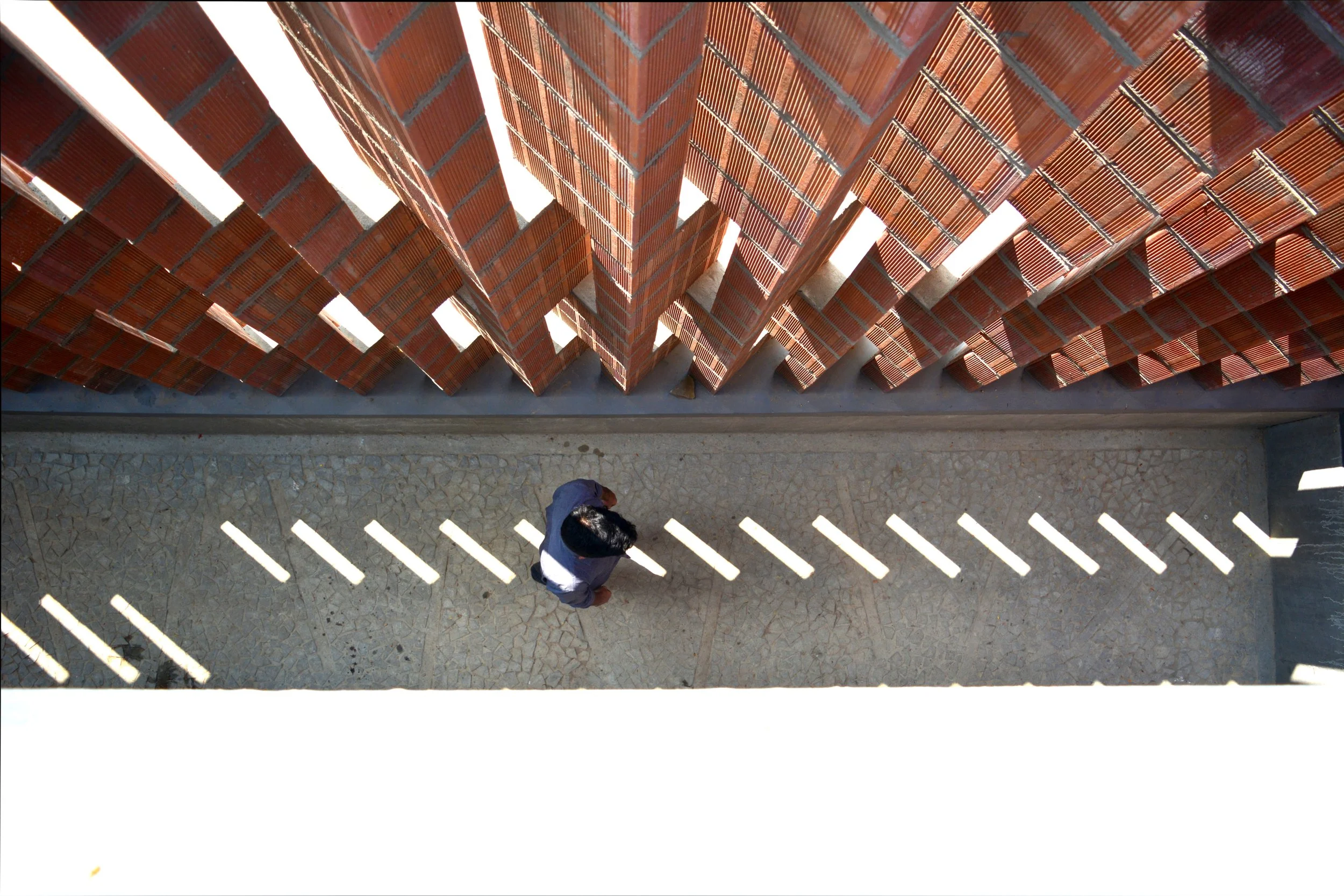
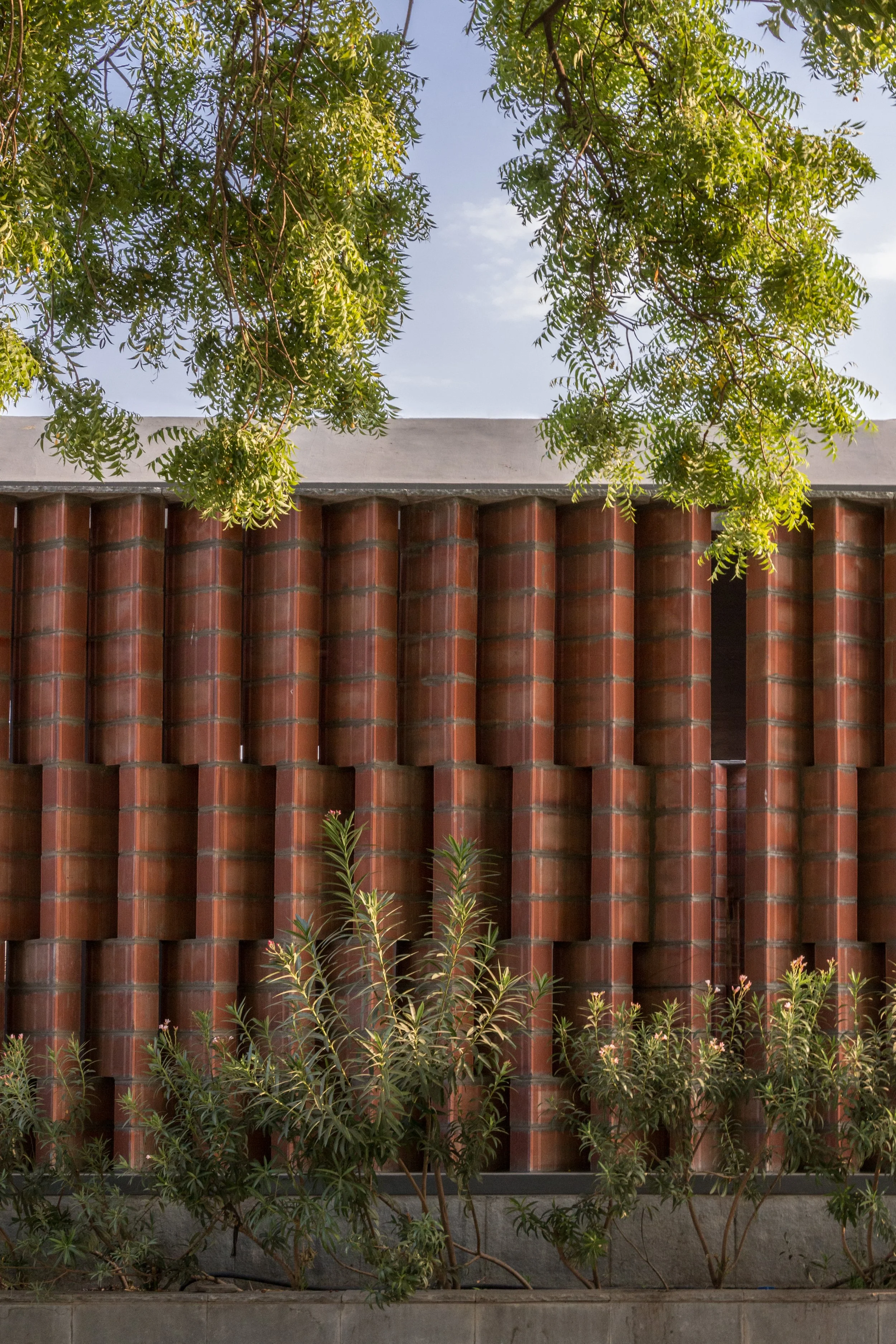
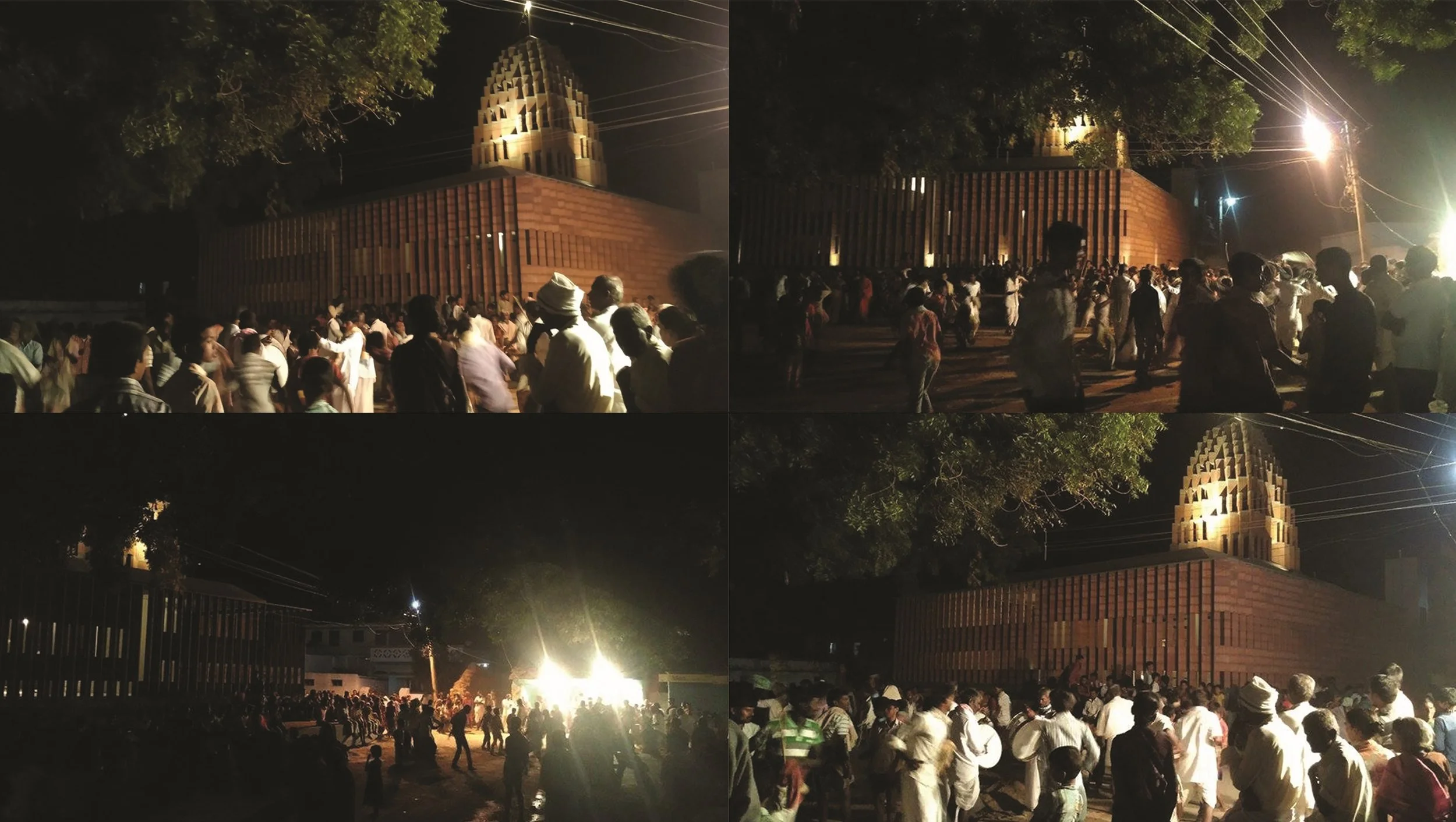
Situated in Vennached, a sleepy, quite village located 150 kms away from Hyderabad city, in a remote location of Gandeed mandal of Ranga Reddy district, the village and surrounding localities of Kosigi, Tandoor, and Kodangal present a vernacular of low slung huts, closely spaced to form narrow intimate streets. “Tandur” a locally and abundantly available cool grey stone dominates the built-scape with its stark grey color as roofing, walling and flooring material. The temple sits at the confluence of three streets that form the entrance into the village, framed by a magnificent tree becomes the village community space for all. The temple design is a direct response and an extension to this socially, and culturally and spiritually important space.
Program: Temple as Social Space
Location: Vennached, Telangana, India
Surface: 330 square meters
Project Team: Hari Krishna, Bob Peniel, Chandra Prakash
Collaborators: Sridhar-Simon Peter Engineer (structure), Sai-Tungsten Studio (illumination), Shabnam Patel (text)
Photography: Ujjwal Sannala
Awards: Wienerberger Finalist, IIA Award
Publications: Architecture Review, Domus, IA&B











-
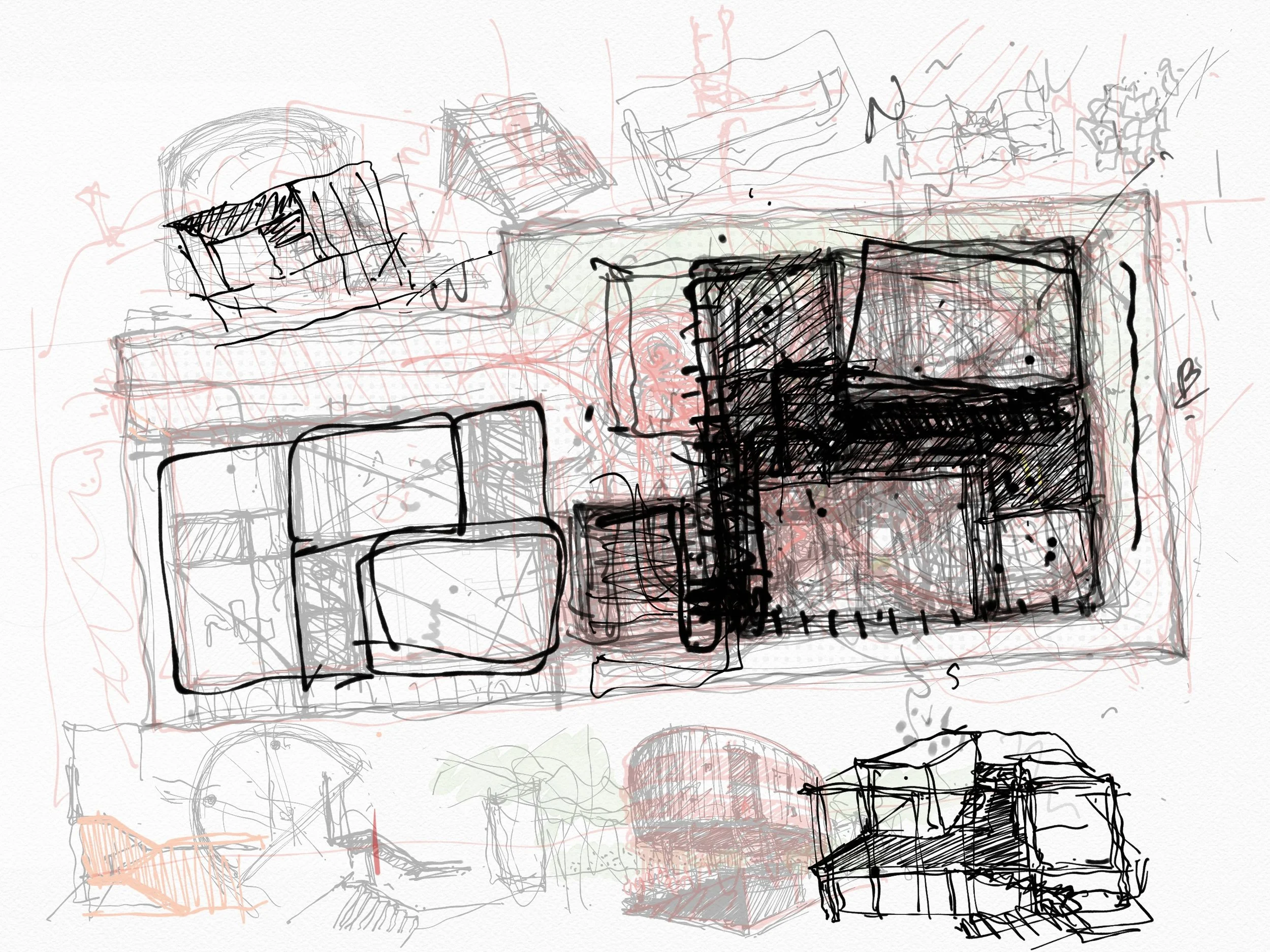
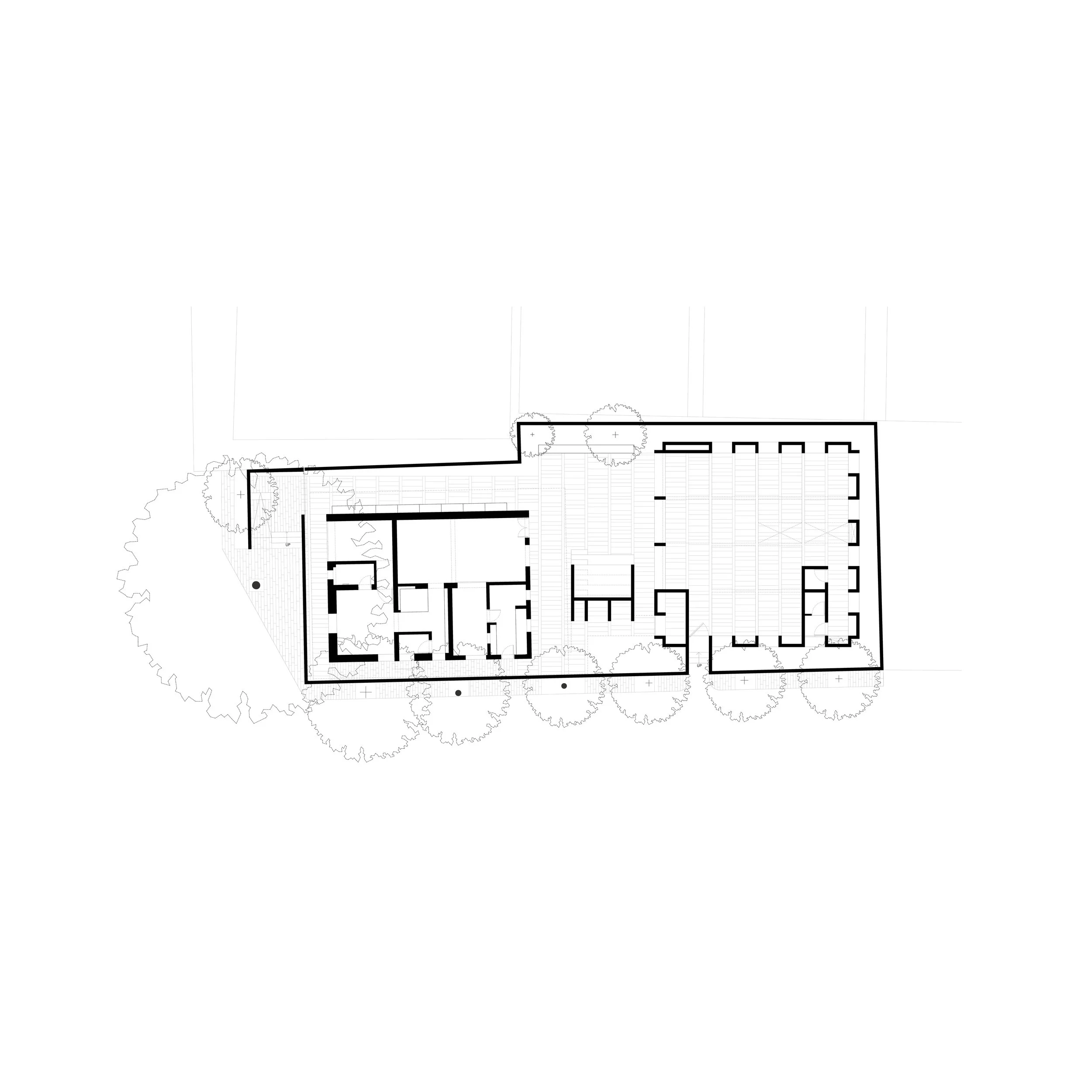
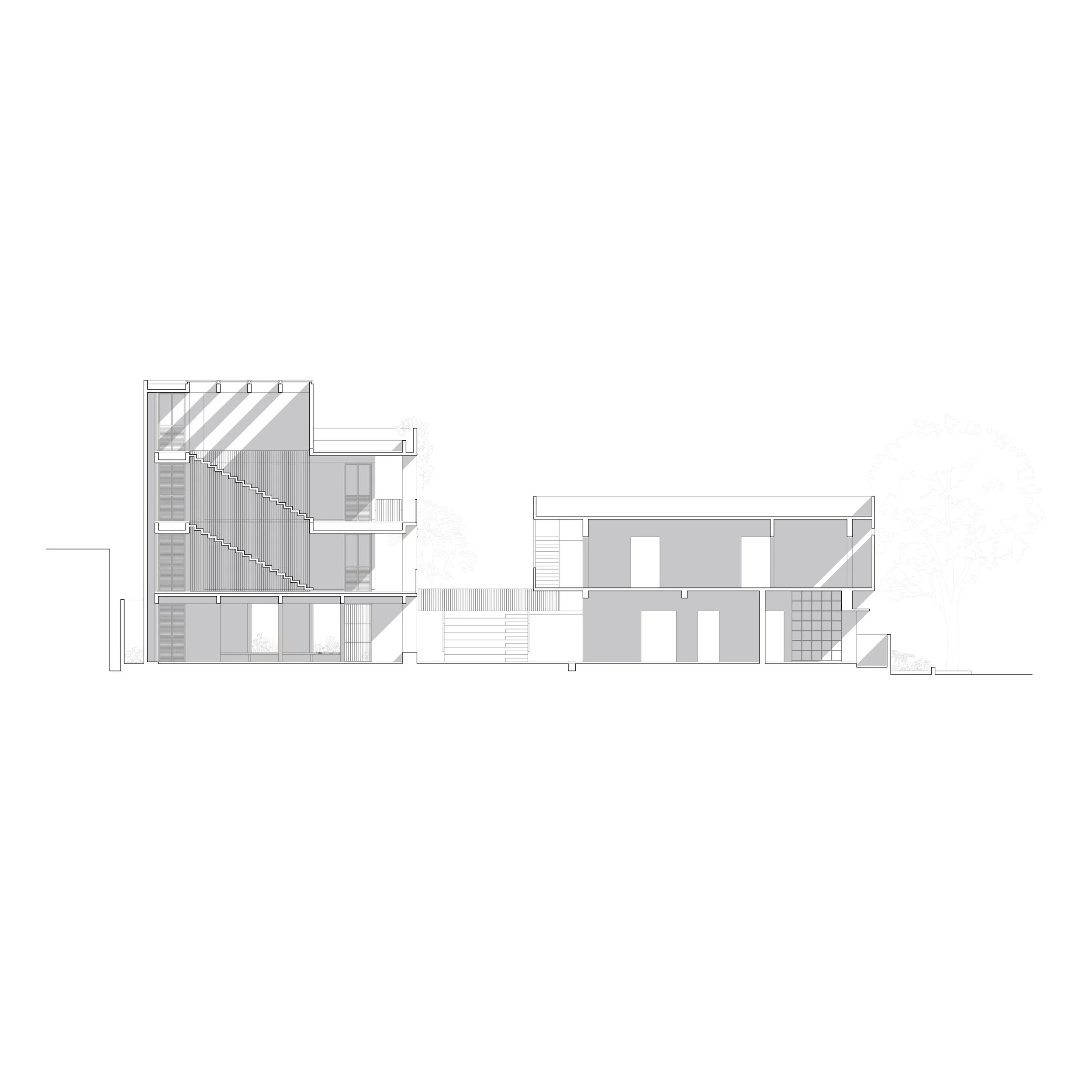
The project expands a small school that originally operated from the ground floor of a house in a dense residential neighbourhood. To create a more engaging learning environment, the school acquired an adjacent 45 by 45-foot plot.
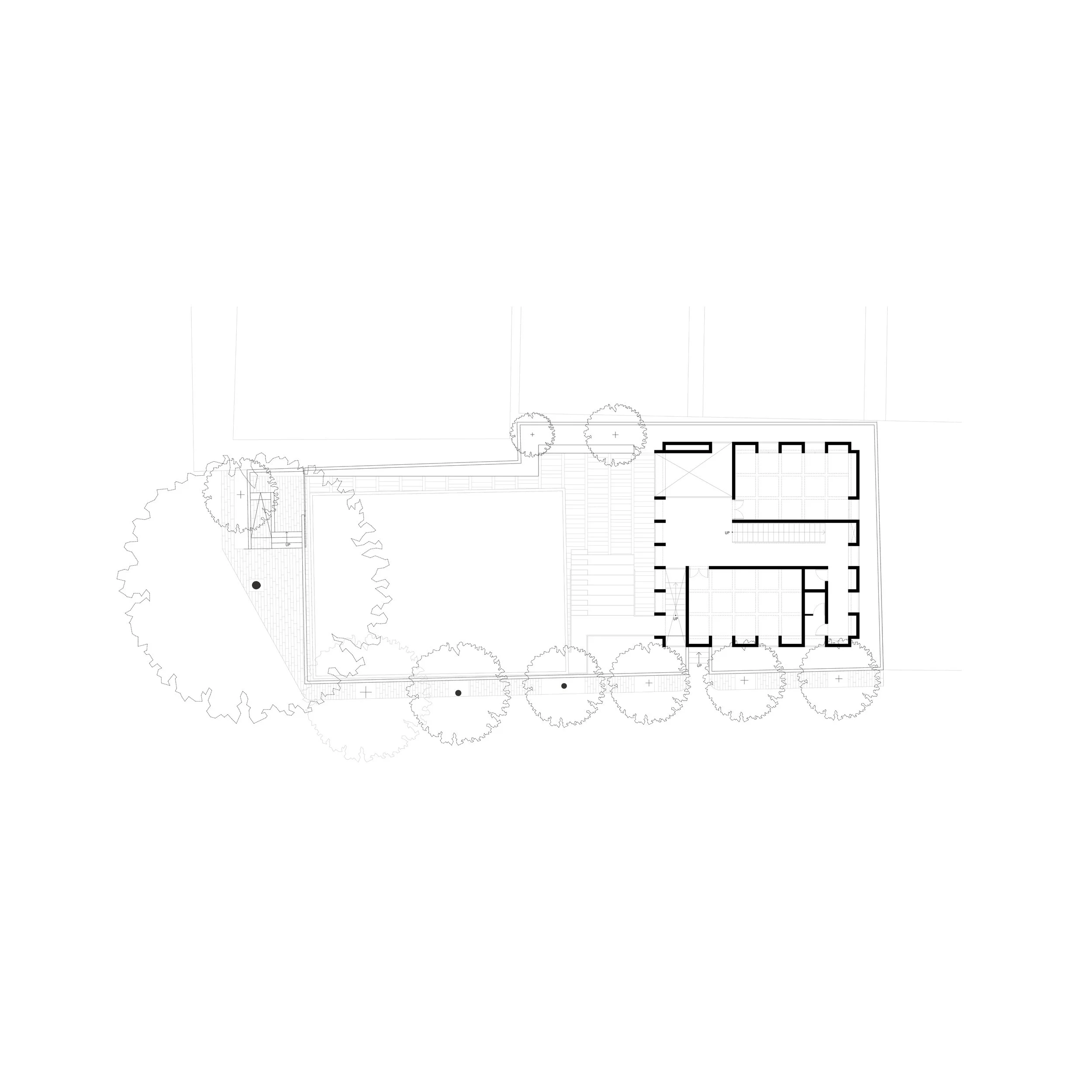
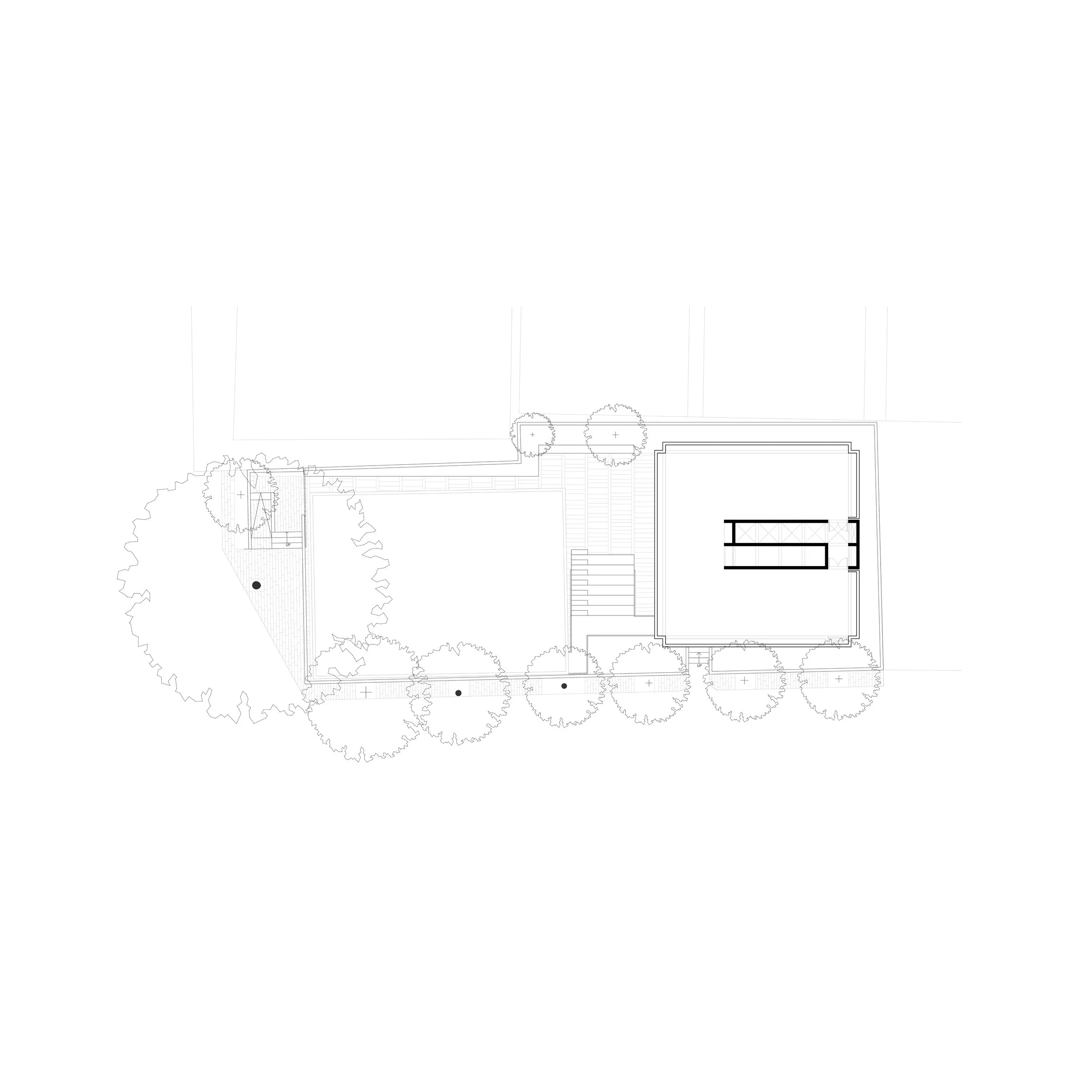
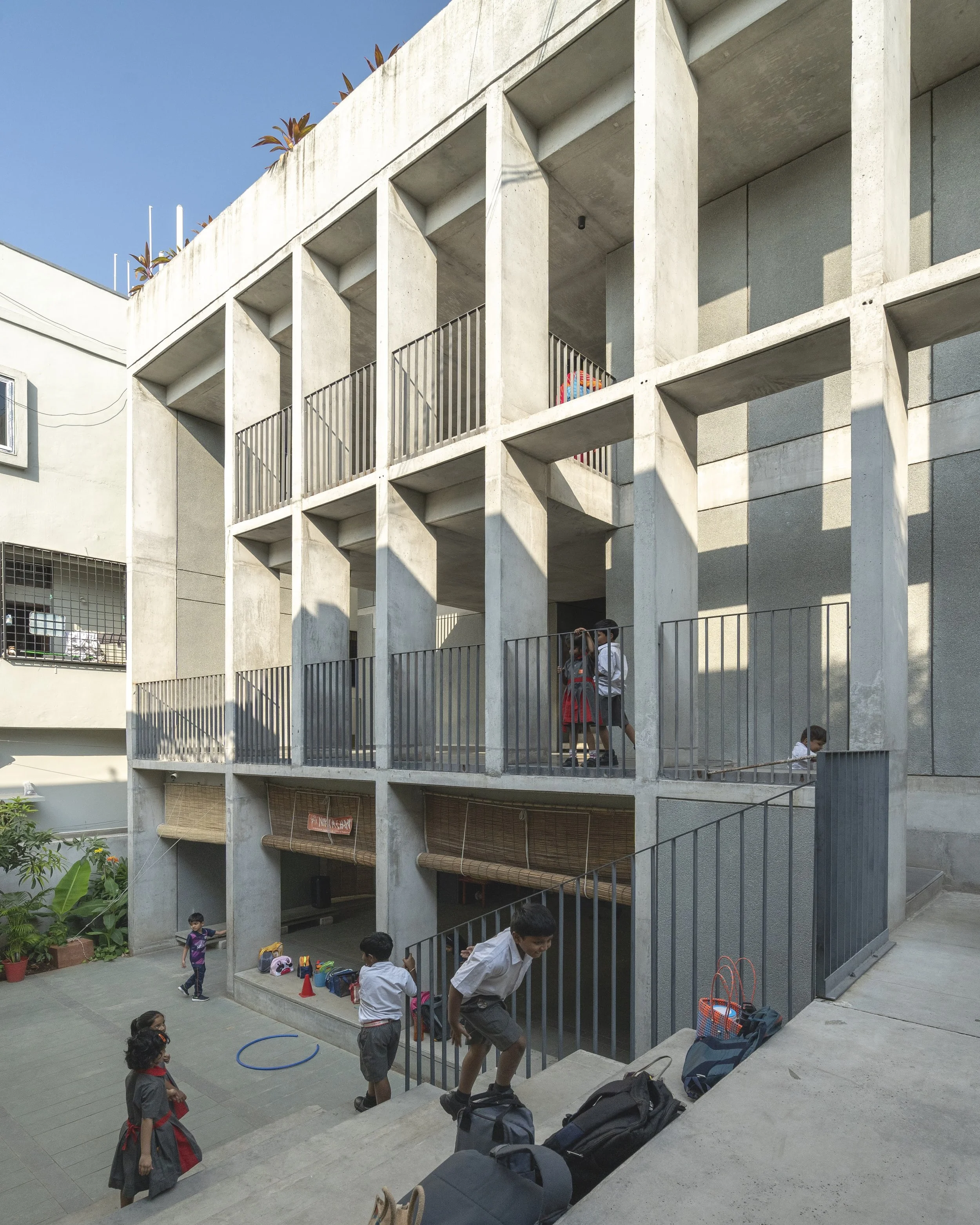
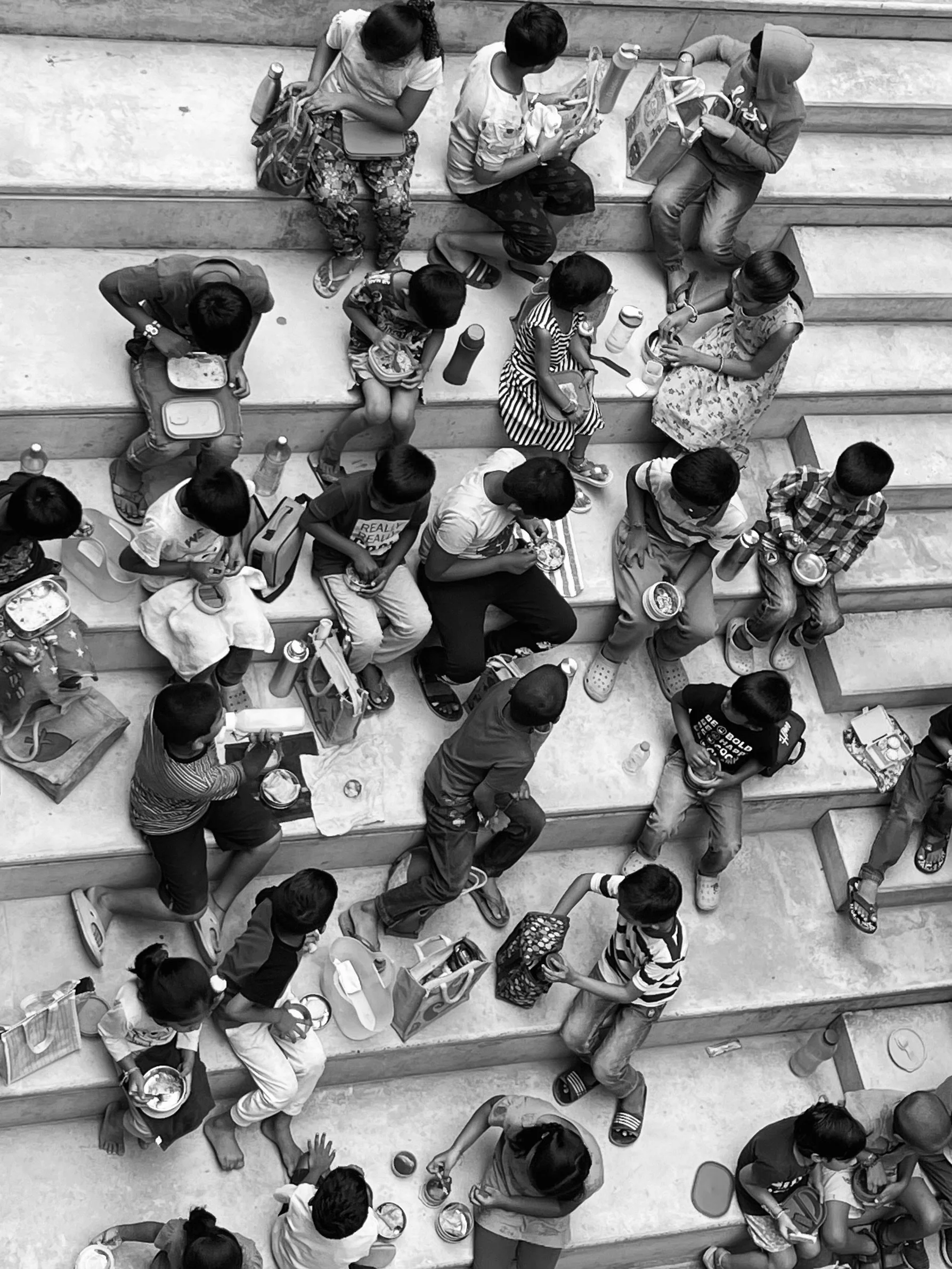
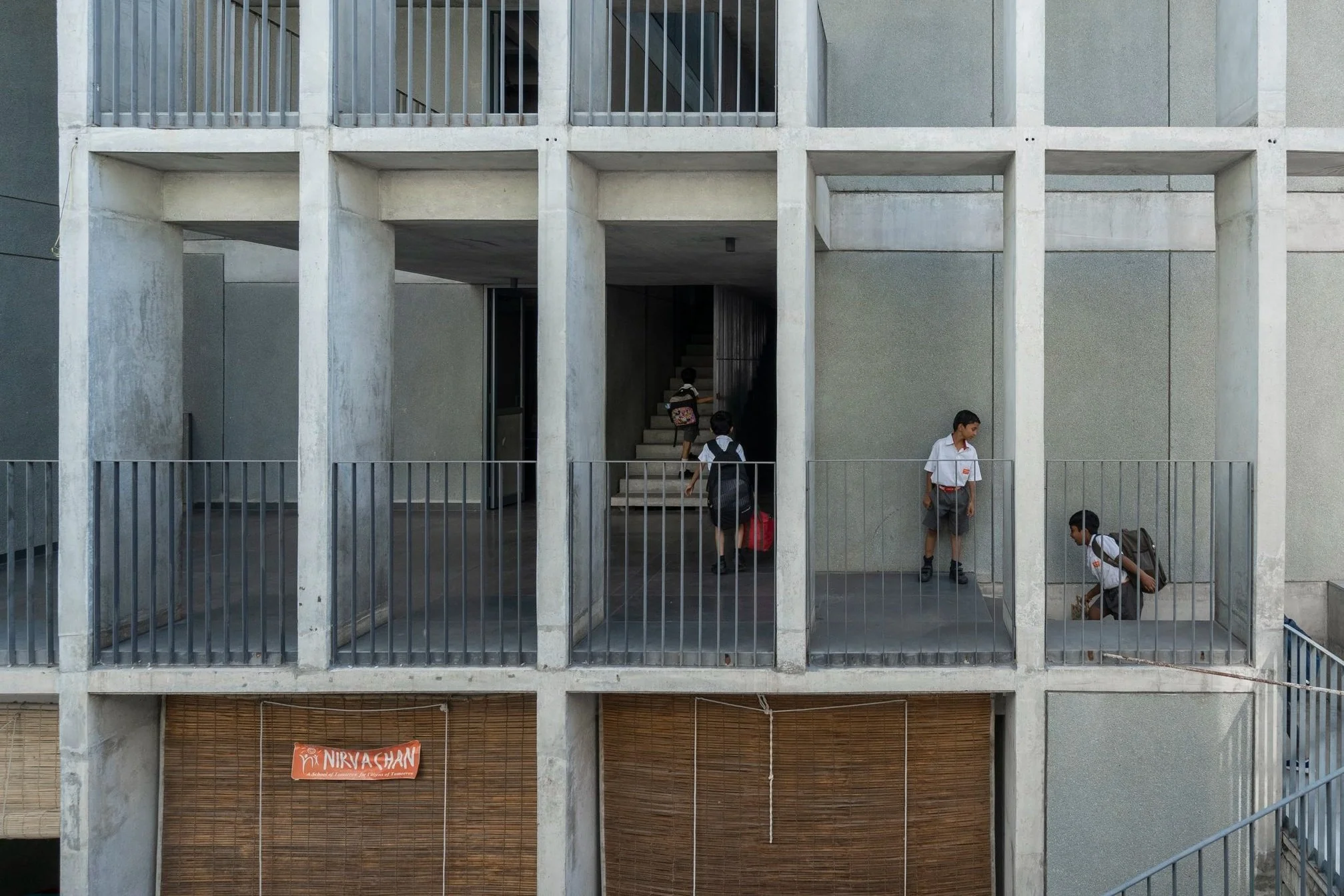
The new building, shaped by site setbacks and its immediate context, stands beside the original house. From the street, a main entrance opens into a courtyard between the two buildings, where broad, stepped seating invites children to gather, sit, and play. This space connects directly to a shared double-height area on the first level, where classrooms open onto this light-filled volume.
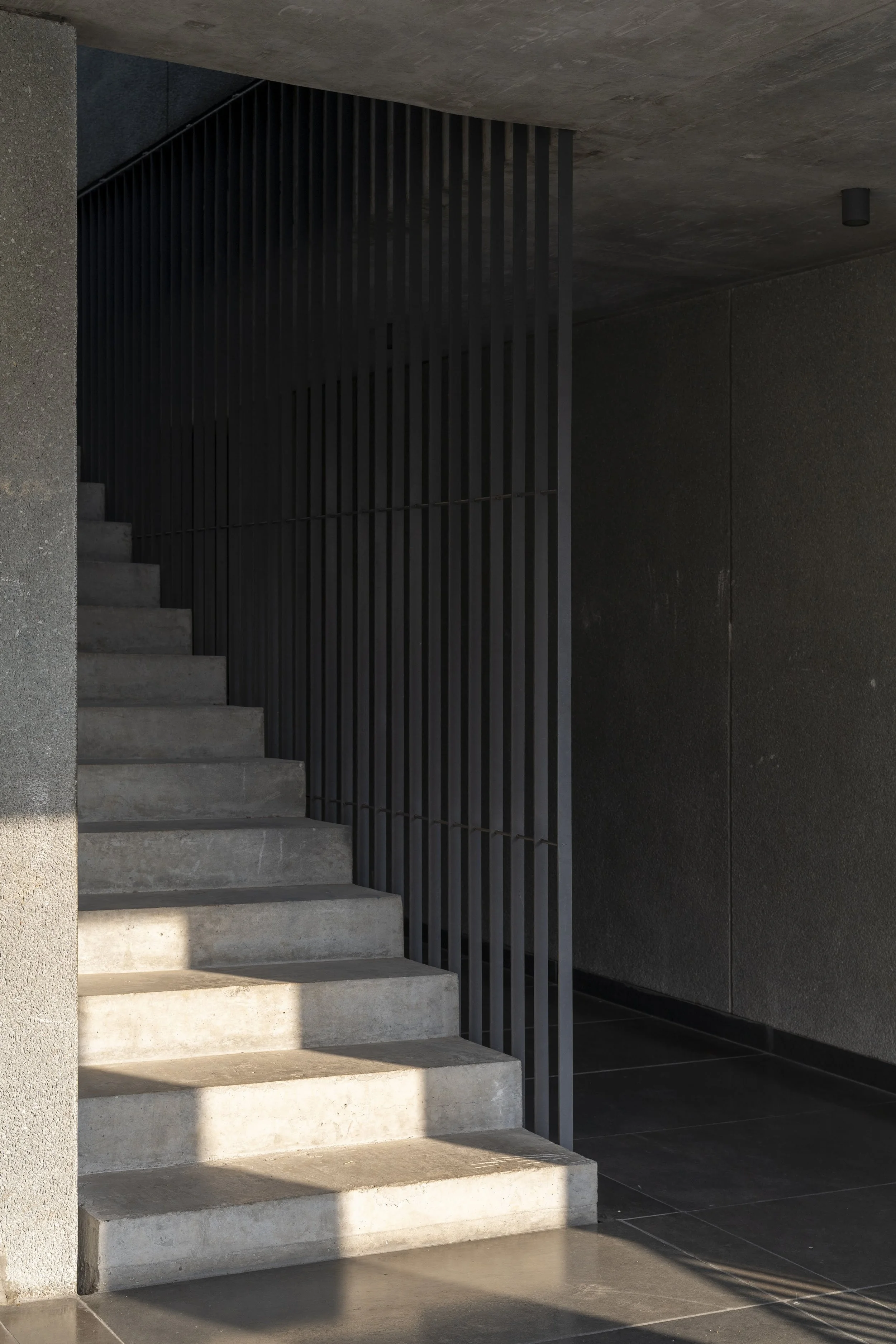
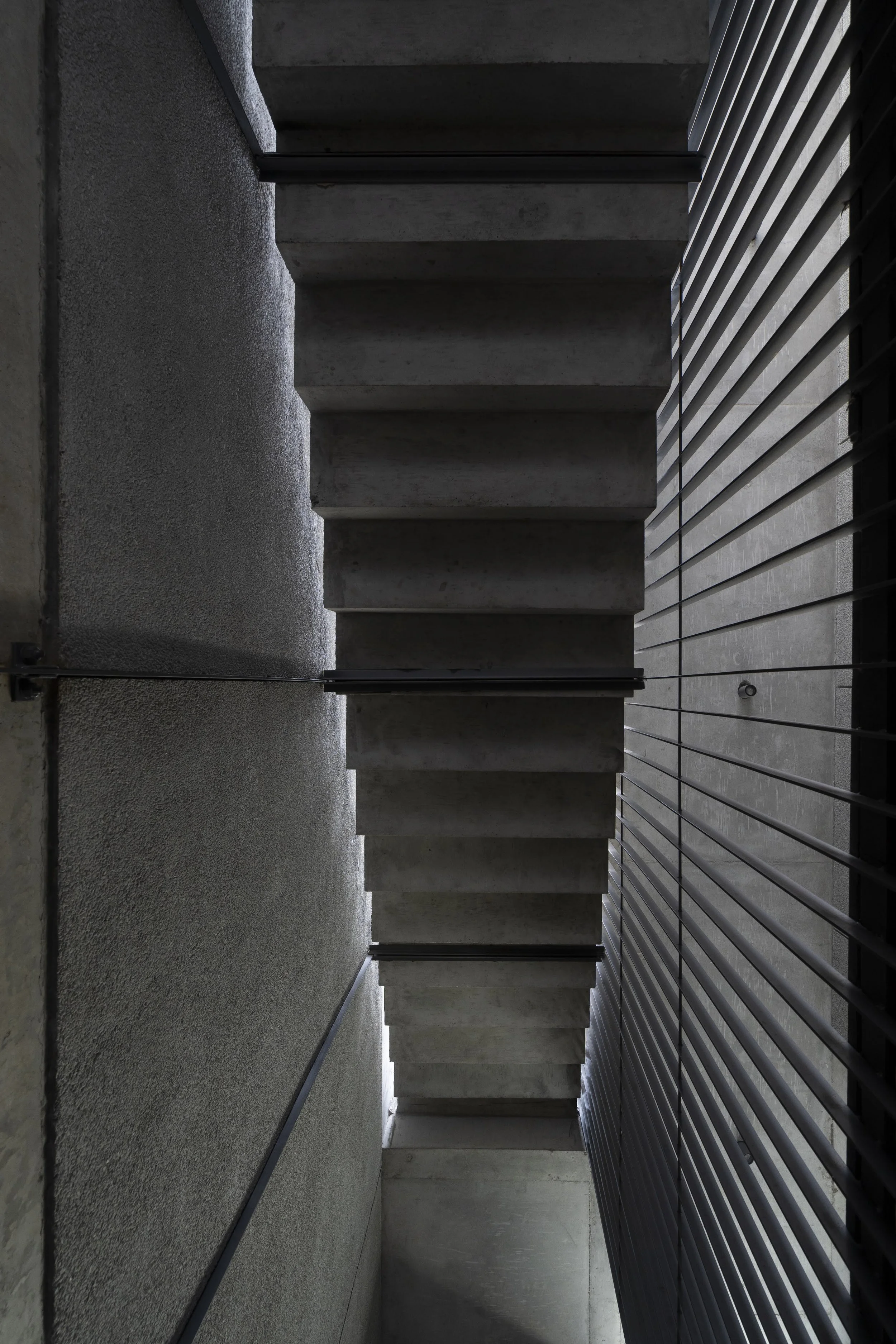
A linear staircase links this space to the second floor, where additional classrooms overlook the activity below, creating visual and spatial connections across levels. The administrative office, nursery, and creative learning spaces are located on the ground floor, anchoring the school’s daily life.
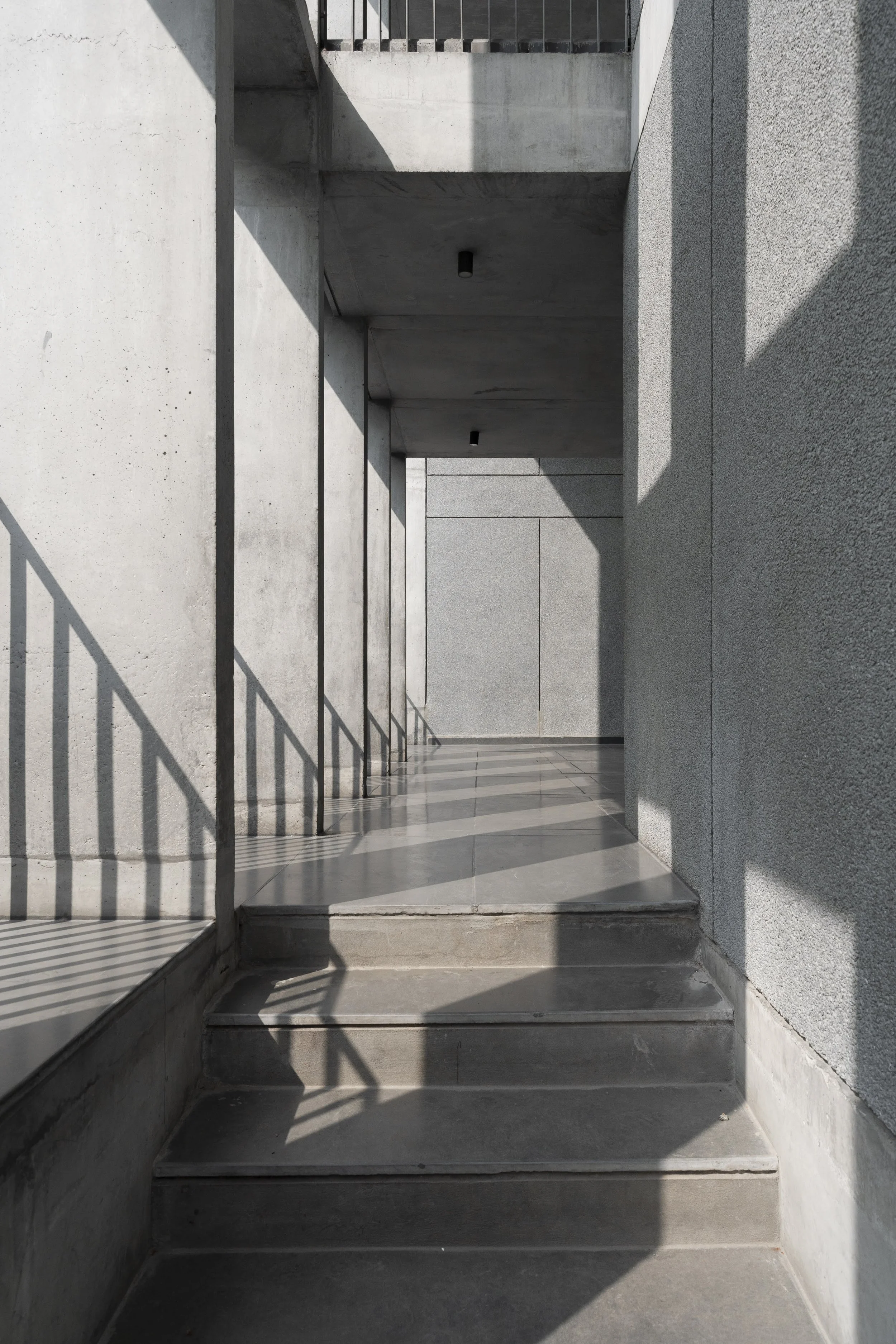
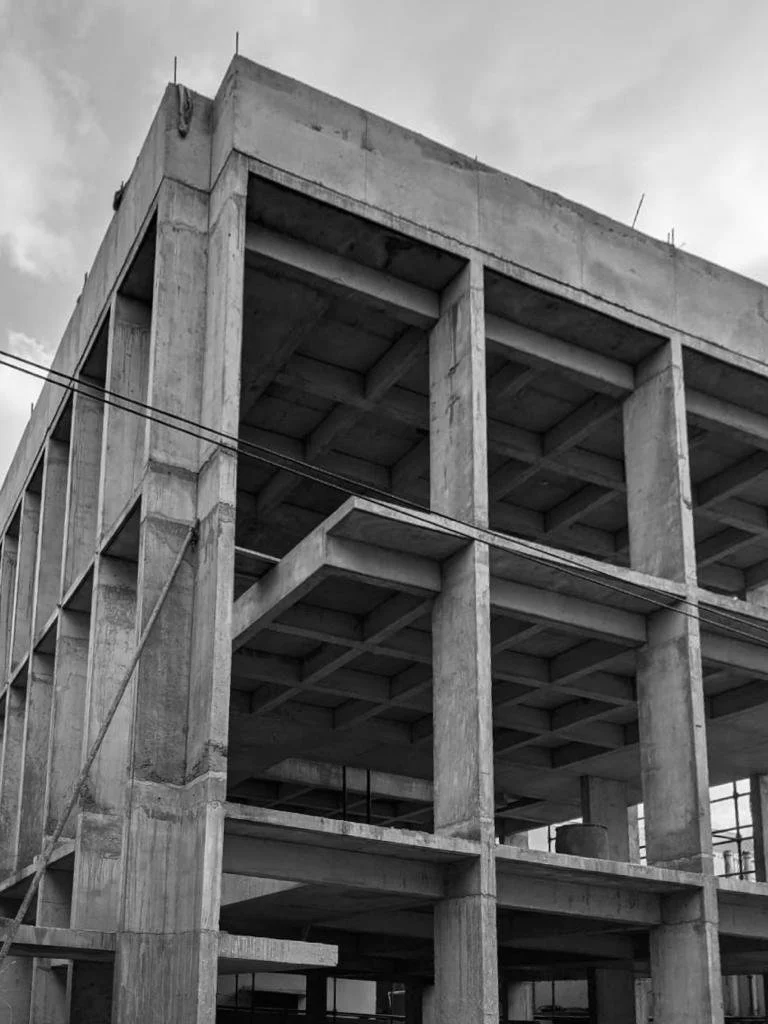
The material palette combines stonecrete, crafted from Kota stone, with an exposed concrete frame, recalling the utilitarian character of 1960s architecture. This interplay of texture and structure redefines the school’s identity, giving it a distinct yet contextual presence in the neighbourhood.
Interior spaces are designed to give the school a domestic character, warm and familiar, without overly defining them.
Program: Educational
Location: Hyderabad, Telangana, India
Surface: 250 square meters
Project Team: Hari Krishna, Abhijeet Singh, Vanditha Sangewar
Collaborators: Sridhar-Simon Peter Engineer (structure), Jem hanbury(Landscape)
Photography: Ujjwal Sannala



-
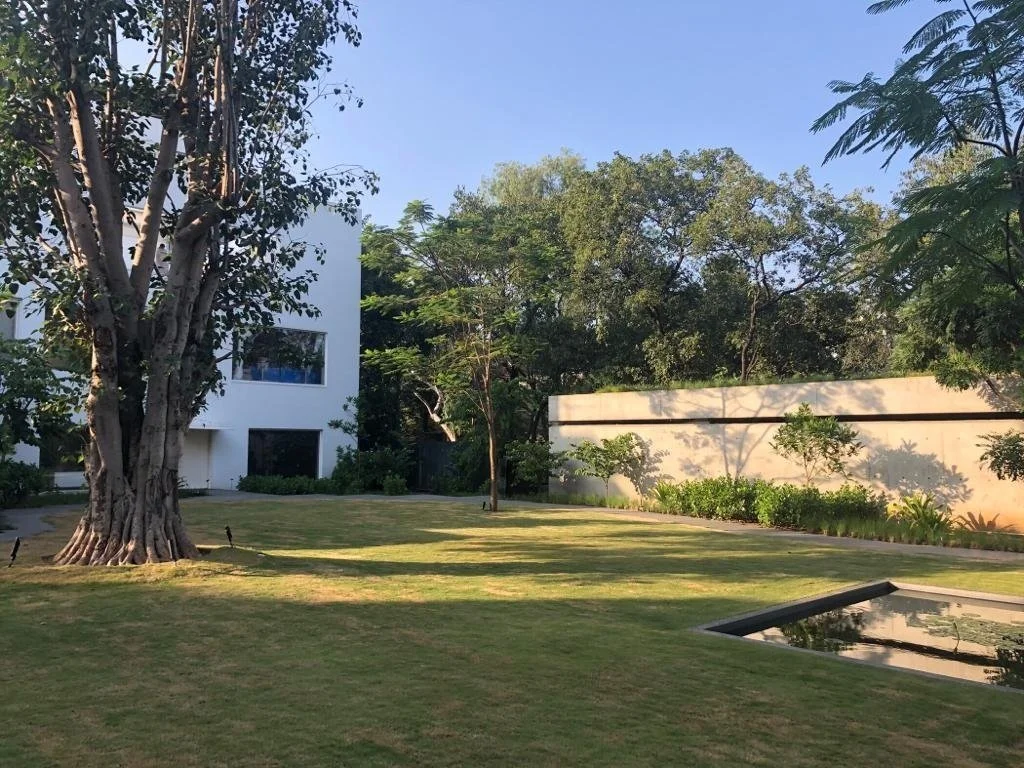
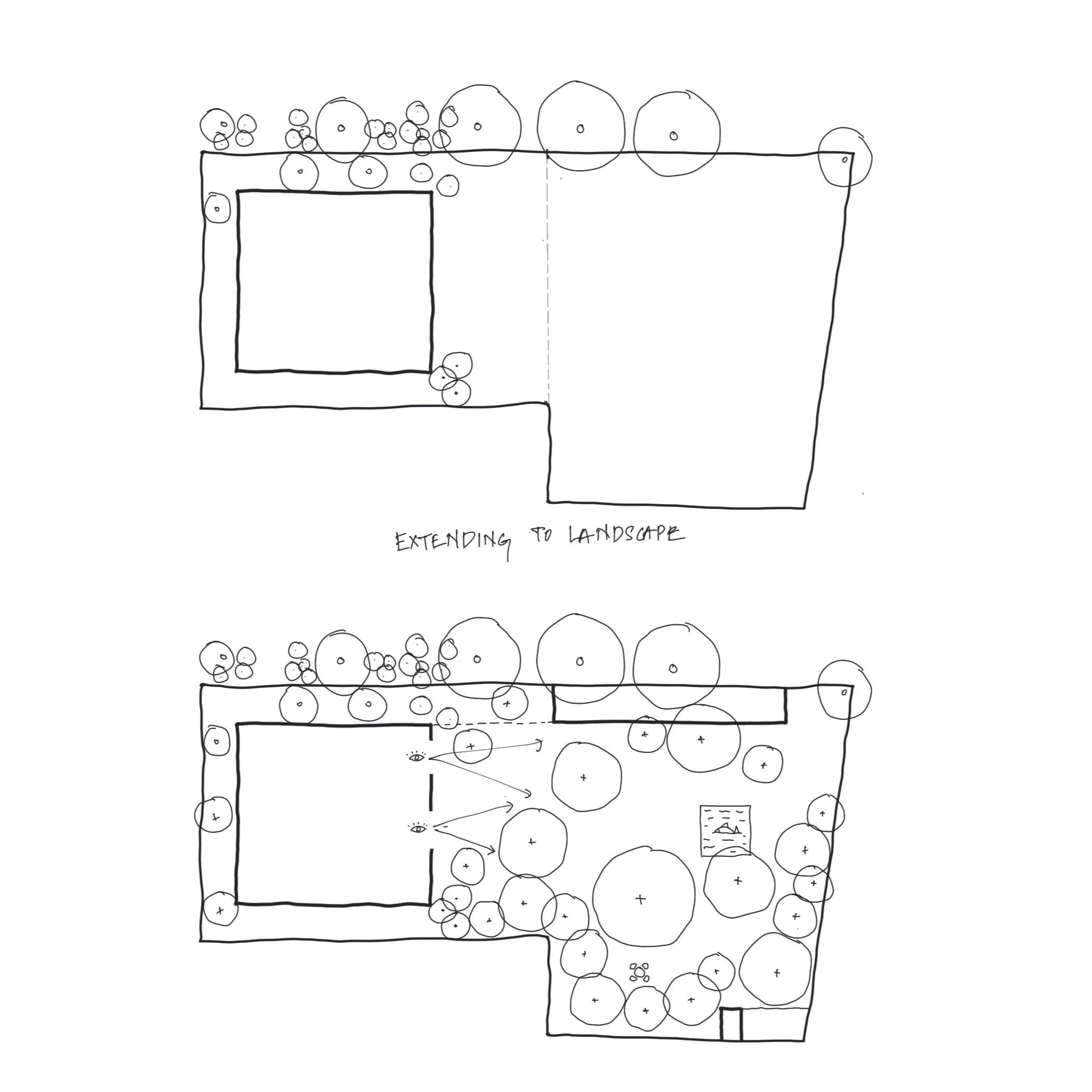
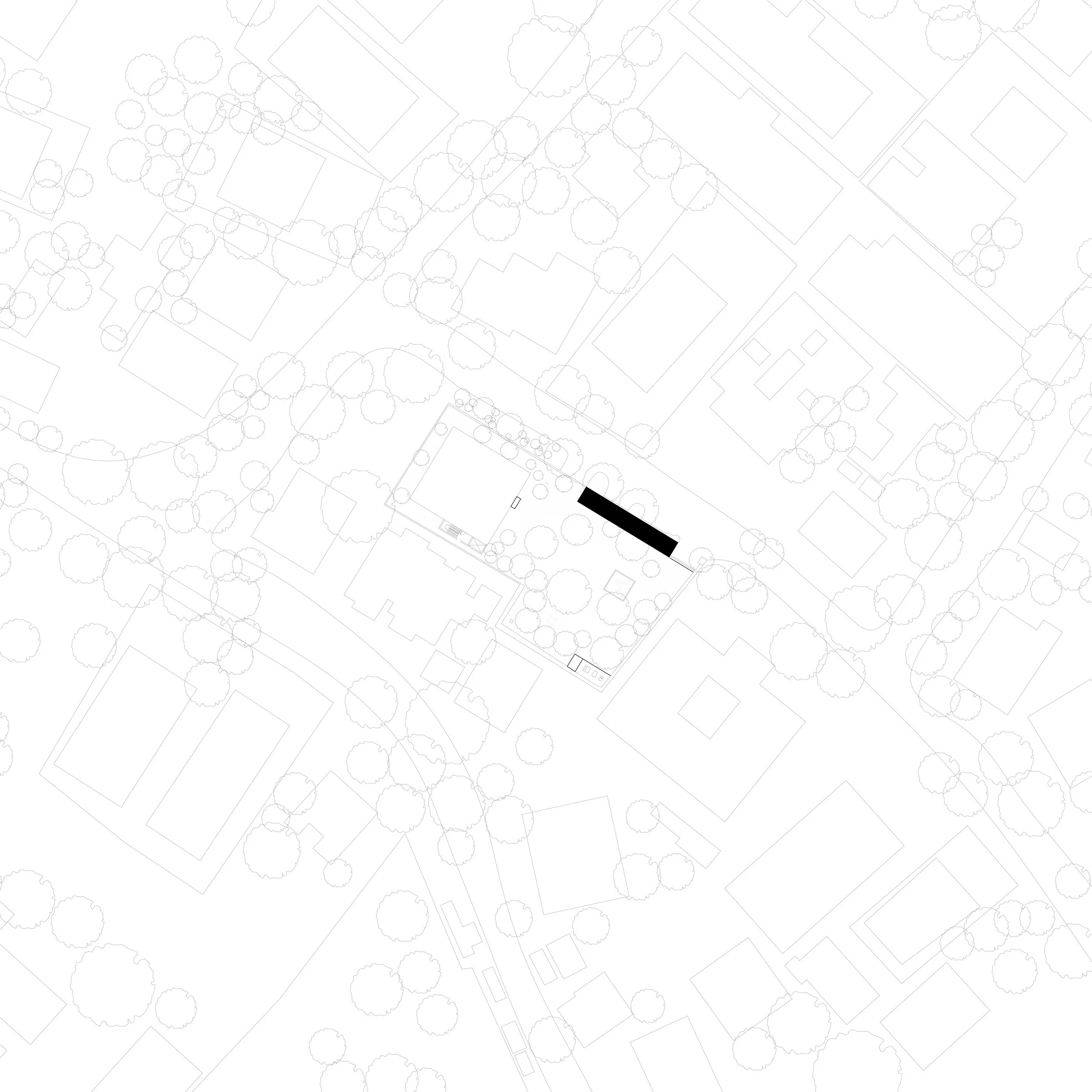
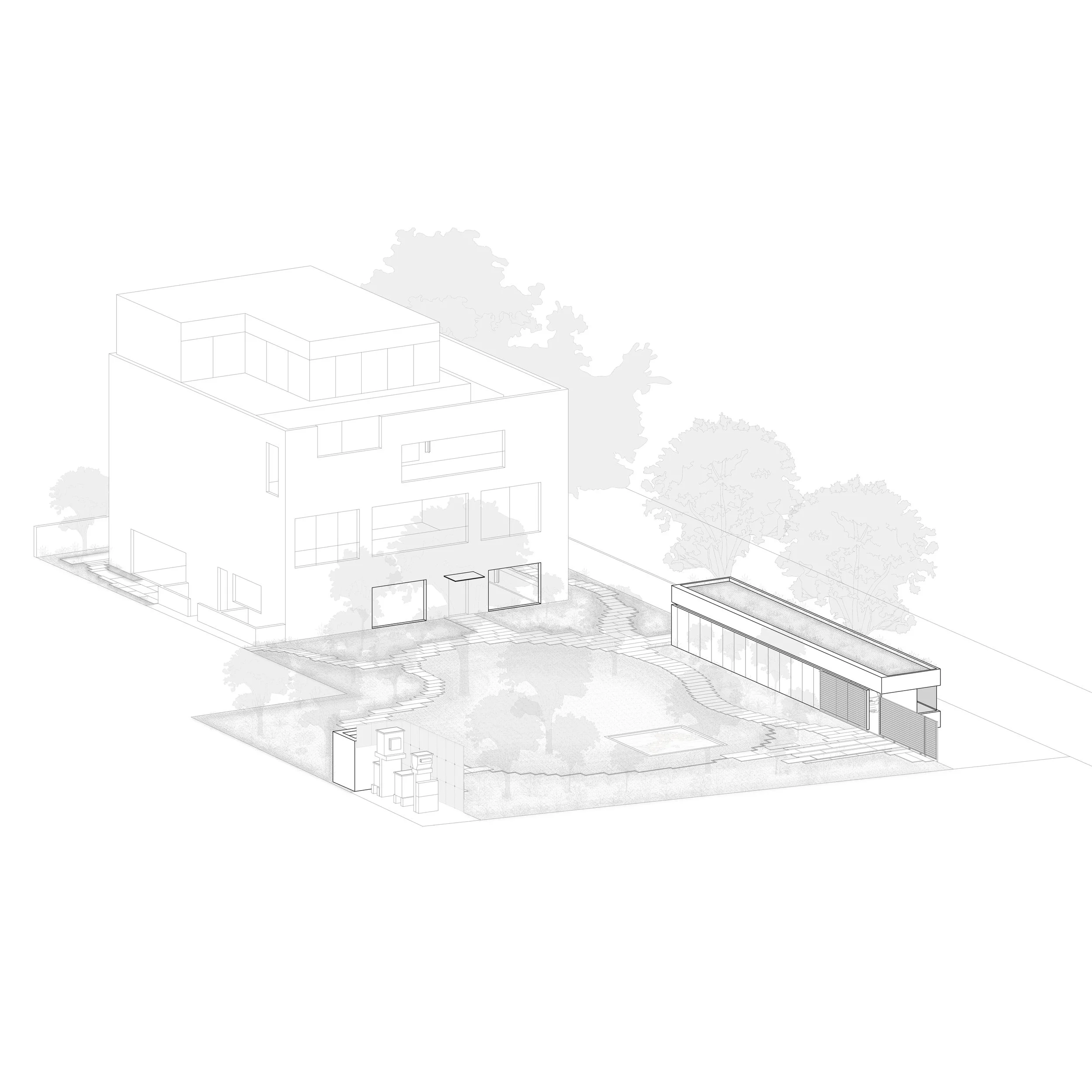
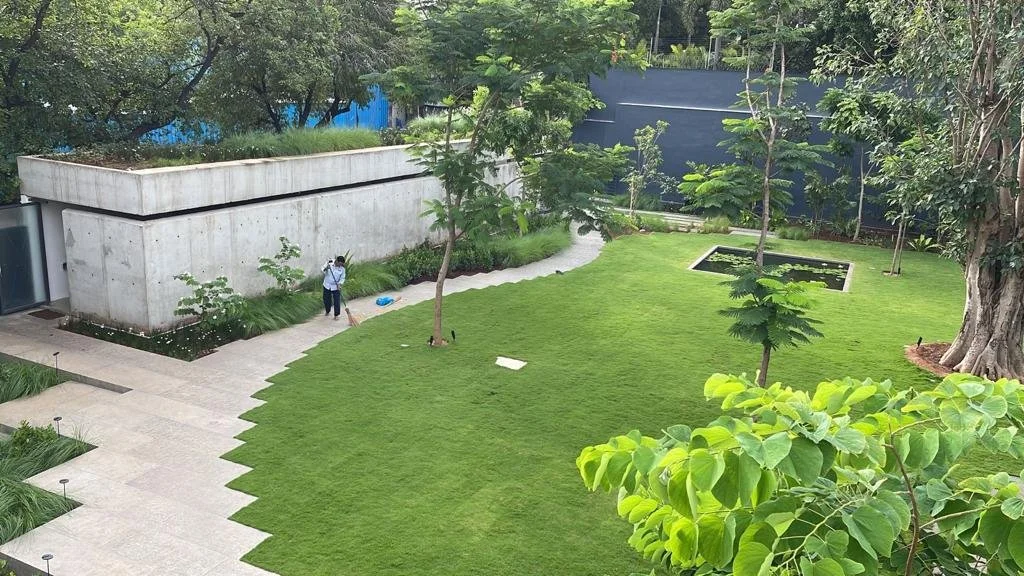
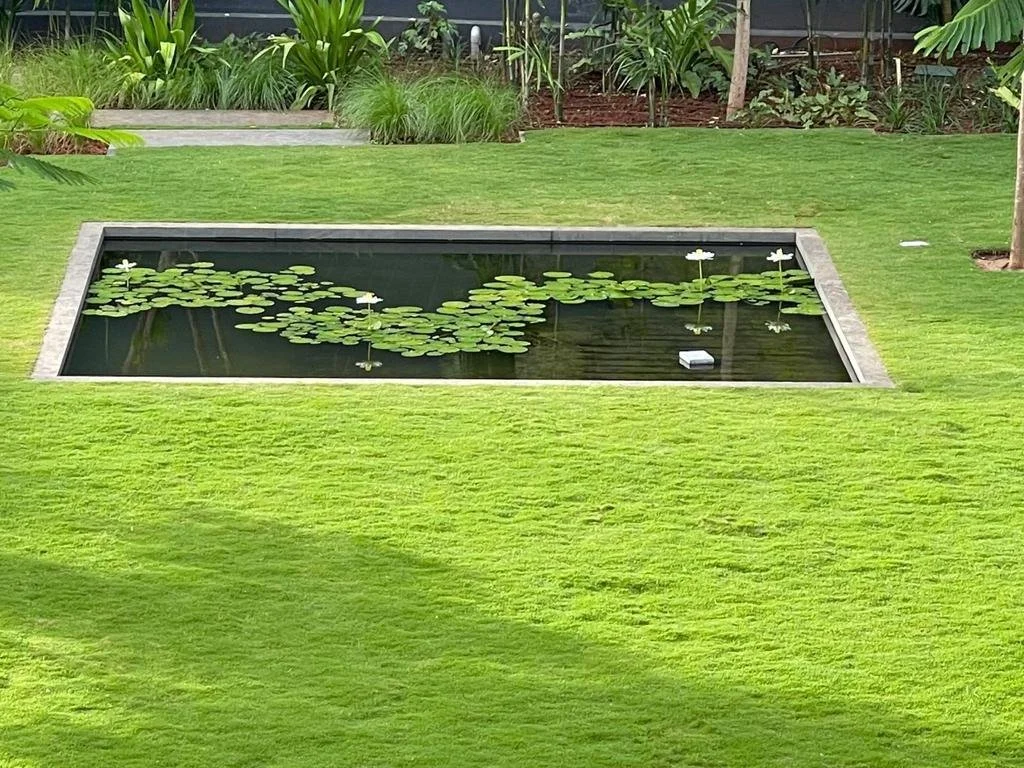
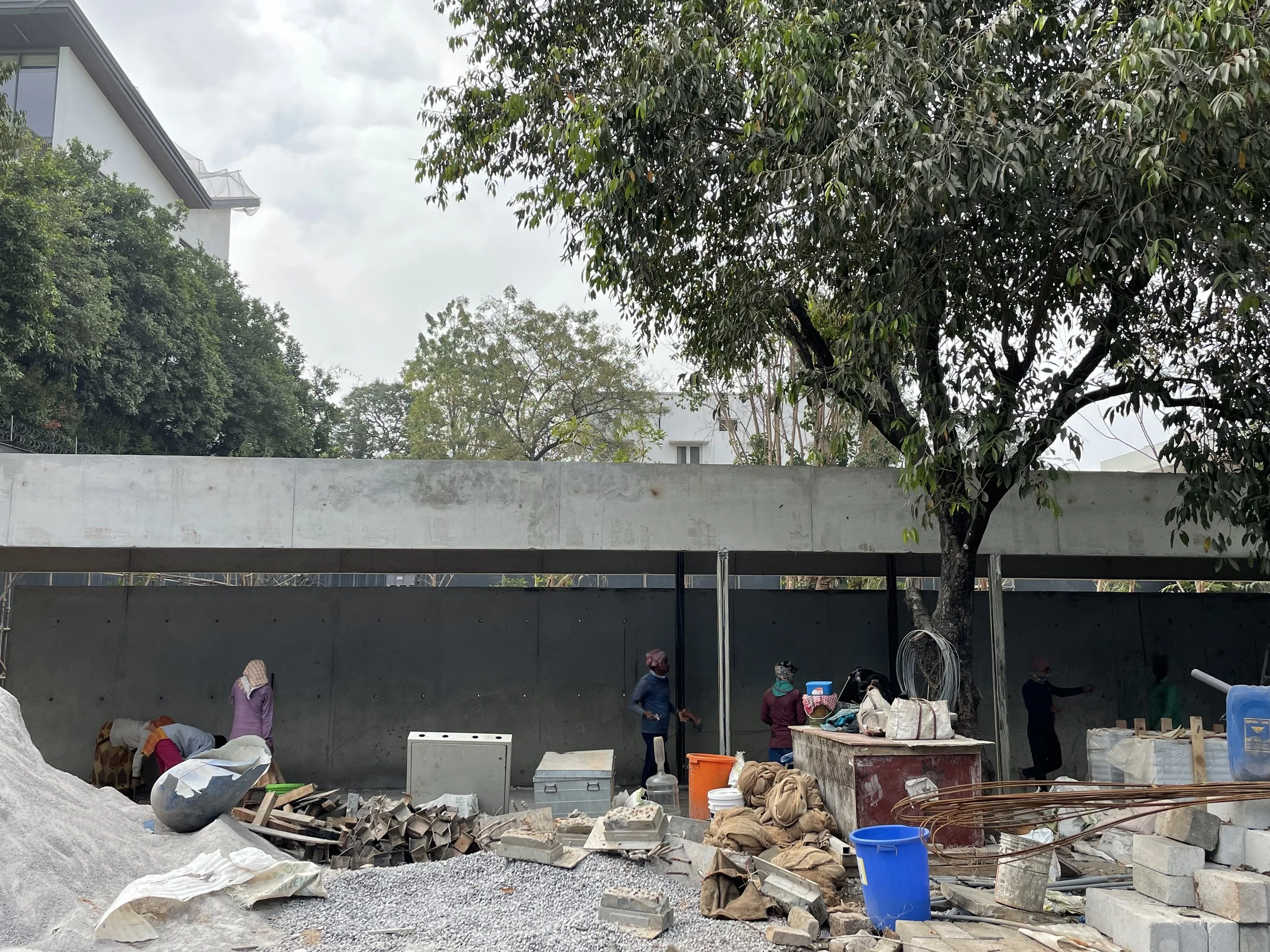
The site of the house is along a long row of mature jamun trees on the north. The south half of the property is an existing house; the garage addition and garden is on east half of the property.
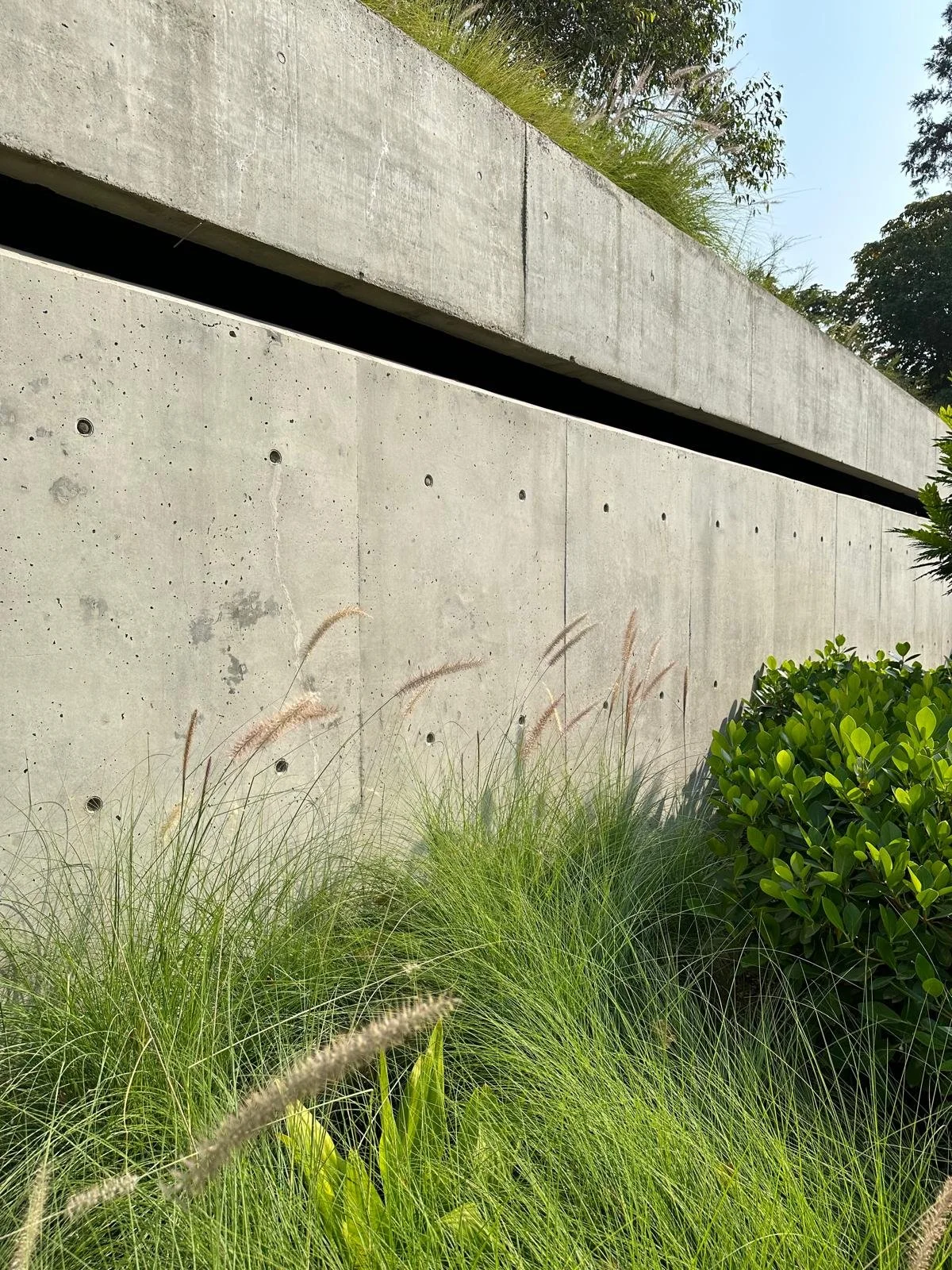
The garage extends 74 feet in a straight line along the north side of the jamun trees, long and lean in exposed reinforced concrete in favour of the minimal aesthetic.
New openings and a canopy were added to the east facade of the existing house, opening up views towards the landscape.
Program: Addition and Renovation
Location: Hyderabad, Telangana, India
Surface: 98 square Meters
Project Team: Hari Krishna, Vanditha Sangewar, Akash Chavan.
Collaborators: Sridhar-Simon Peter Engineer (structure), Jem Hanbury Studio (Landscape), Sai-Tungsten Studio (illumination), We3Infra (PMC)








-
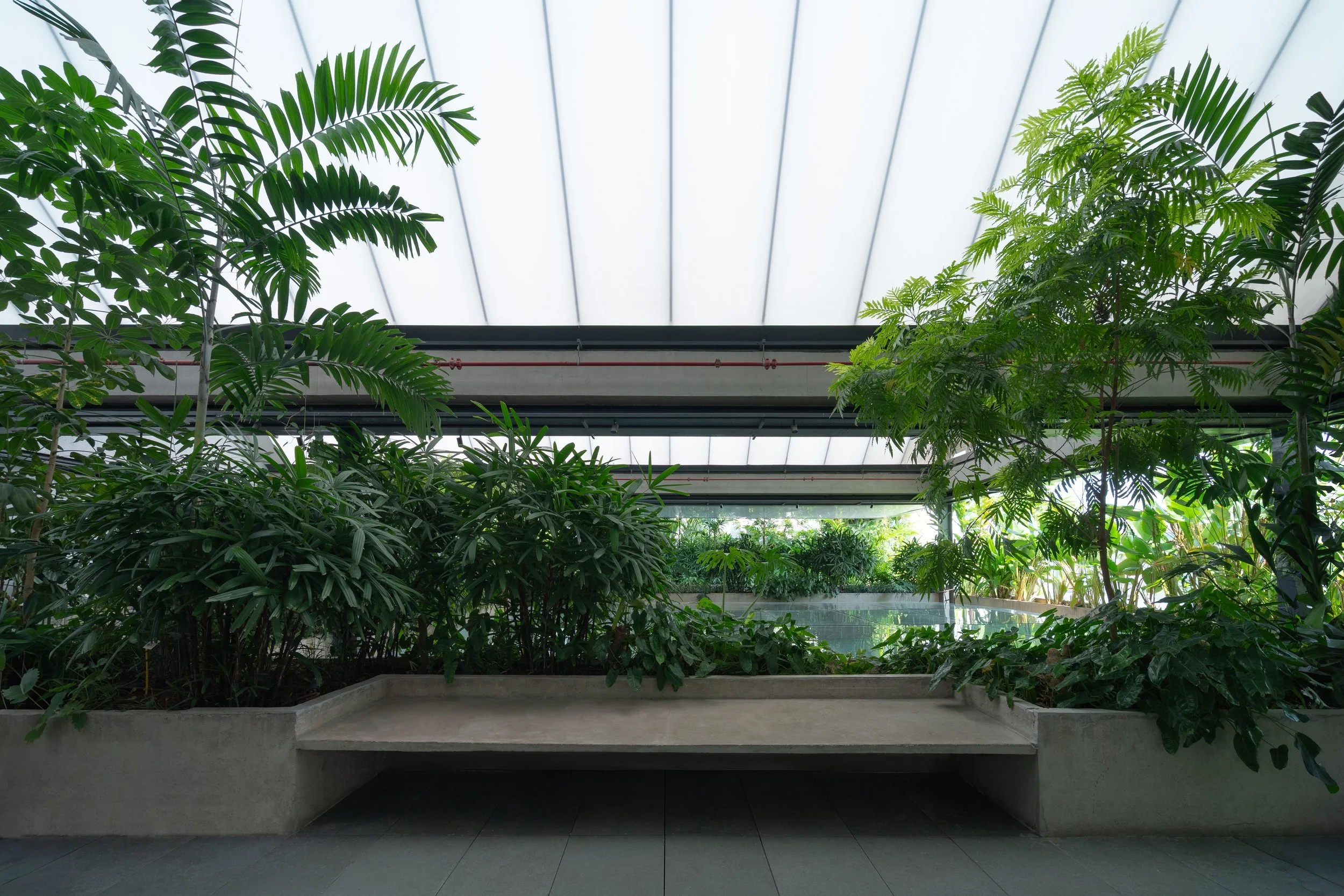
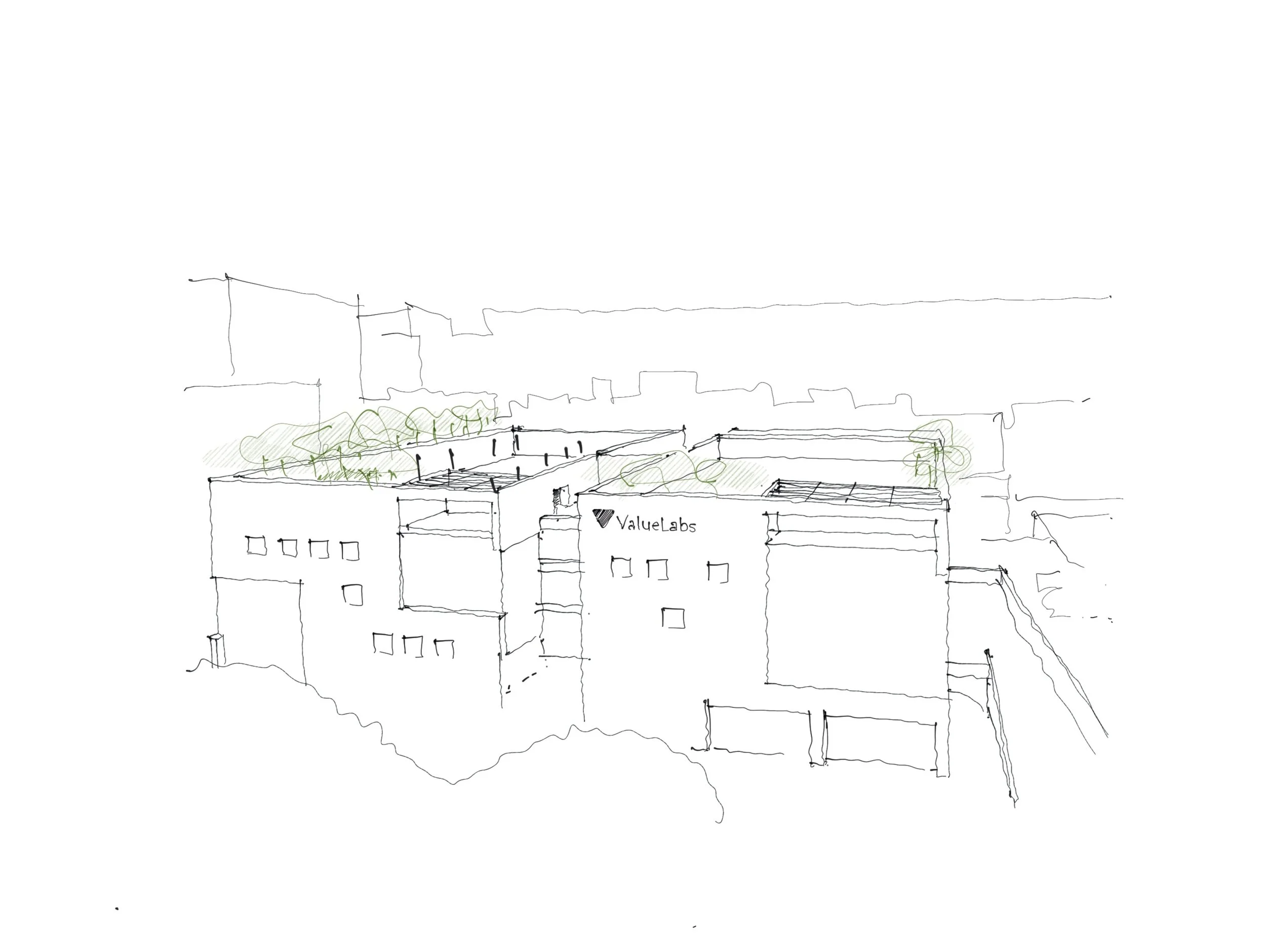
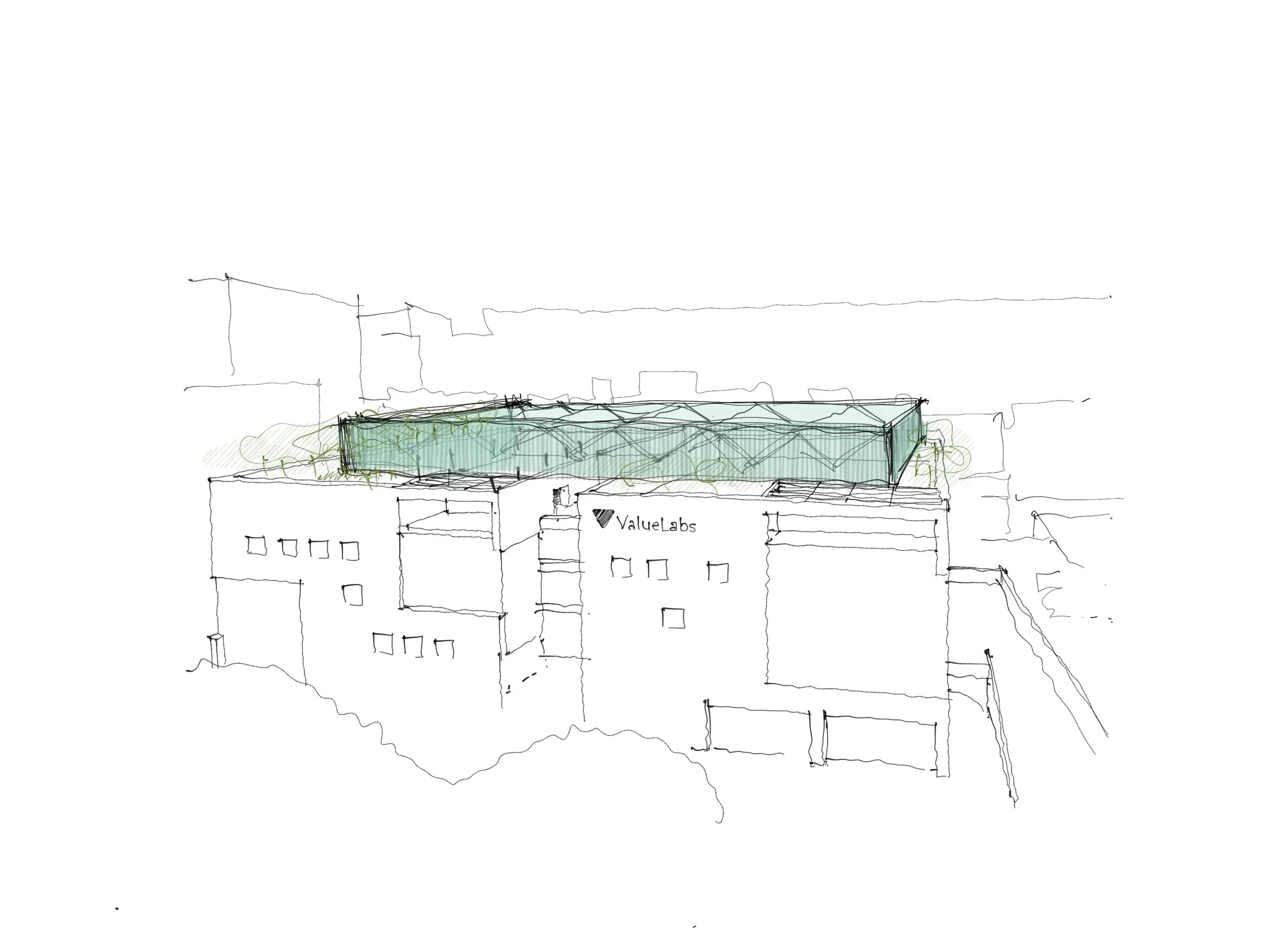
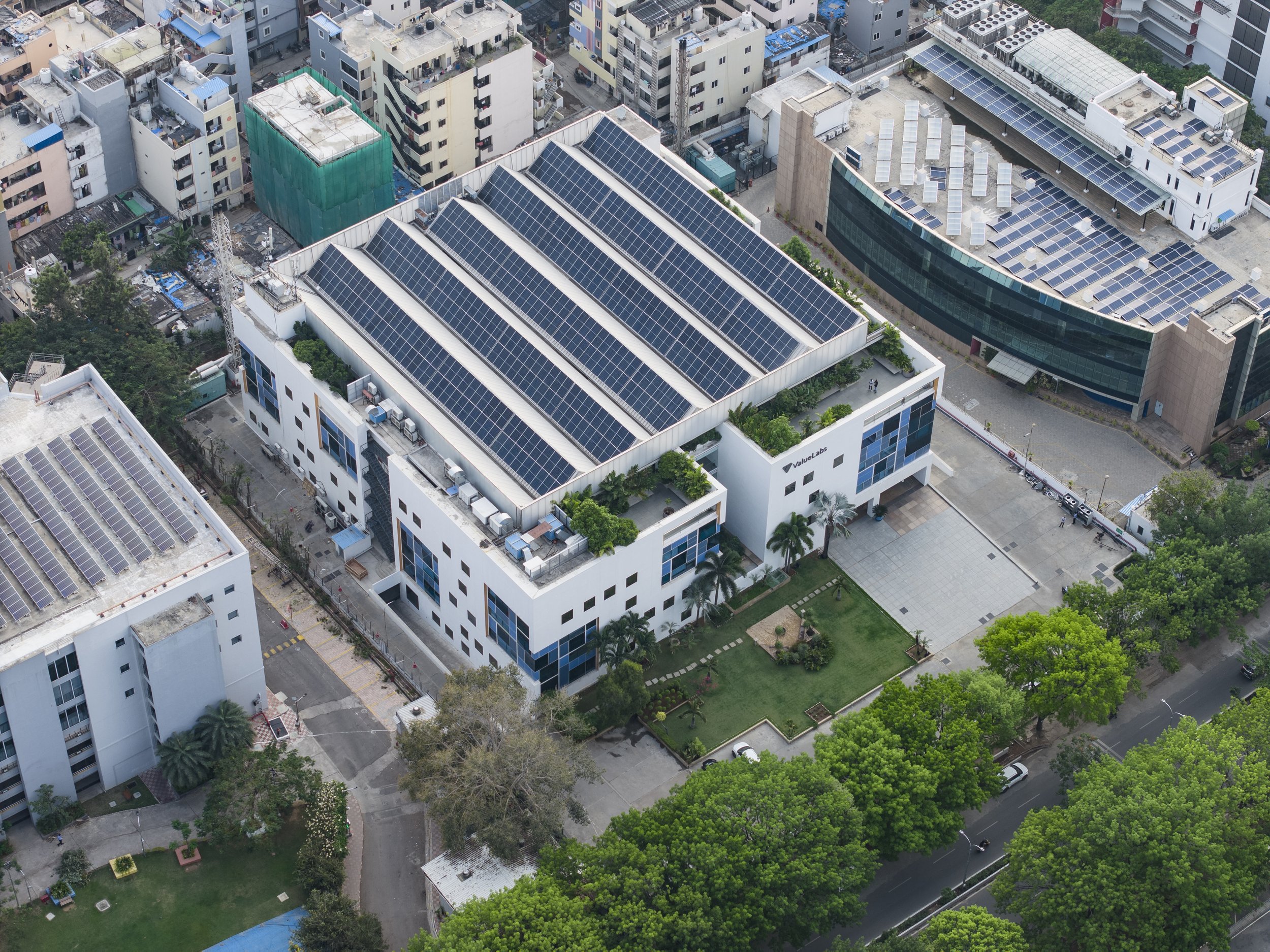
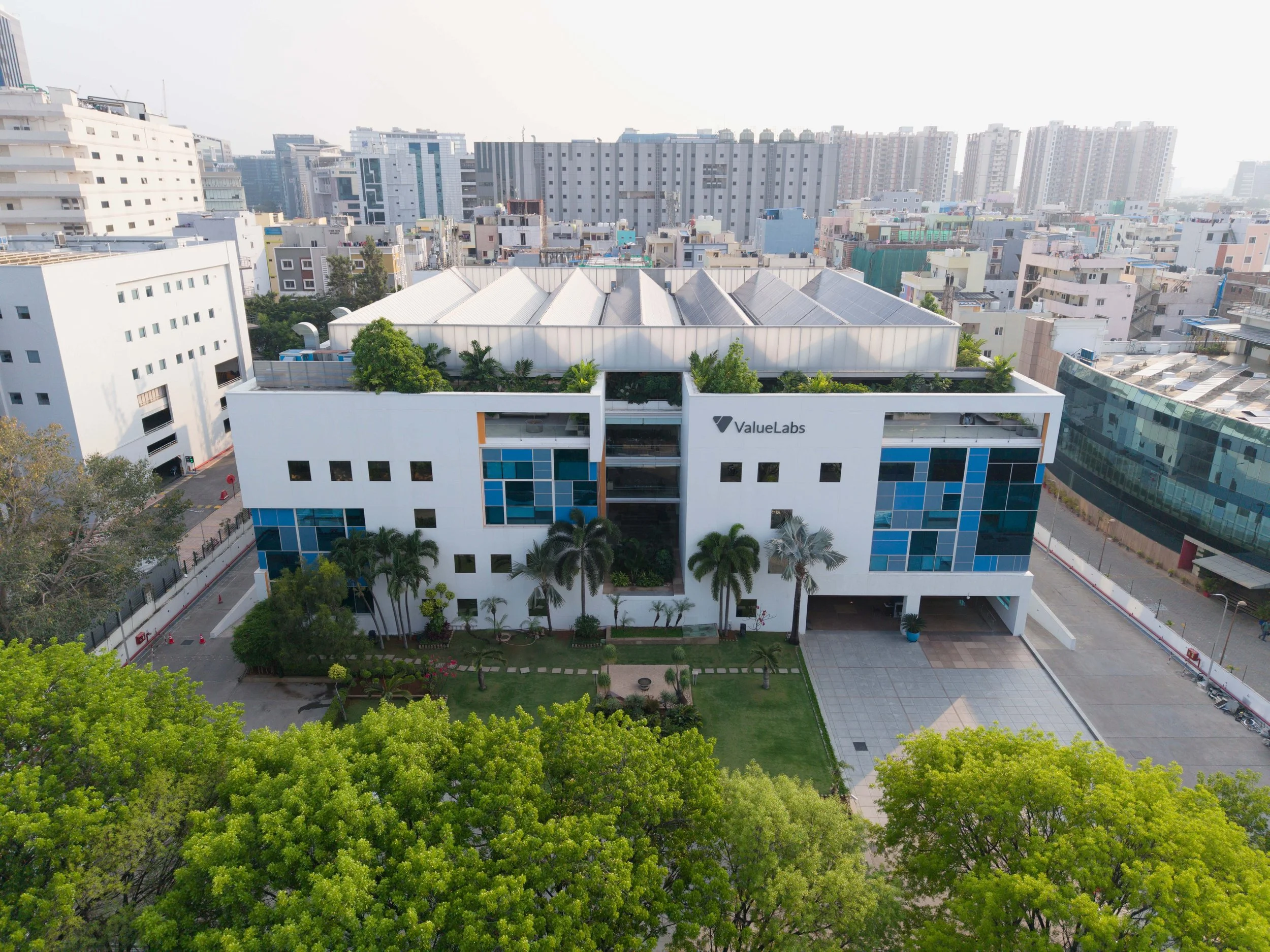
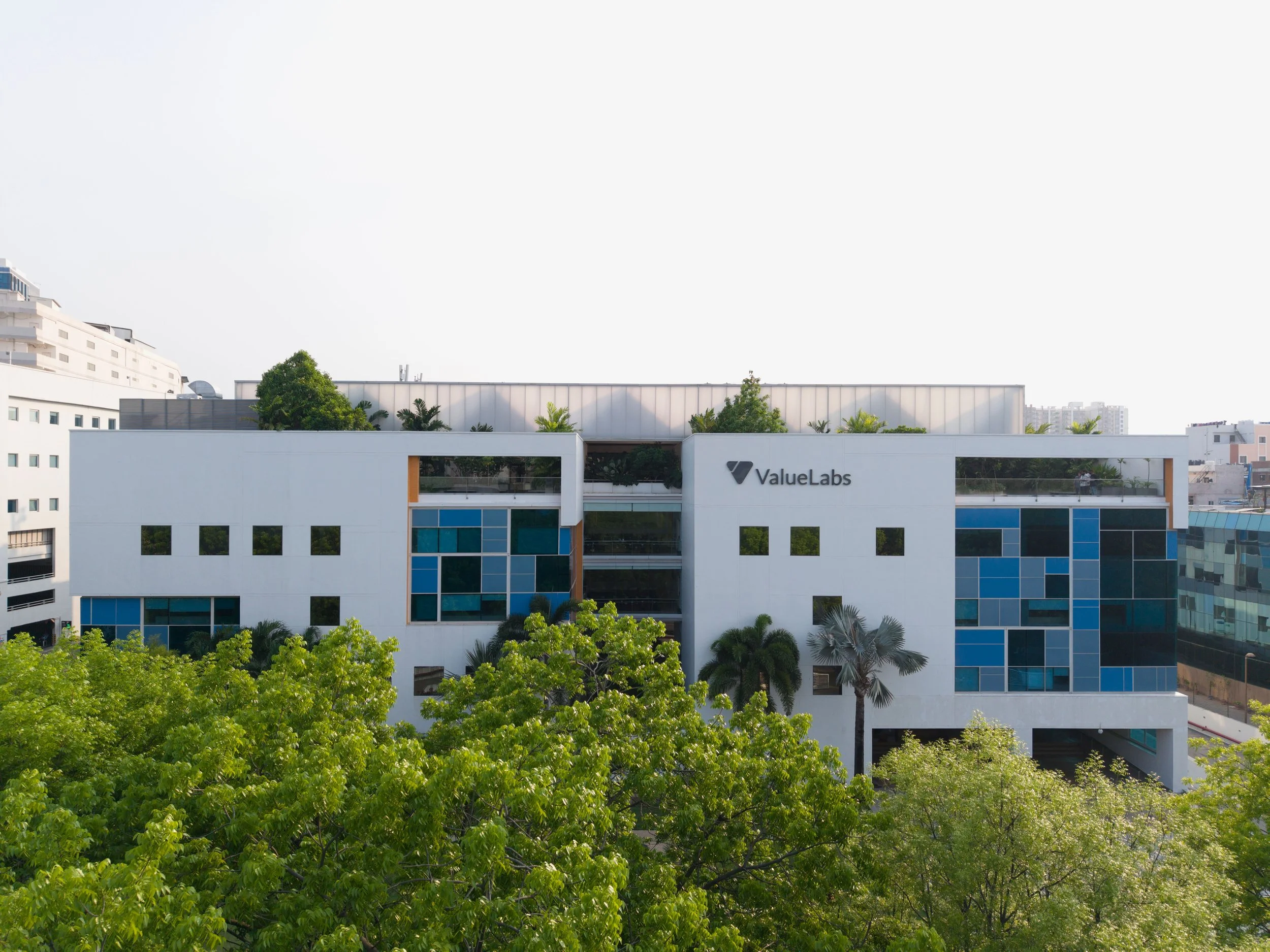
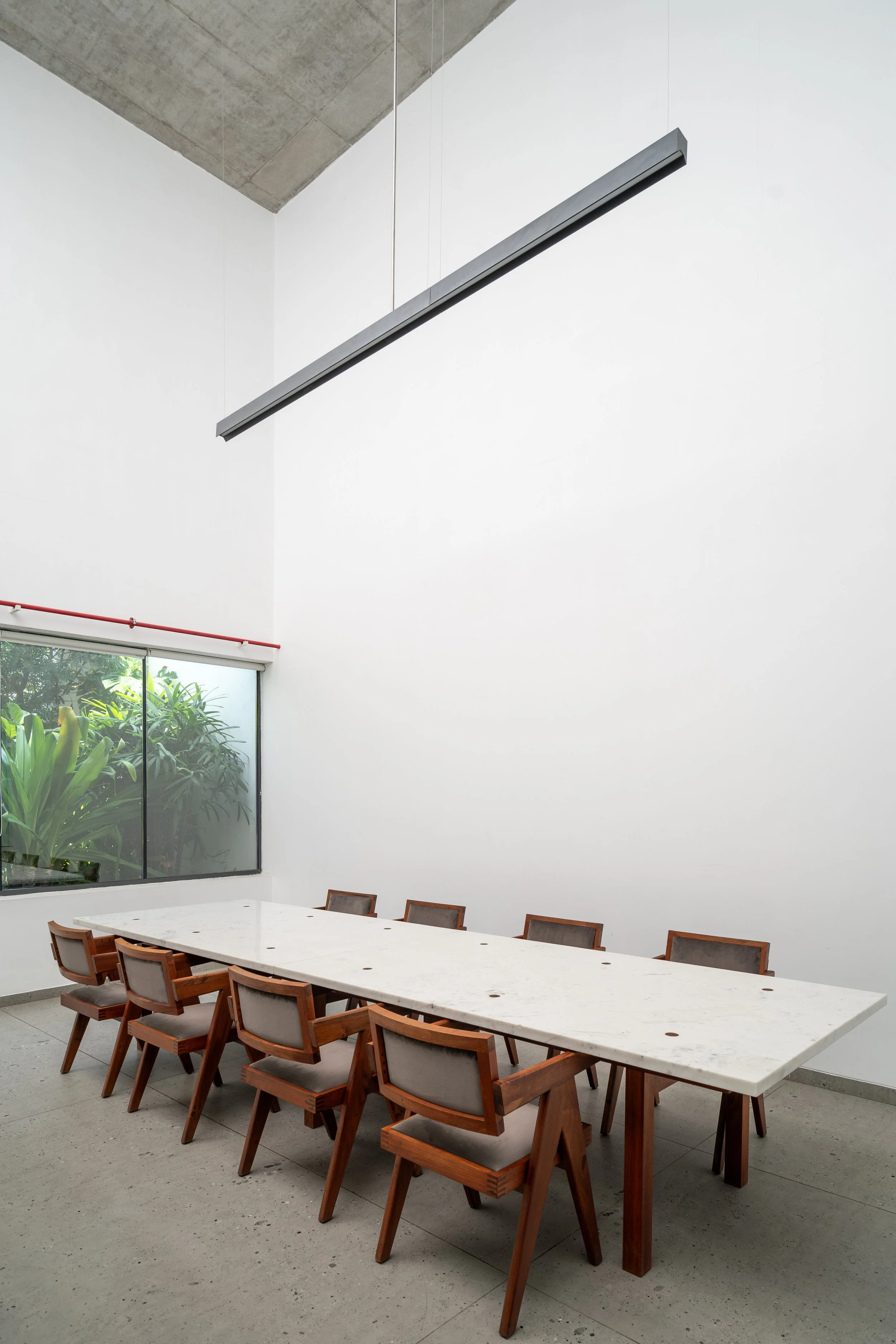
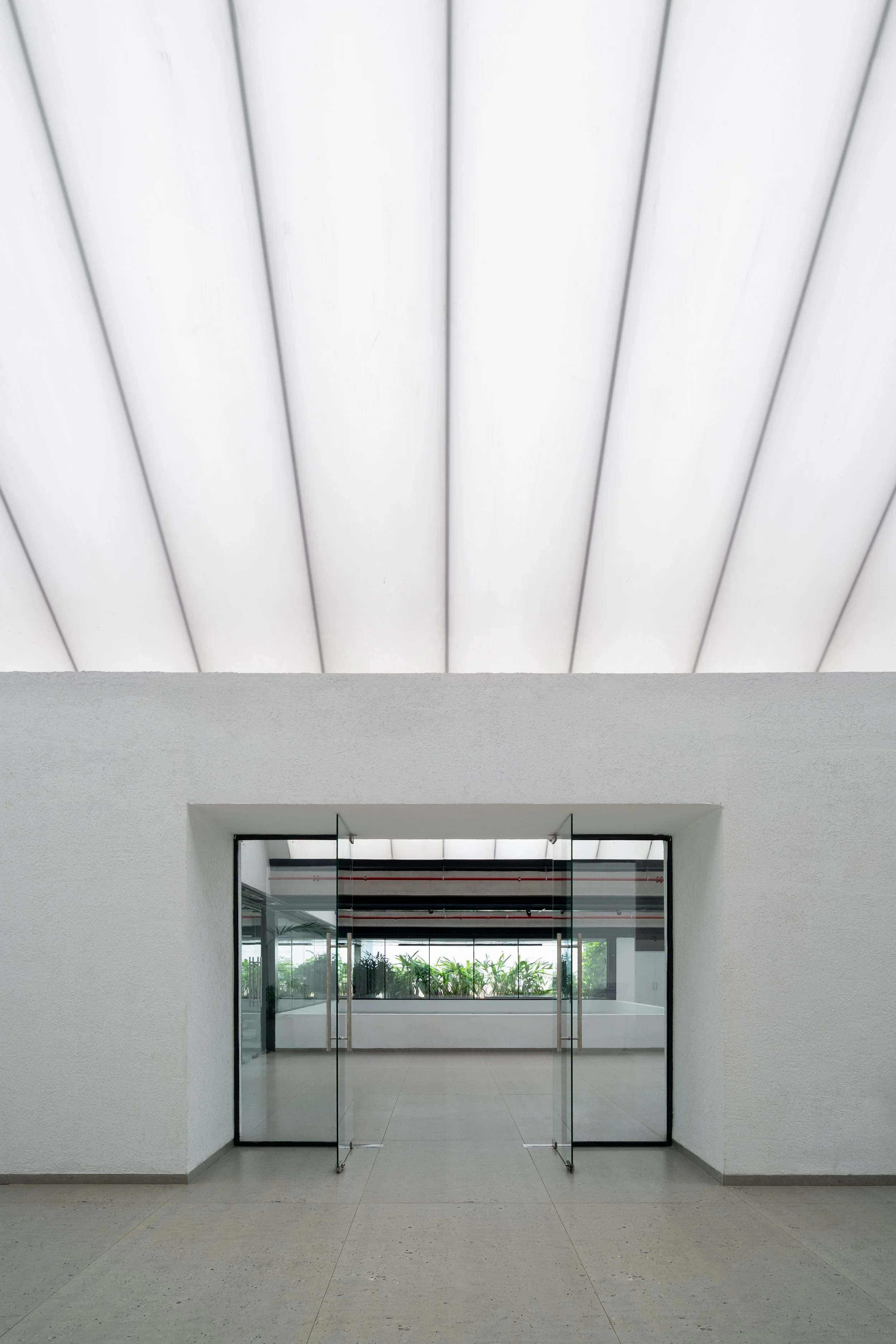
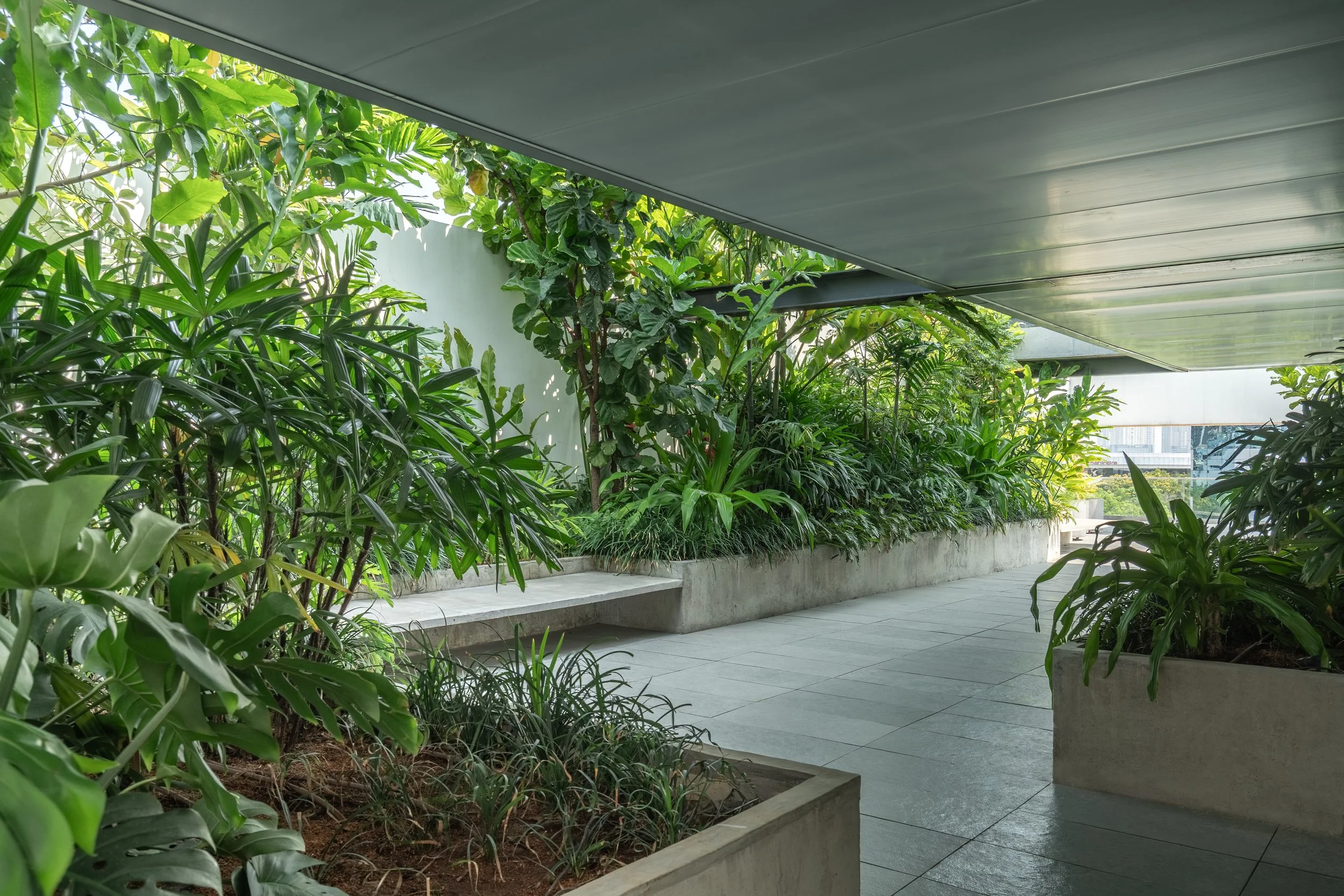
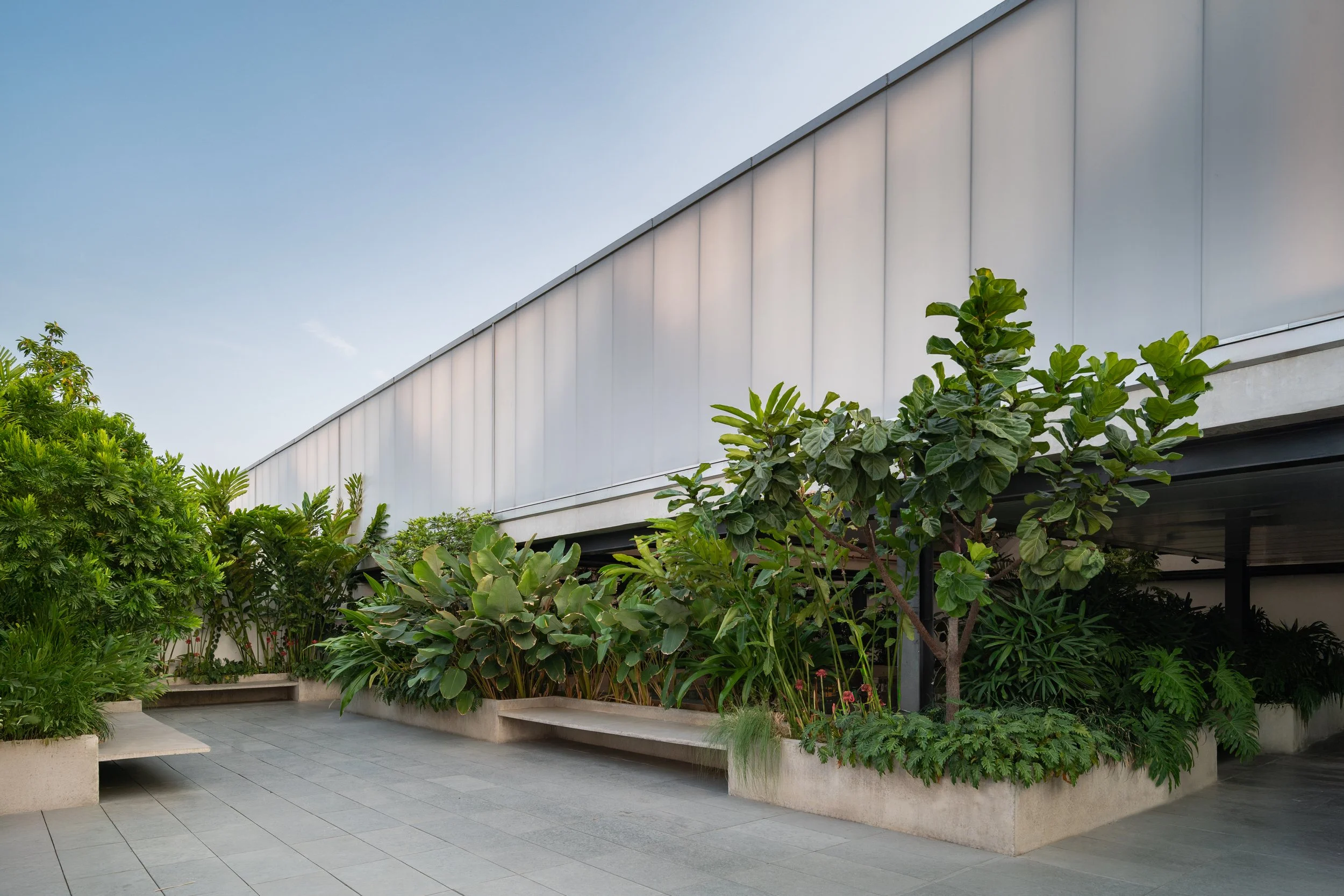
Floating above an existing office building in Hyderabad's Hi-Tech City, the rooftop intervention reimagines the structure as a recreational and wellness hub, accommodating a cafeteria, gym, gardens, and semi-outdoor gathering spaces. The design is subtle yet intentional, articulated through a lightweight steel framework and polycarbonate cladding, offering transparency, lightness, and contrast to the existing structure below.
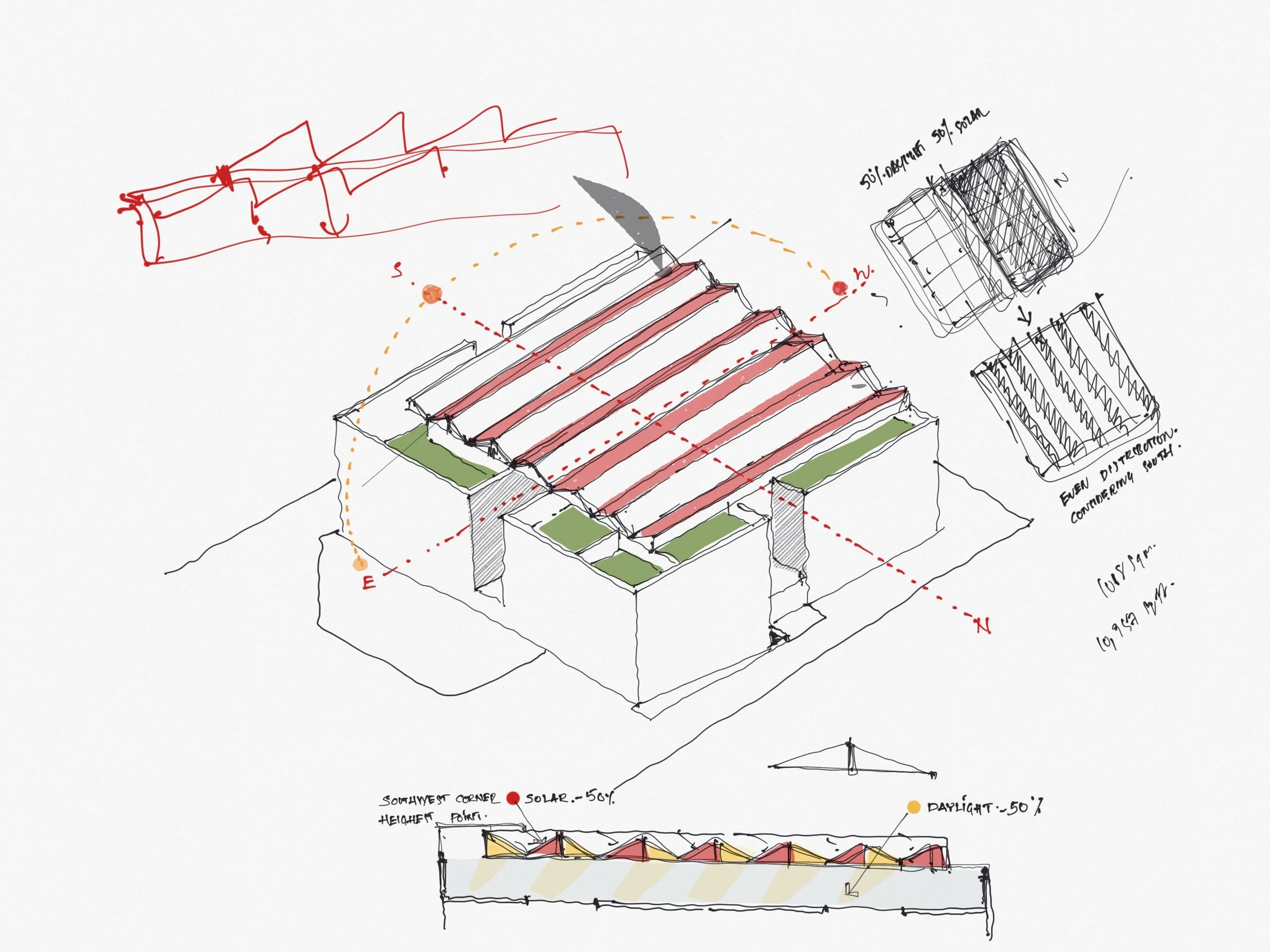
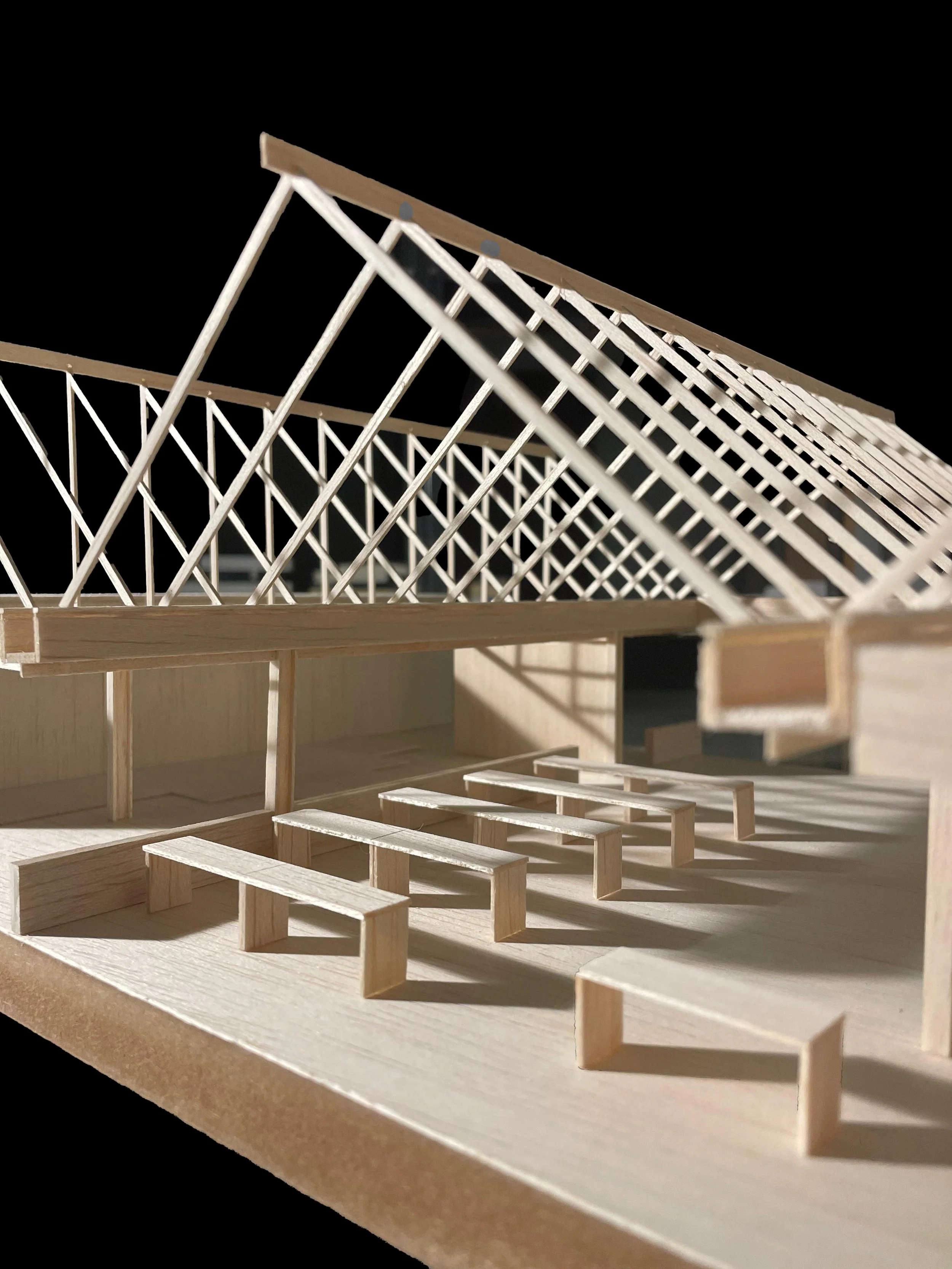
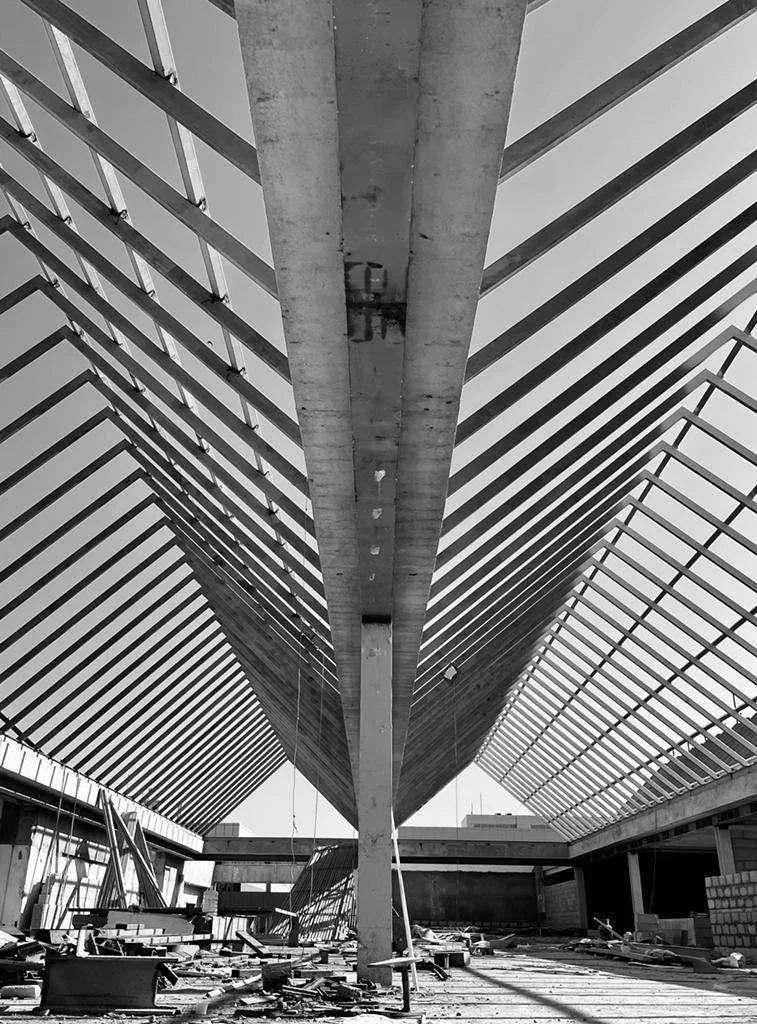
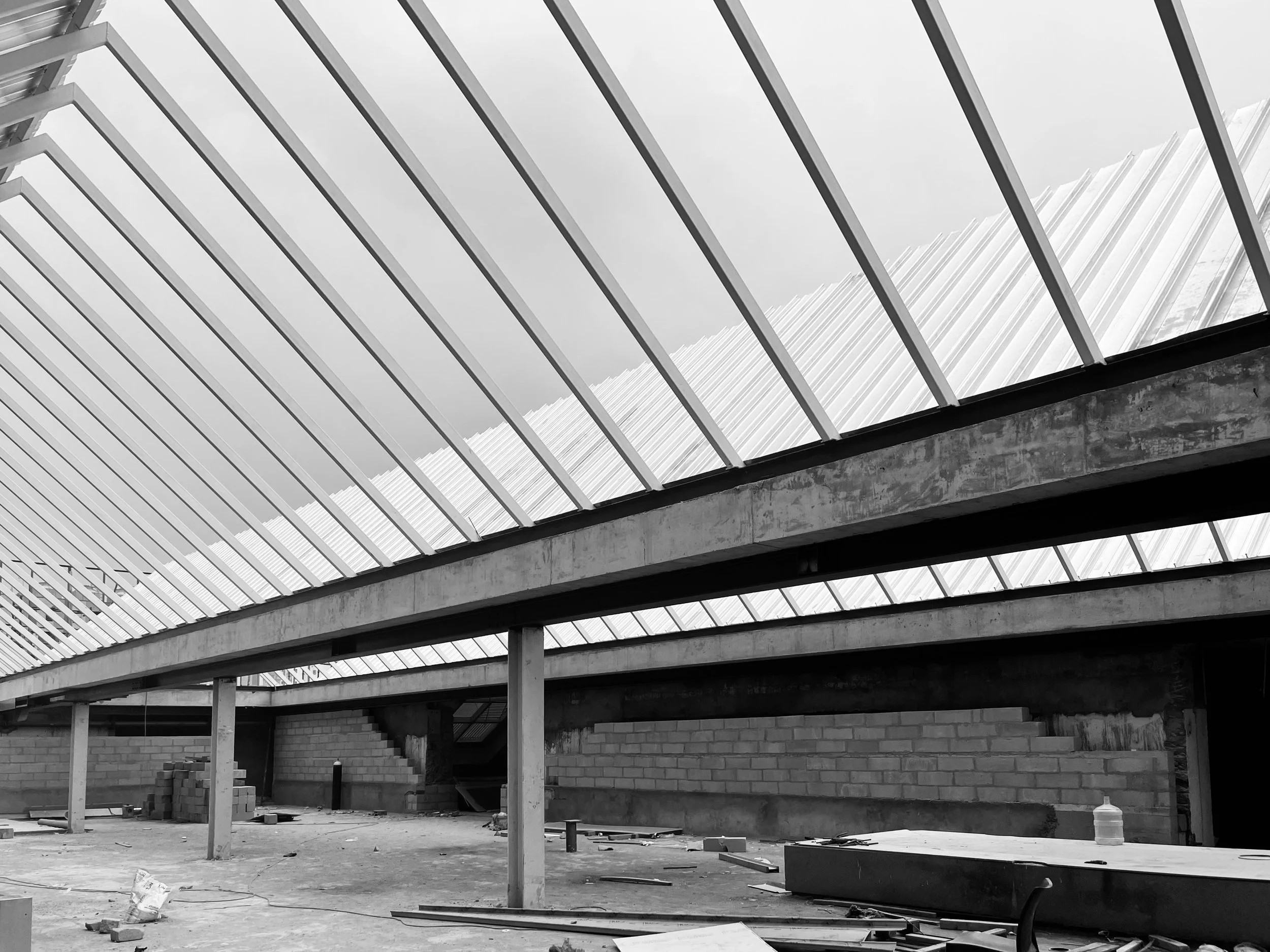
A single, continuous roof plane spans above the existing structure, strategically offset to create a peripheral zone for landscape, circulation, and services. This roof is organized into five parallel bays, spanning 48 meters in both directions, which spatially unify the program while ensuring clarity and structural efficiency.
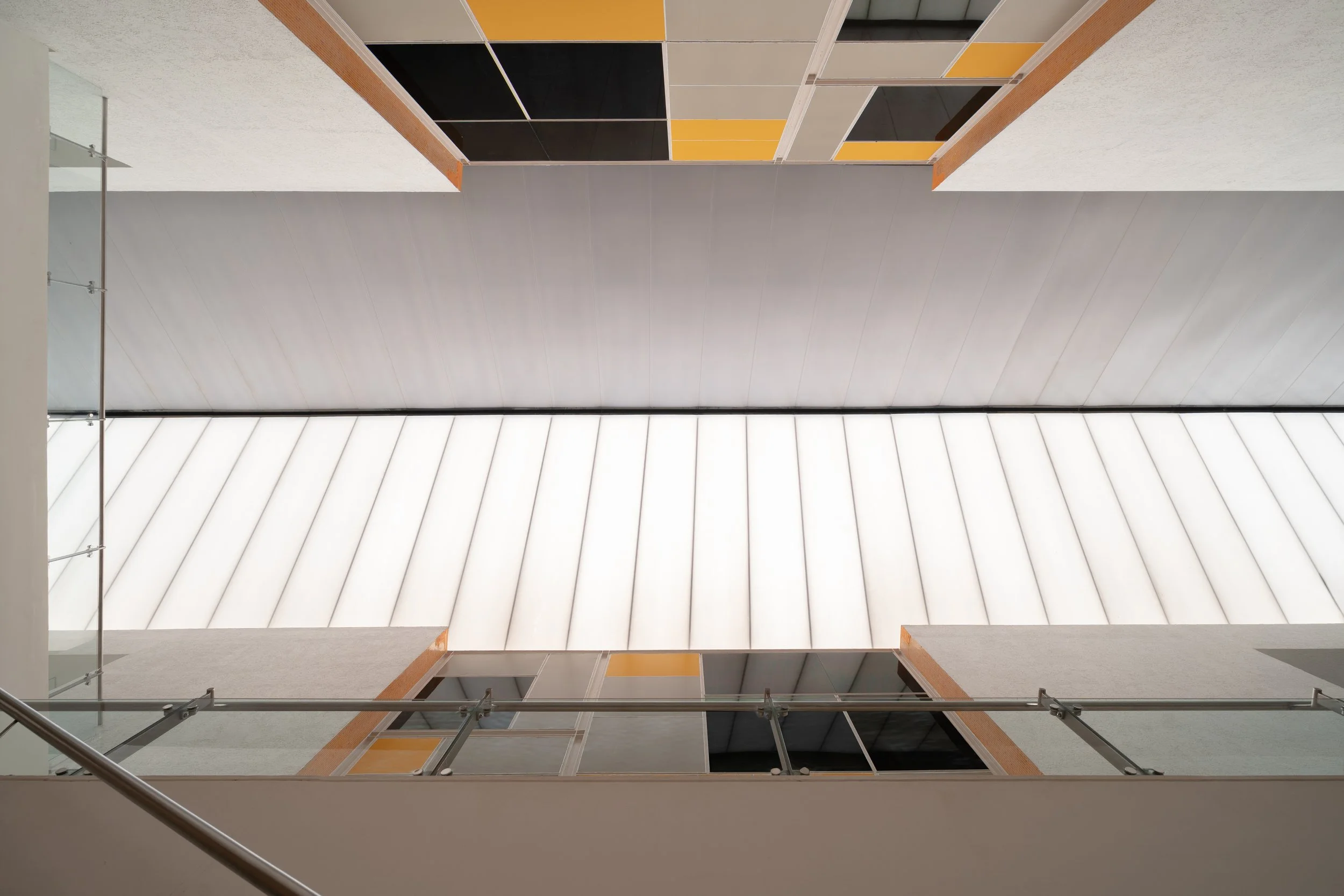
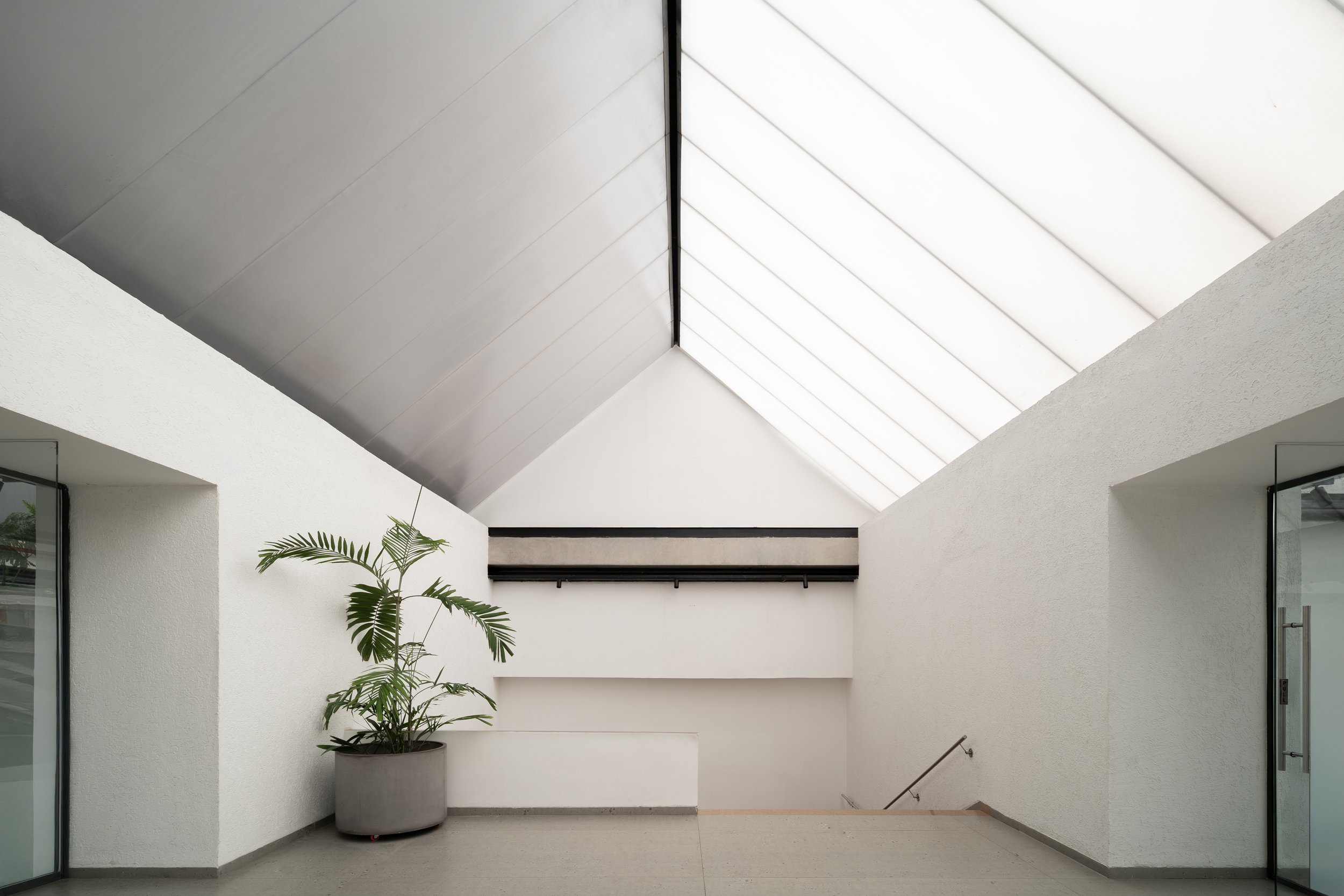
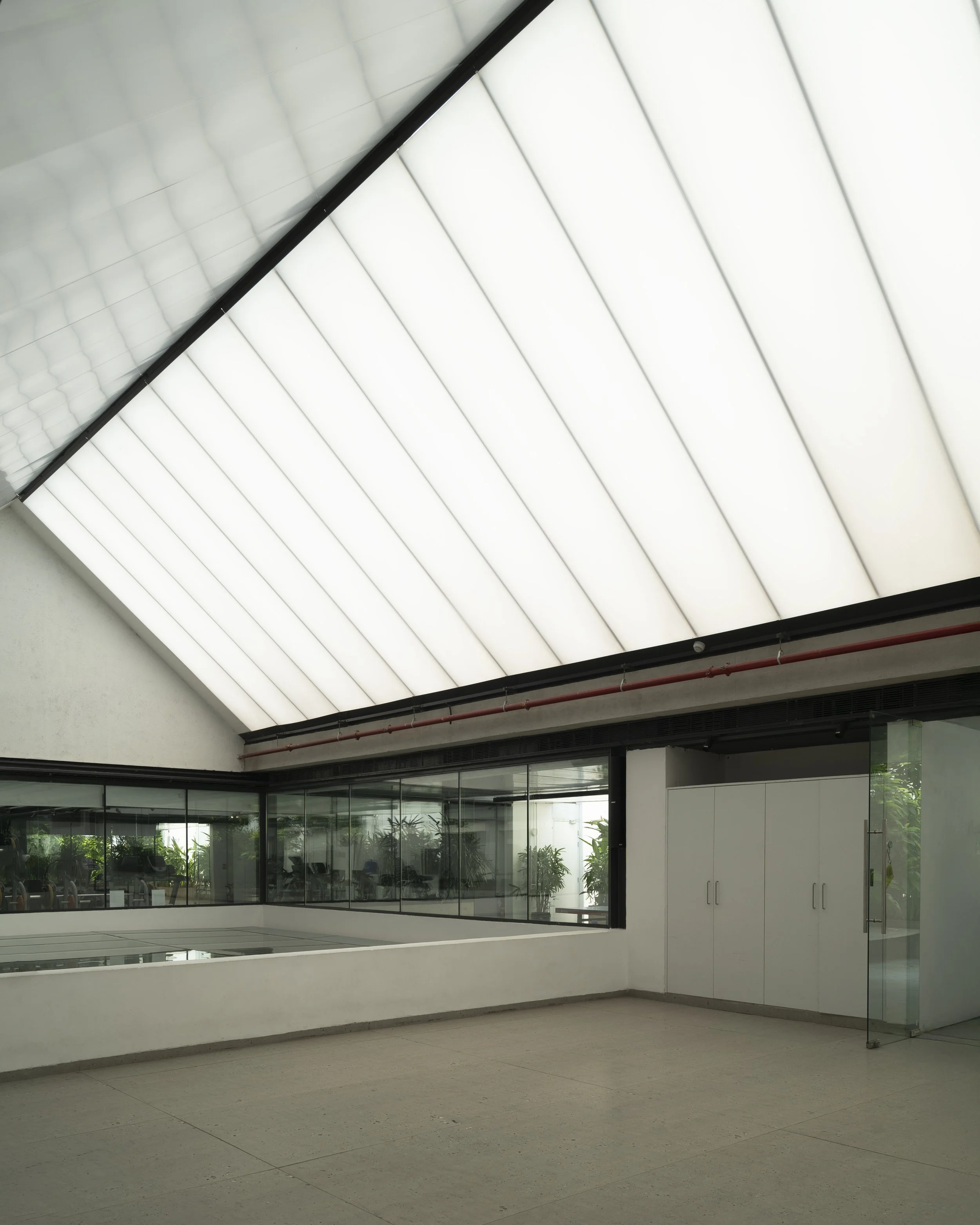
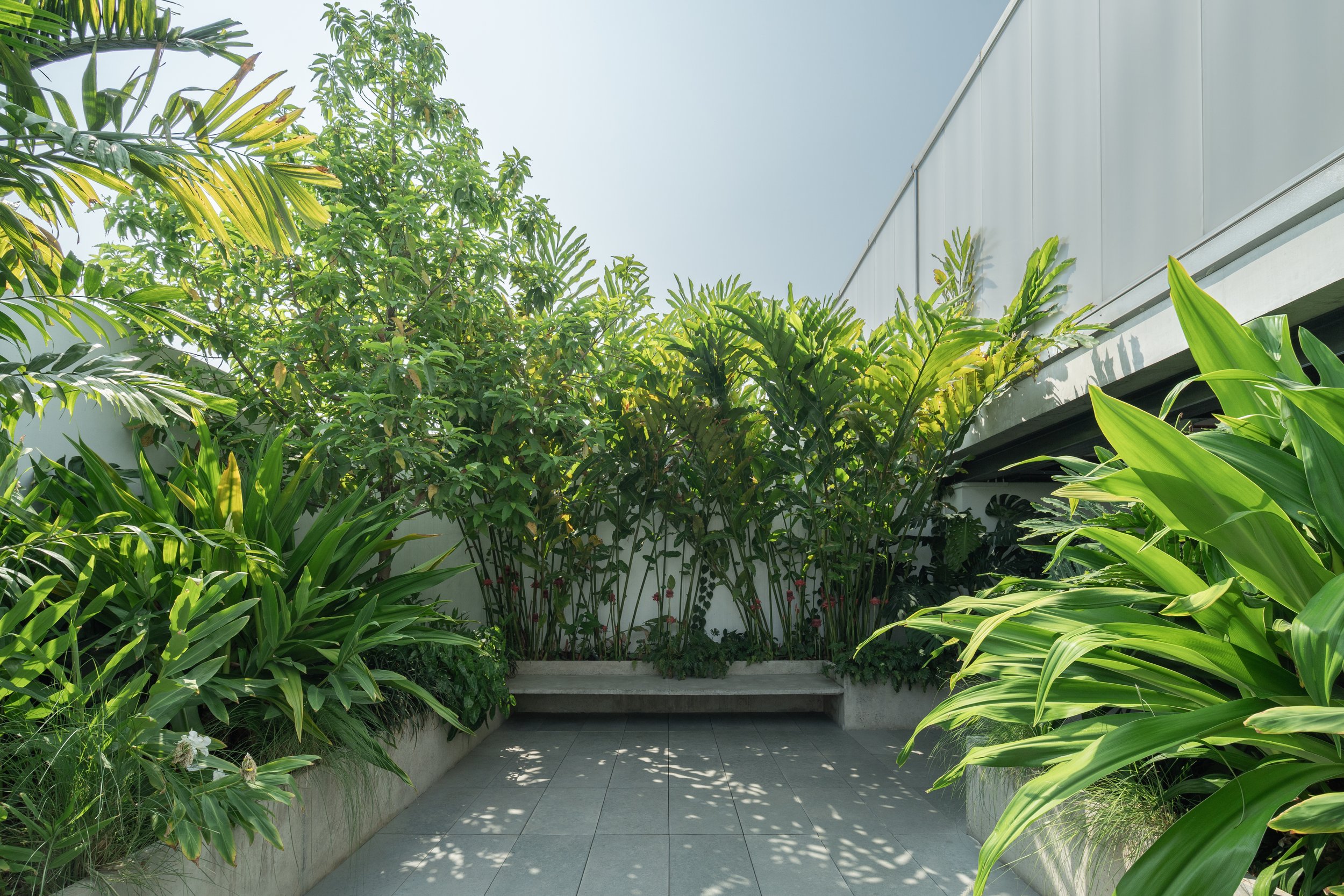
A sequence of five evenly spaced gable roofs, each set at 8-meter intervals, establishes a strong rhythmic order and aids in load distribution. The first two bays house the cafeteria, encouraging social interaction and informal gatherings. The central gable defines the primary circulation spine, drawing in natural light to the center of the building. The last two bays hold the fitness and play zones, terminating in a semi-open landscape court at the northeast corner, where people can sit and relax.
The triangular roof section maximizes northern daylighting and southern solar gain, while the material palette - polycarbonate panels for filtered diffuse light and aluminium roofing integrated with photovoltaic panels, creates a clear contrast with the existing structure. Integrated planters soften the built edge, while concealed lighting transforms the rooftop into a light box against the city’s skyline.
Program: Addition and Renovation
Location: Hyderabad, Telangana, India
Surface: 40000 square feet
Project Team: Hari Krishna, Akash, Vanditha, Gayatri, Vishishta, Abhijeet.
Collaborators: Sridhar-Simon Peter Engineer (structure), Jem Hanbury Studio (Landscape),Sai-Tungsten Studio (illumination) We3Infra (PMC)



-
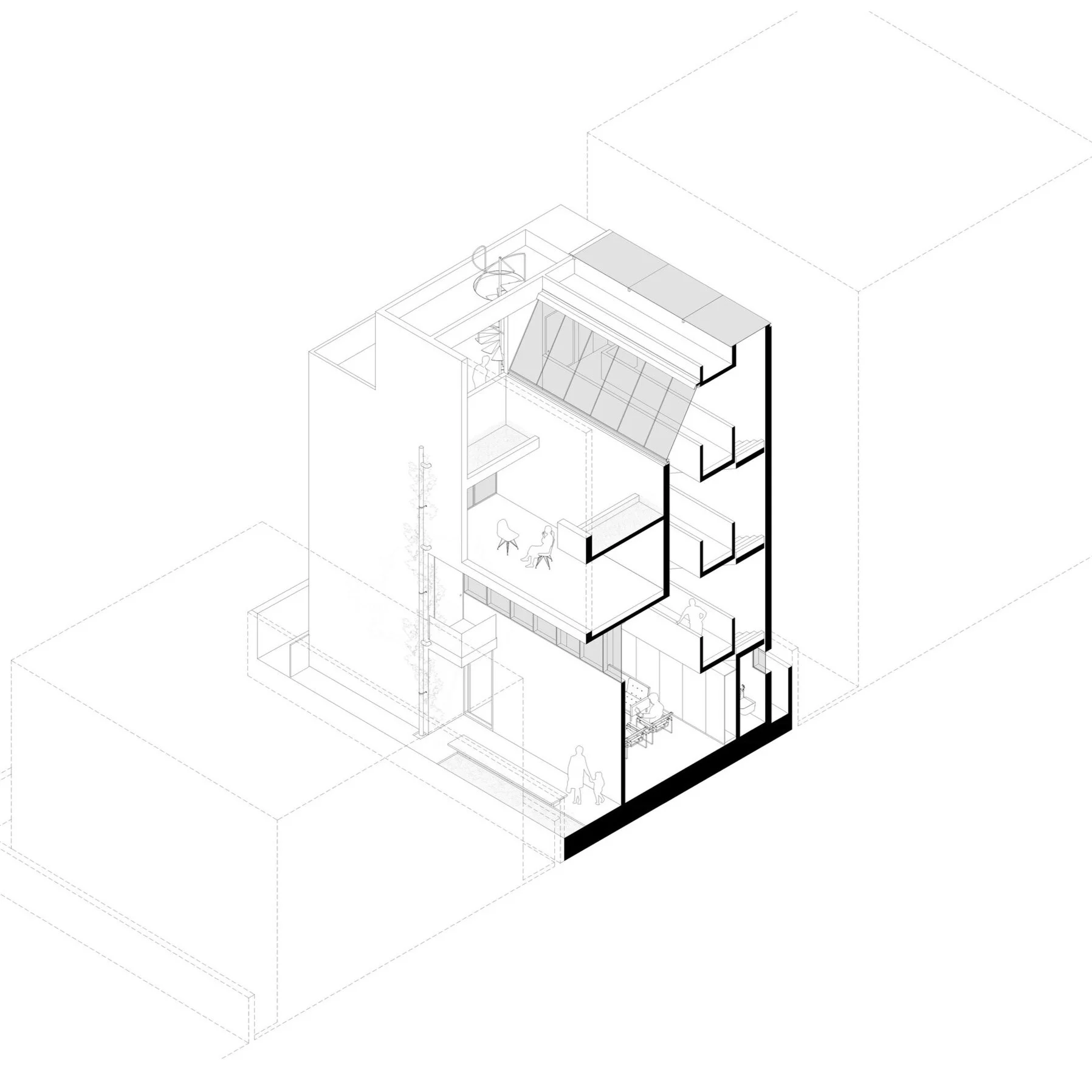
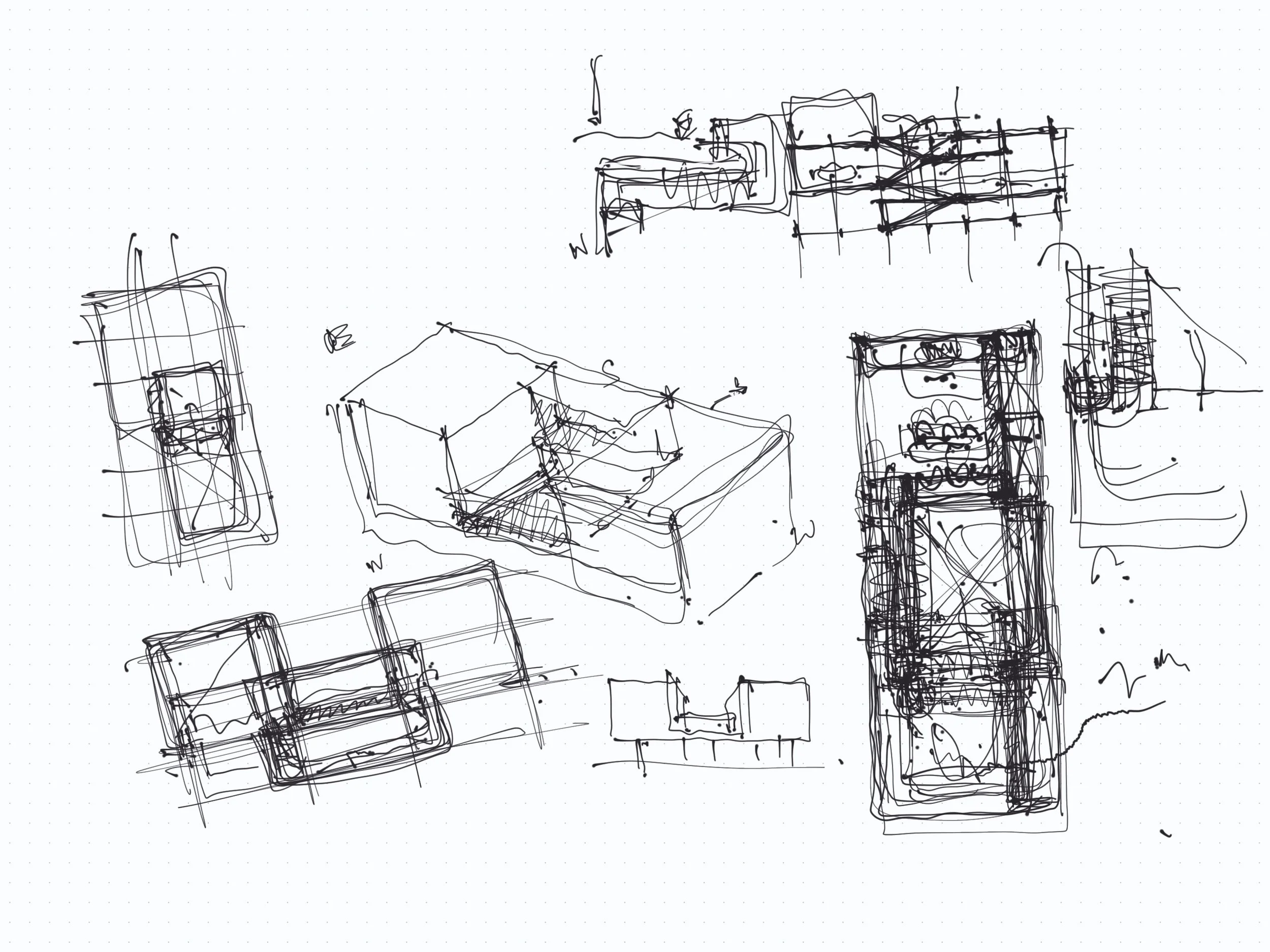
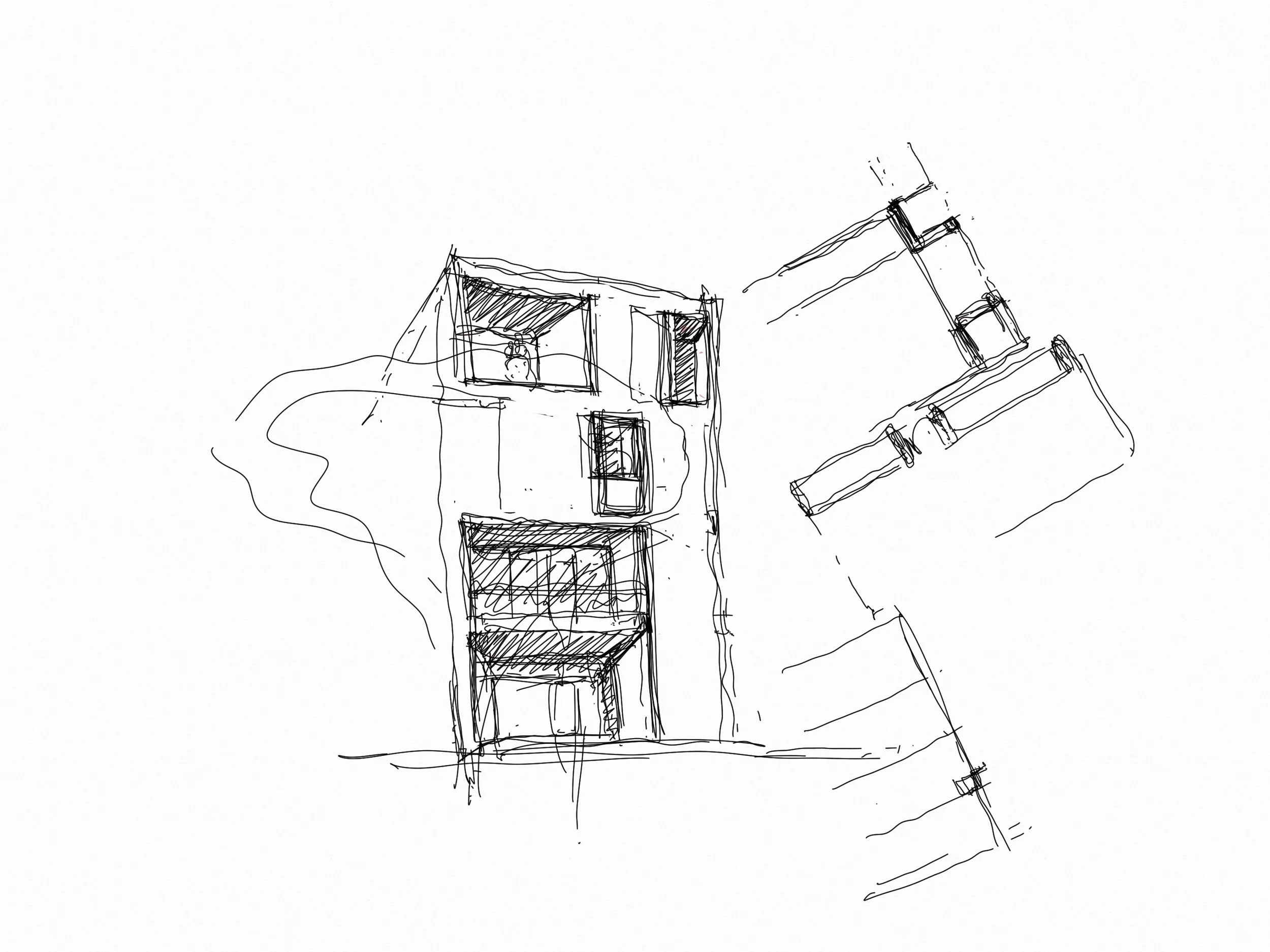
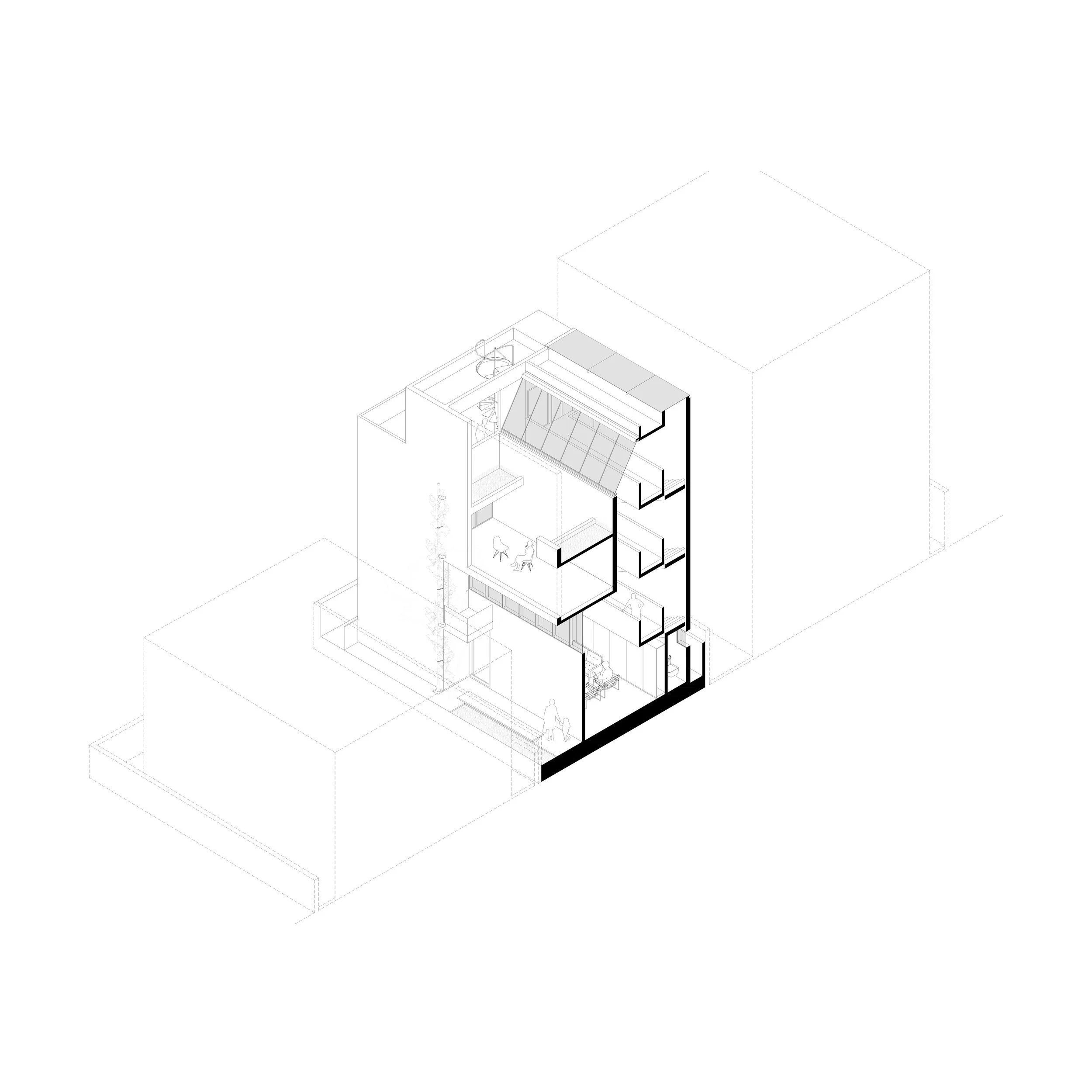
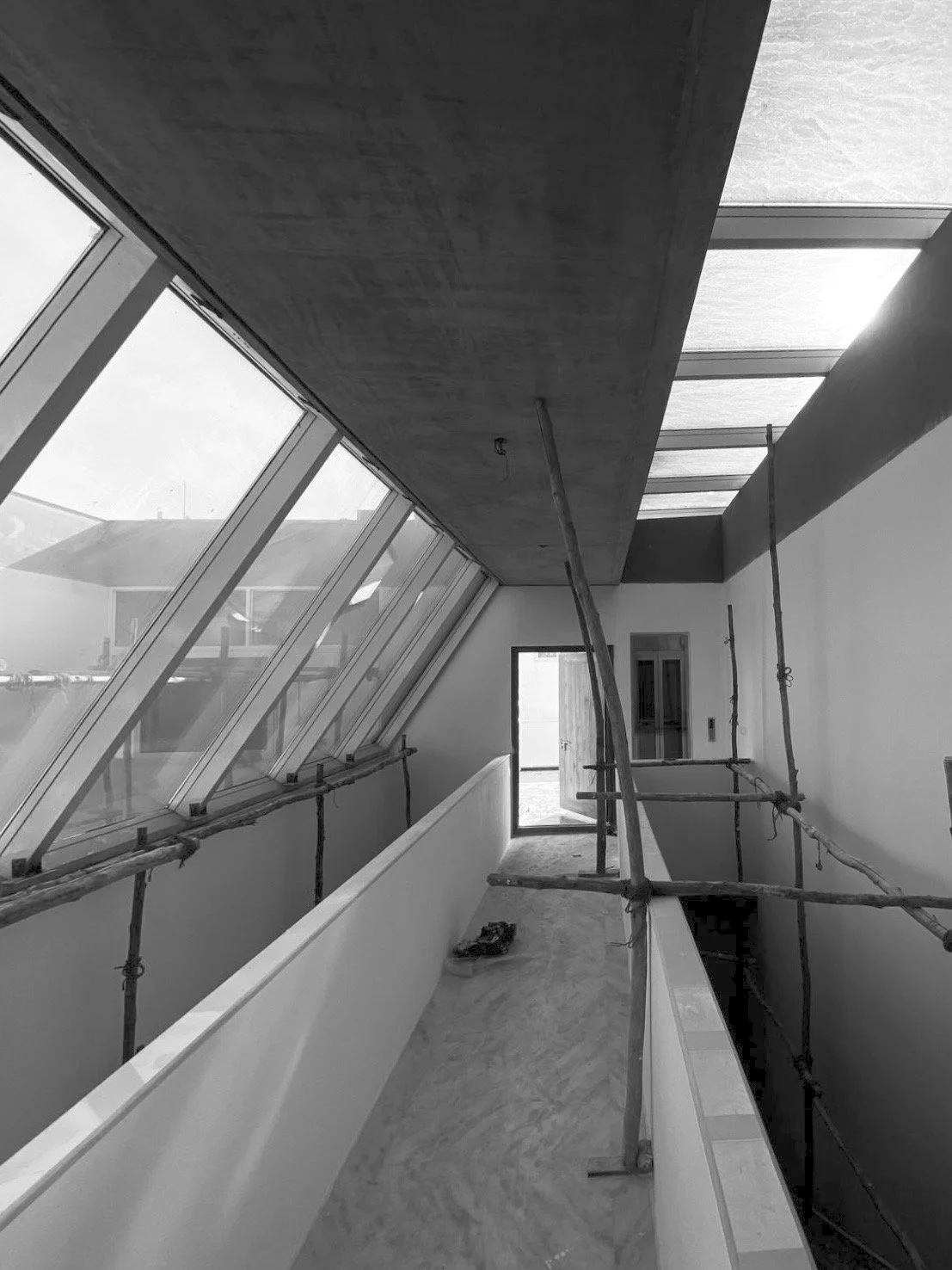
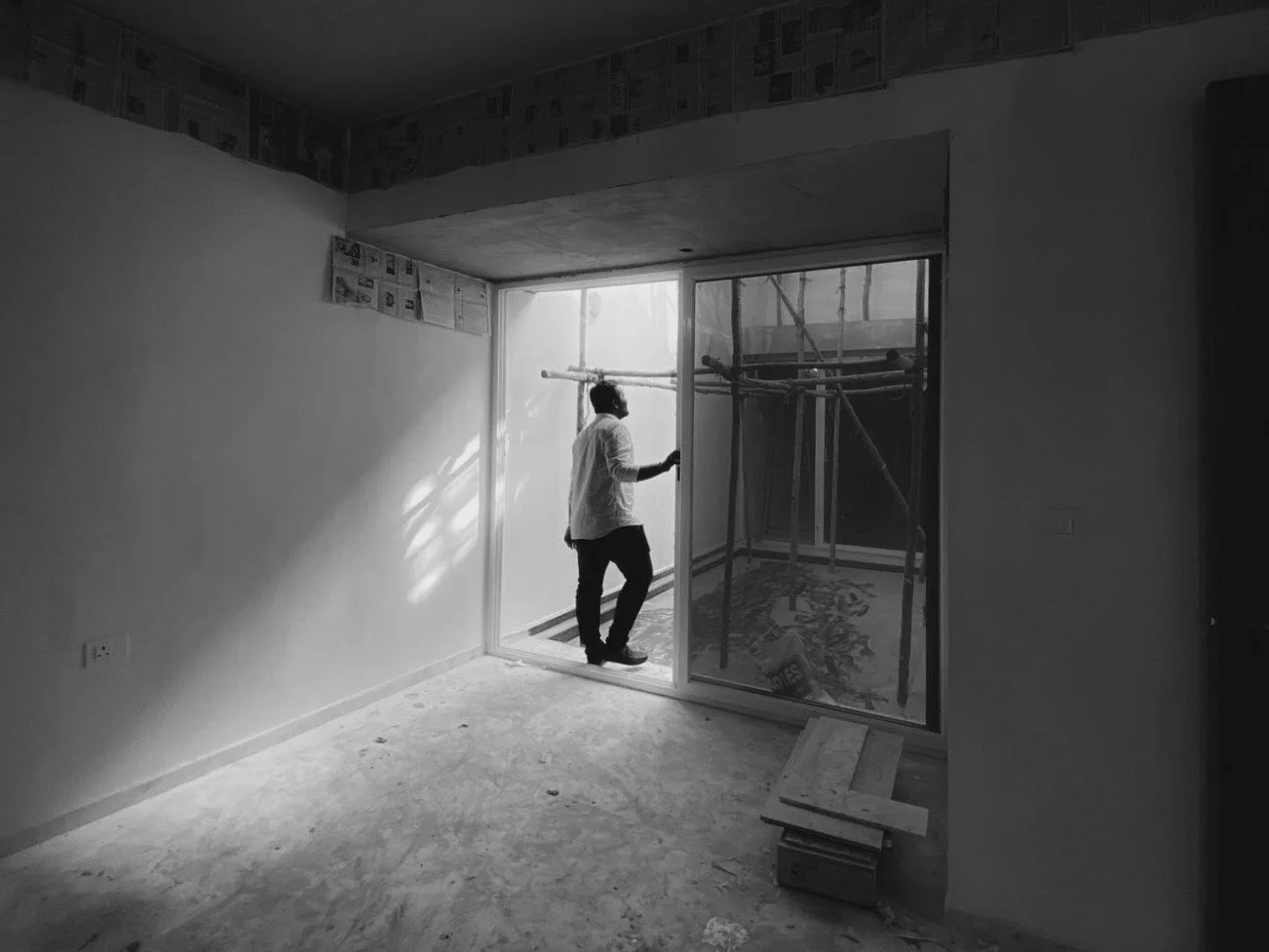
The plot is located in the rapidly expanding residential area in Hyderabad and placed into an urban fabric of dwellings between party walls. The available space is narrow and elongated, only 8m wide; and accessible from west street. The challenge was to create an entirely open structure within a narrow house enclosed by tall walls. The continuity of the open levels is maintained throughout the entire house. Natural light floods every room, and cool and pleasant breezes flow through the air, creating favorable conditions for family members to easily communicate, connect, and bond with each other.
Program: Residence
Location: Nagole, Telangana, India
Surface: 600 square meters
Project Team: Hari Krishna, Vanditha Sangewar.
Collaborators: Sridhar-Simon Peter Engineer (structure), Sai-Tungsten Studio (Illumination)


-
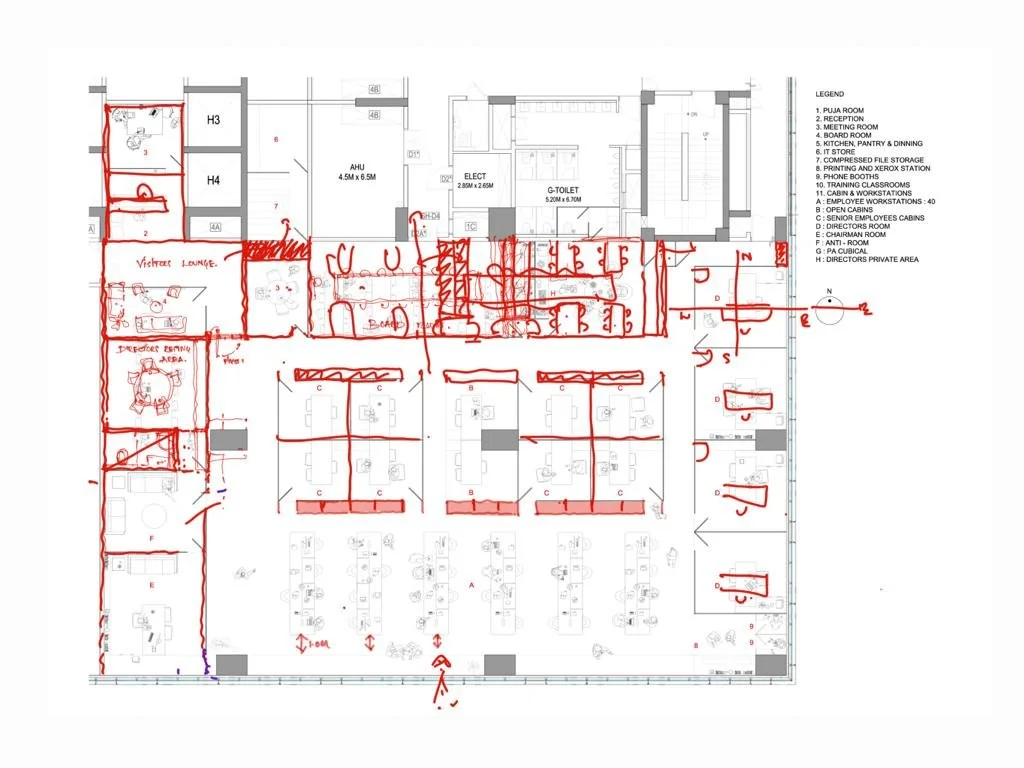
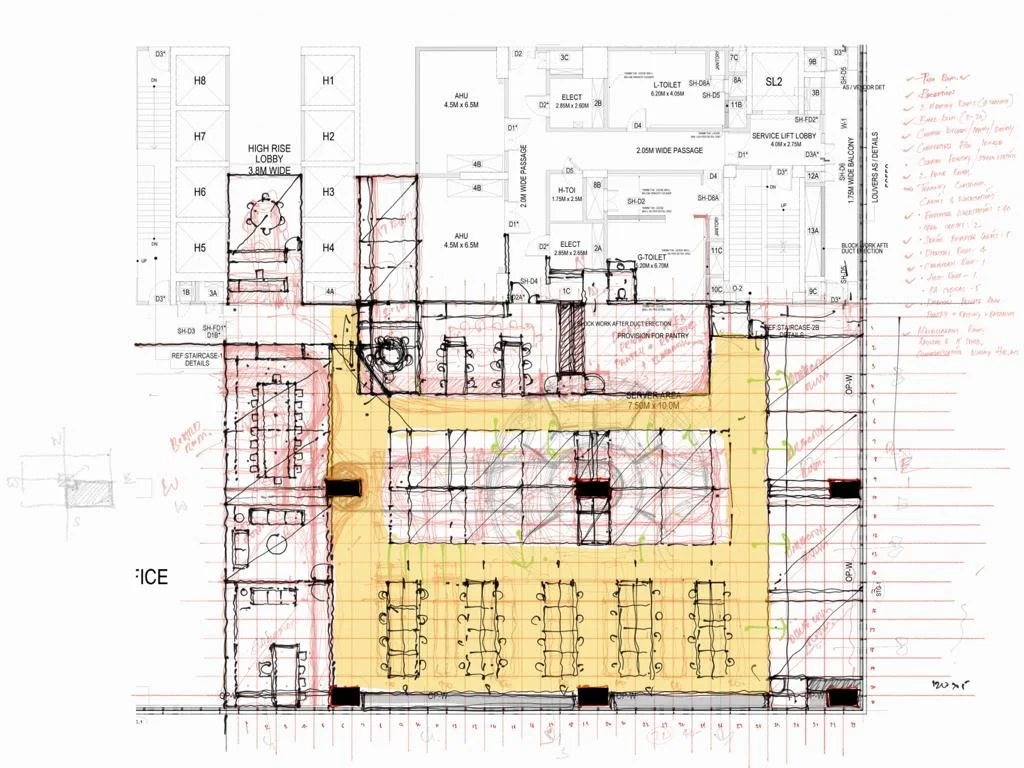
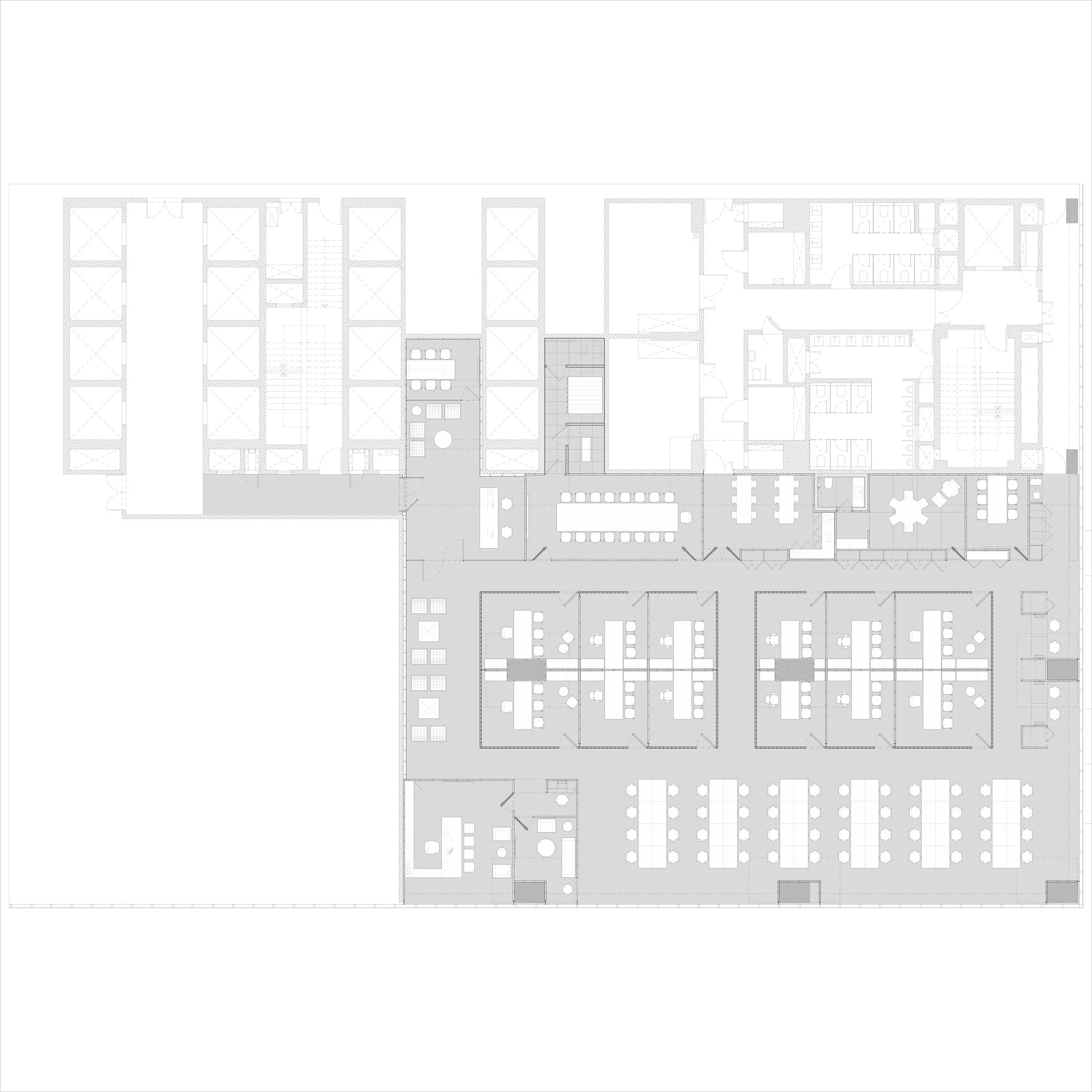
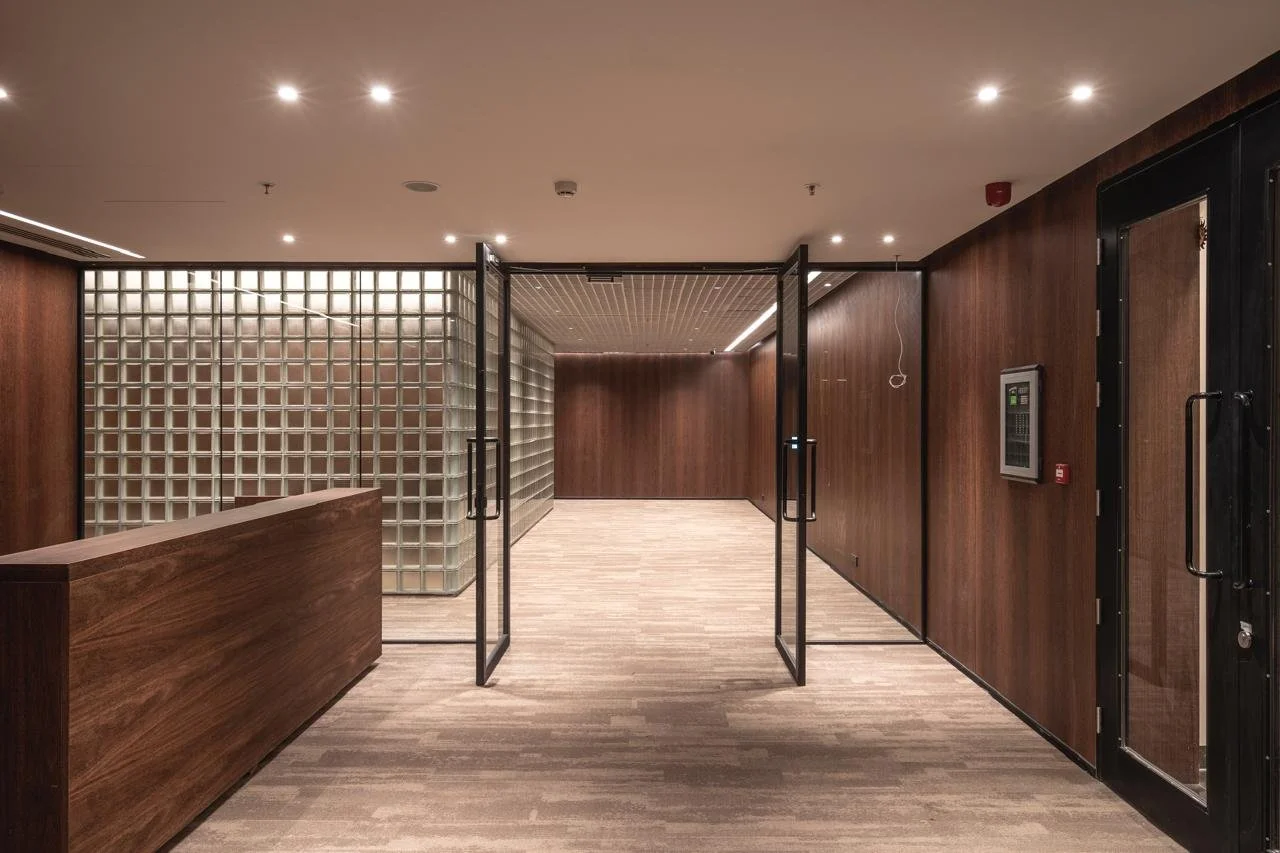
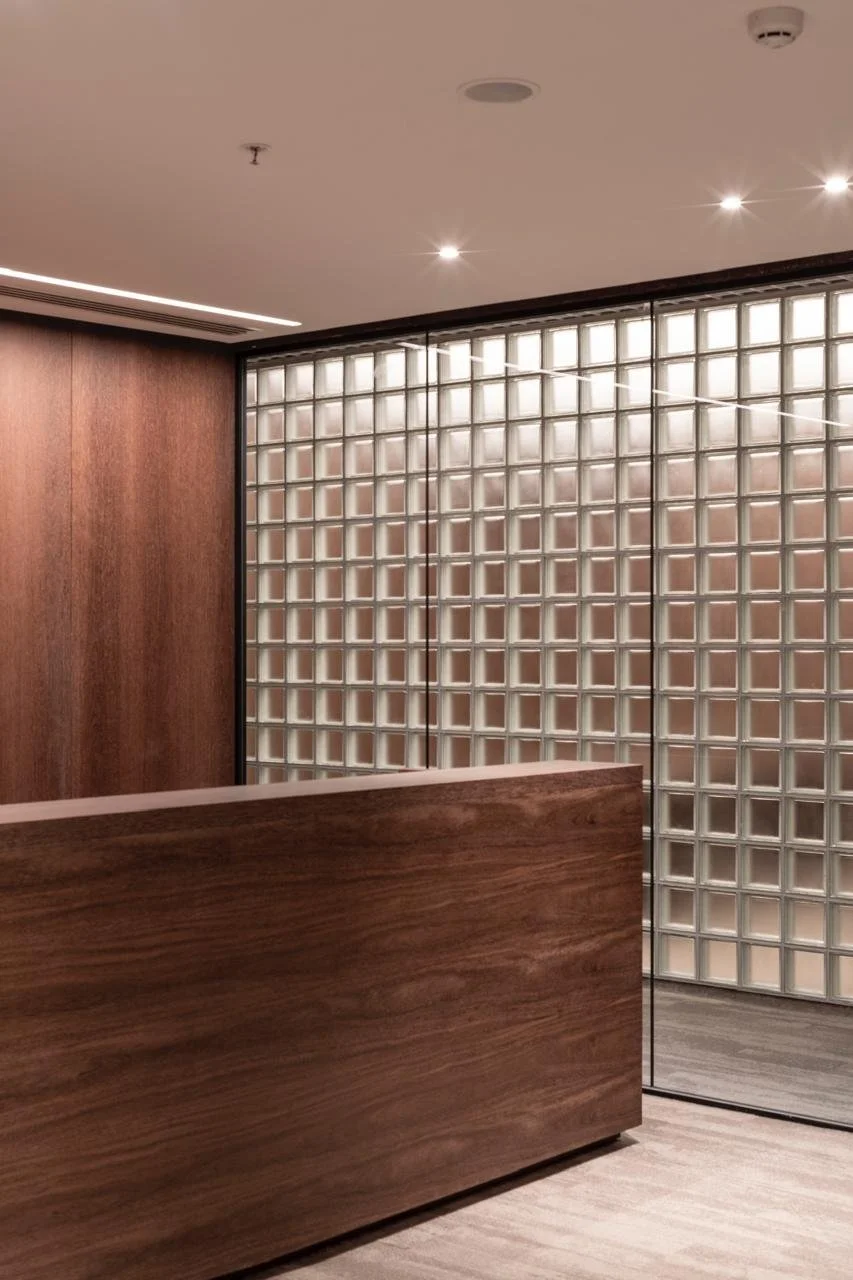
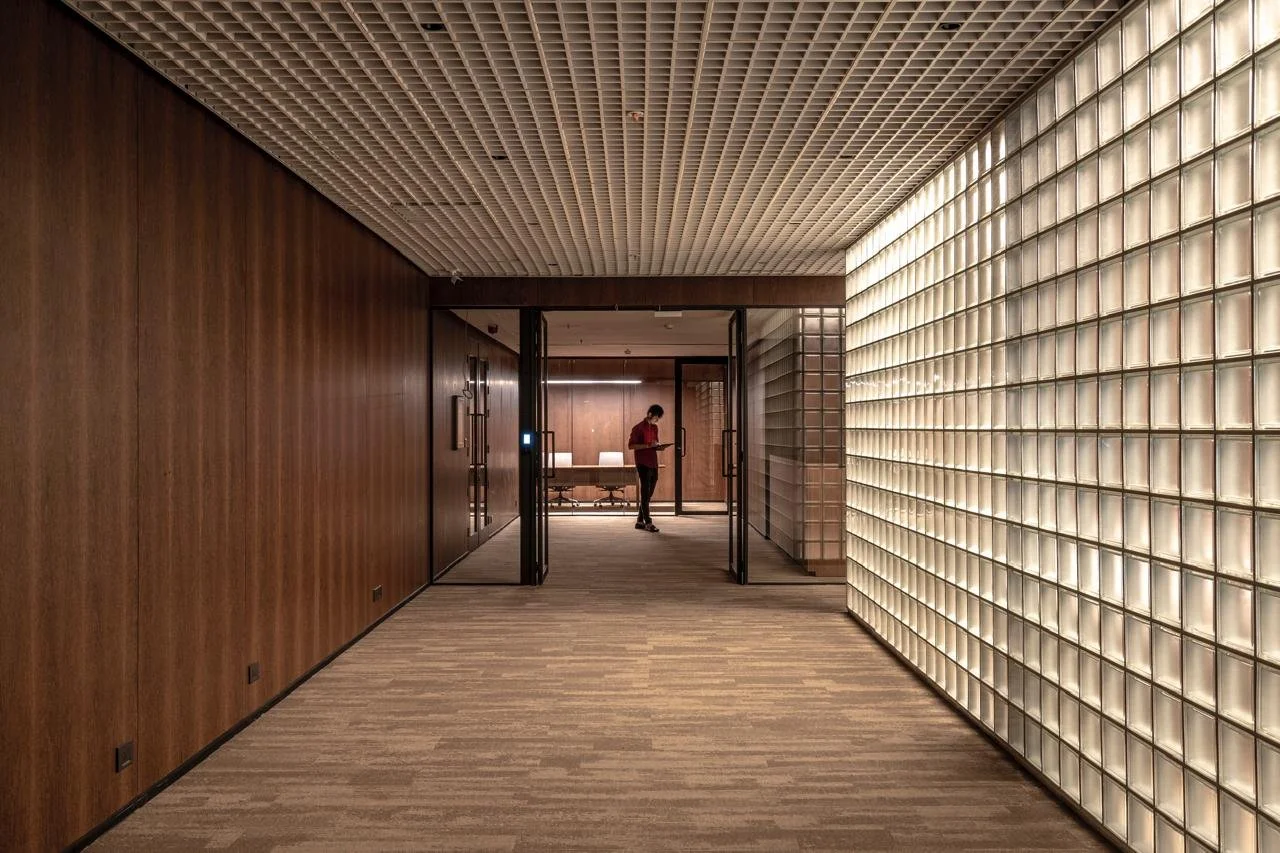
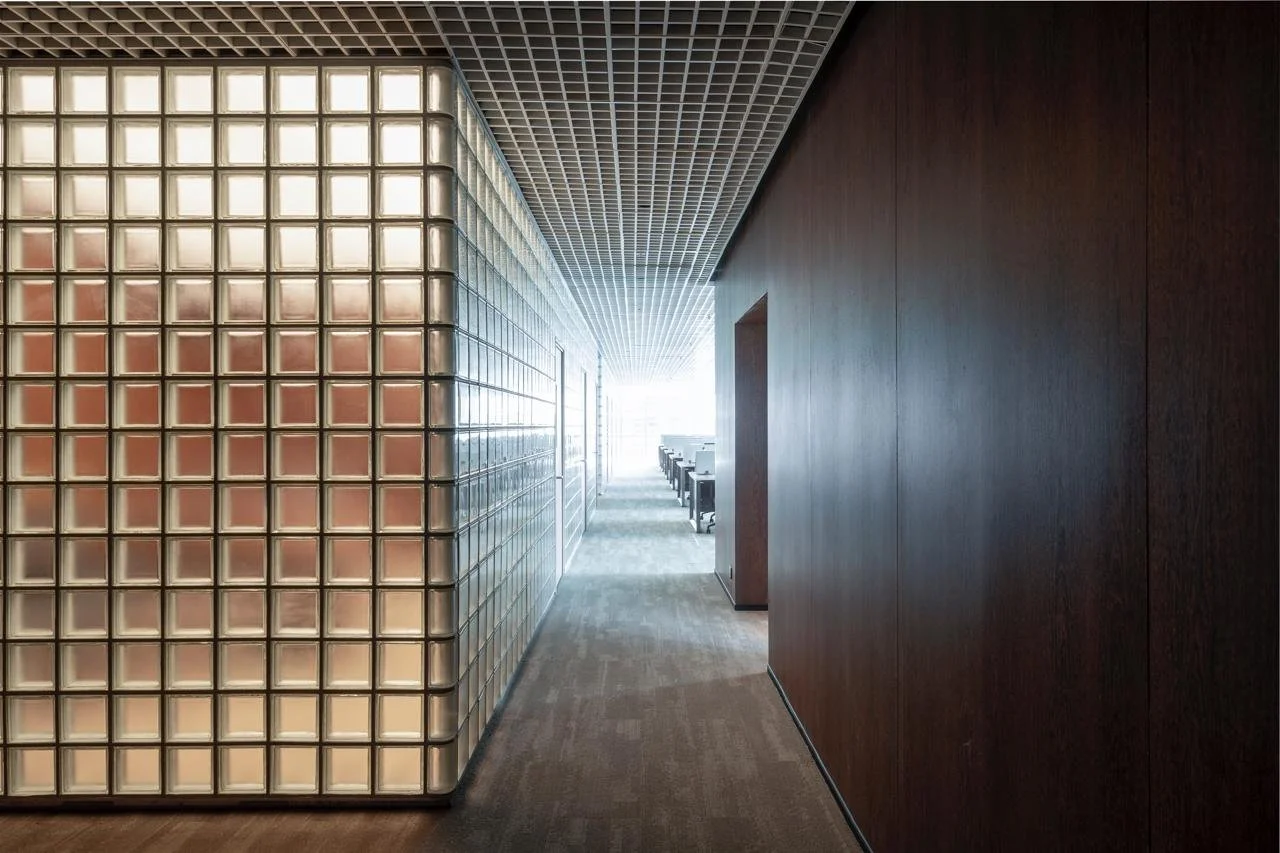
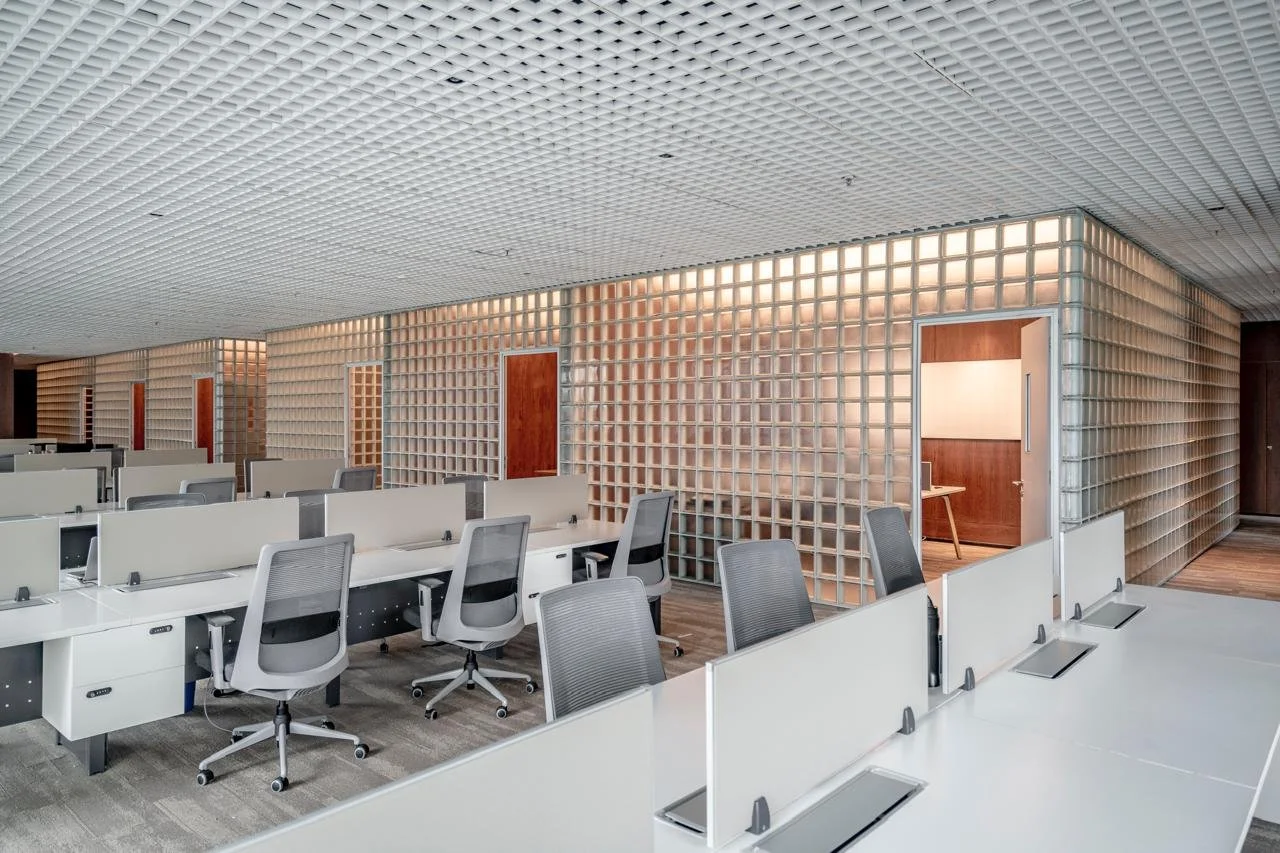
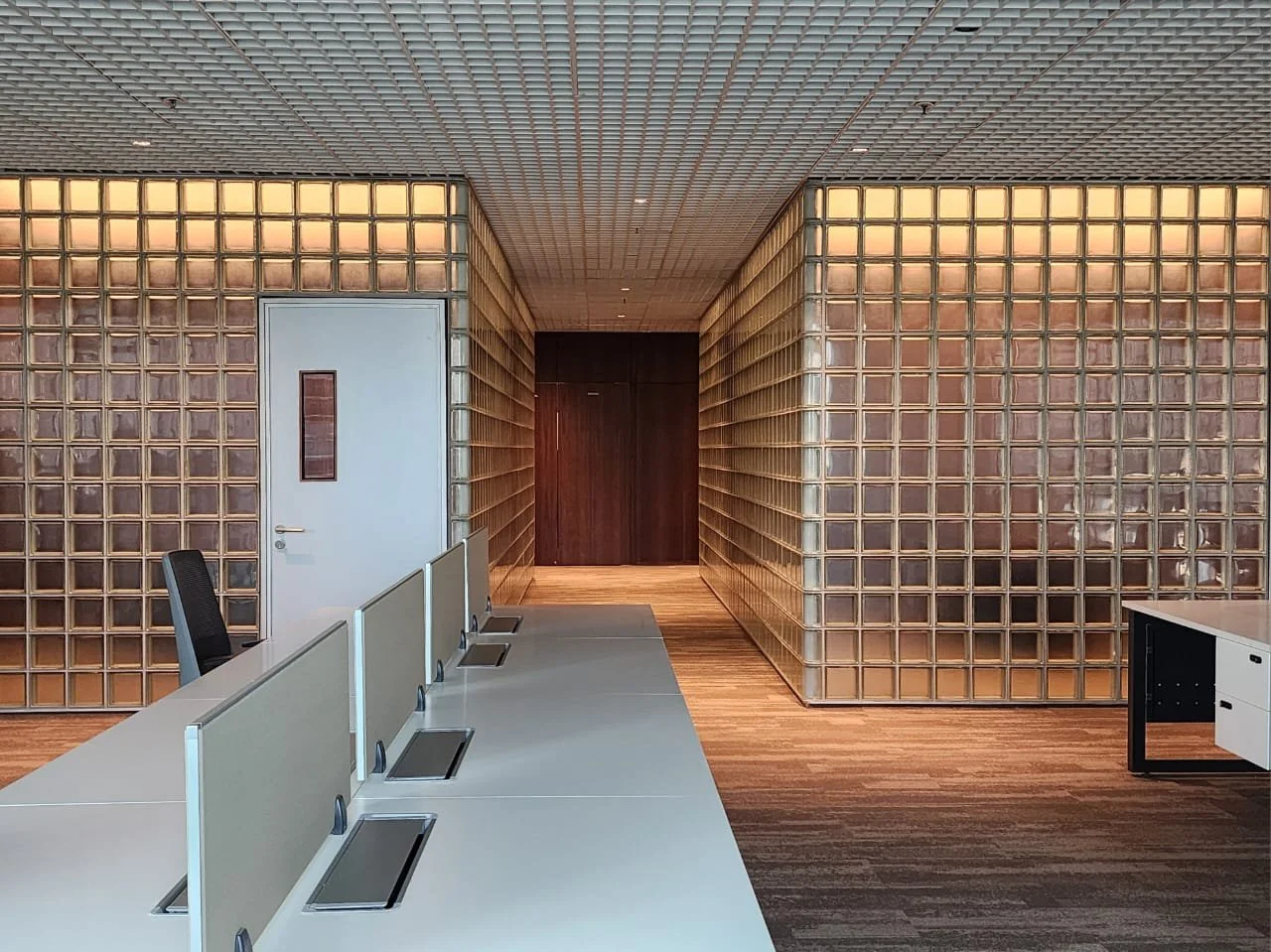
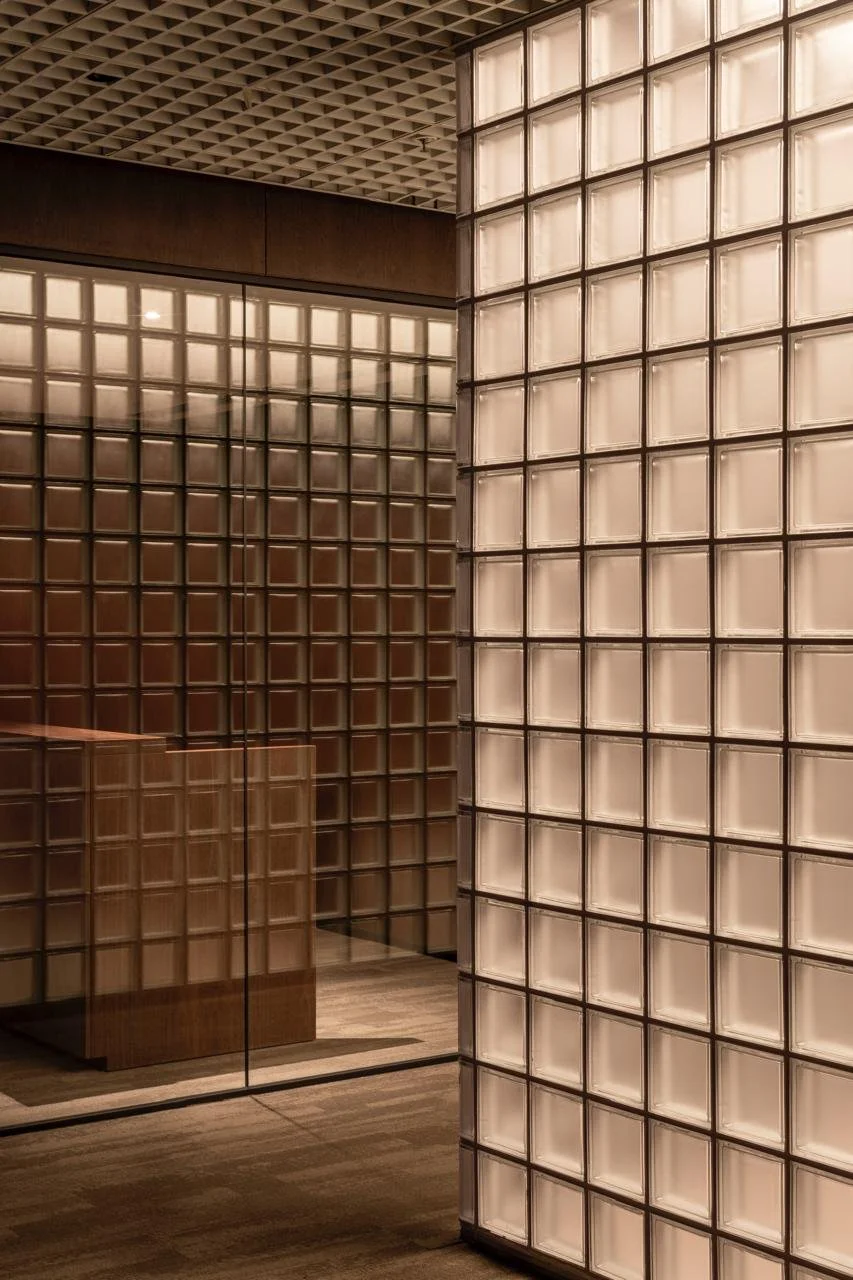
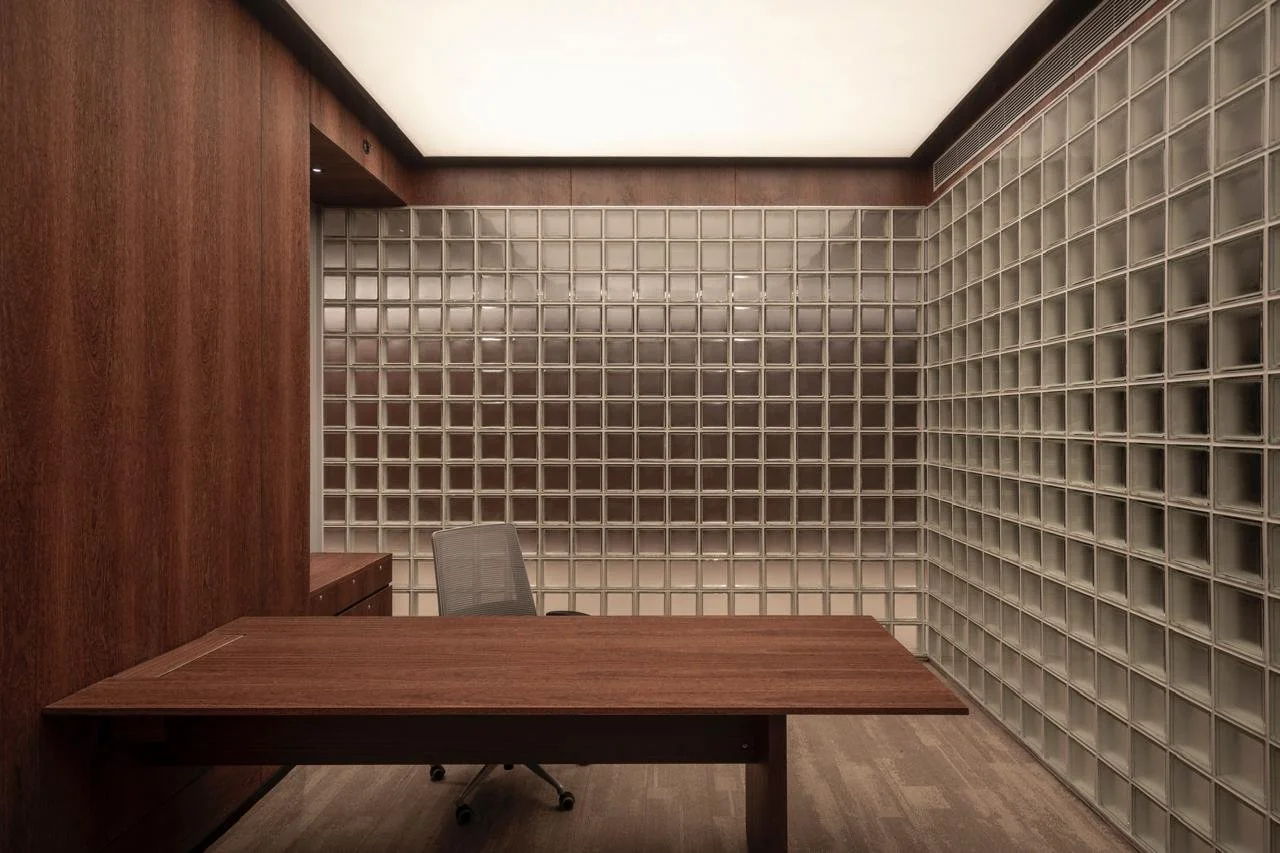
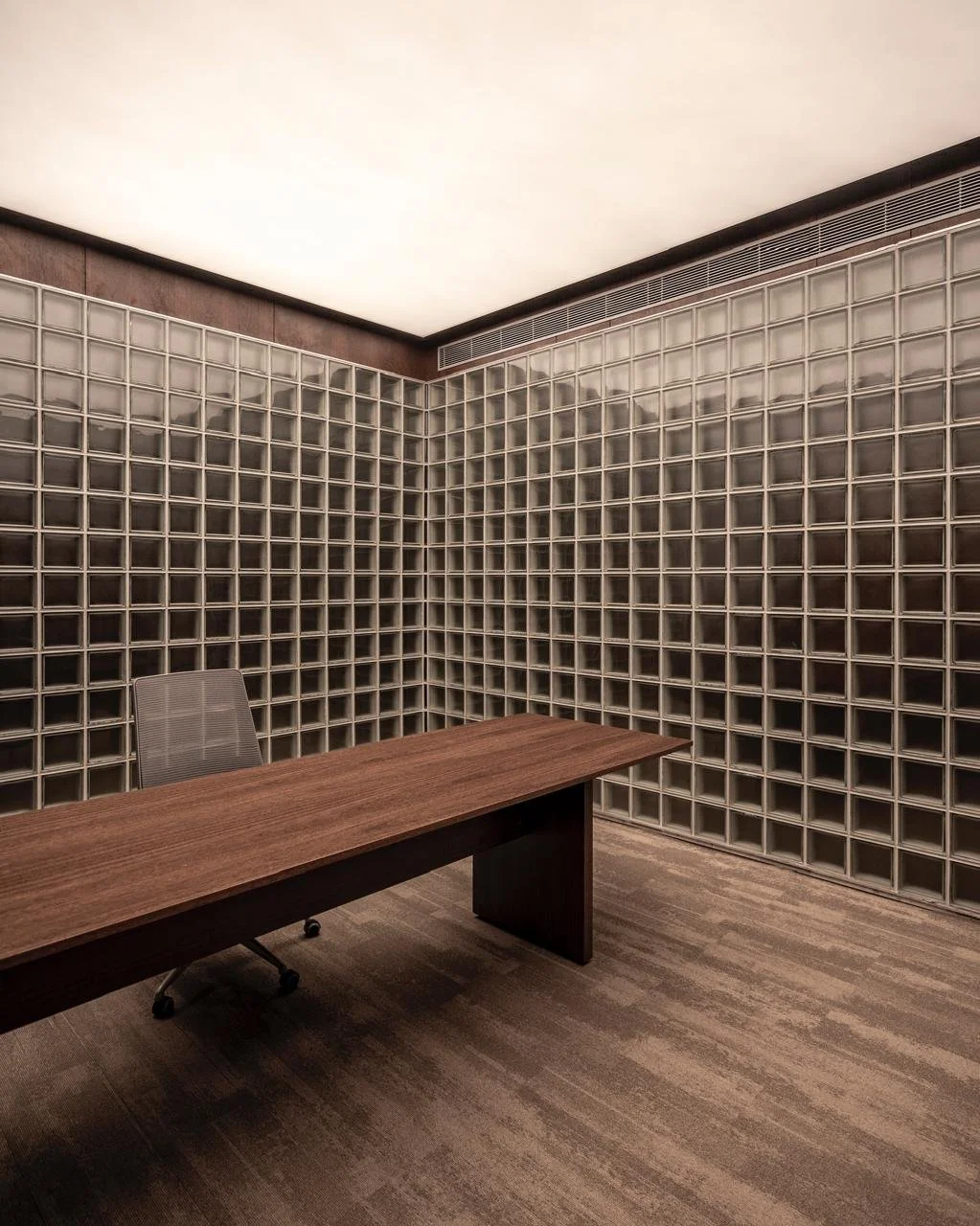
The office is entered through a narrow, dim corridor leading into a reception finished in dark veneer, recalling the feel of a classic old office. From here, the space opens up to reveal two glowing glass brick volumes at the center—private cabins that act like islands, separating spaces while still letting light pass through.
Workstations are placed along the glass-lined edge of the floor, where natural light floods in, creating a bright and inspiring work environment. In total, the layout includes over sixty workstations, twelve private cabins, two meeting rooms, a boardroom, MD chamber and restful breakout zones.
Common areas are arranged around the perimeter, allowing light to reach every corner. Above, a clean and hidden mechanical system, tucked behind a open cell ceiling, adds a sense of modern order. The overall design balances privacy and openness, structure and light, creating a workspace that feels both calm and dynamic.
Program: Office Interiors
Location: Hitech city, Telangana, India
Surface: 1111 square meters
Project Team: Hari Krishna, Akash Chavan.
Collaborators: Ganesh-Virinchi Projects (PMC), Sai-Tungsten Studio (illumination)
Photography: Ujjwal Sannala



-
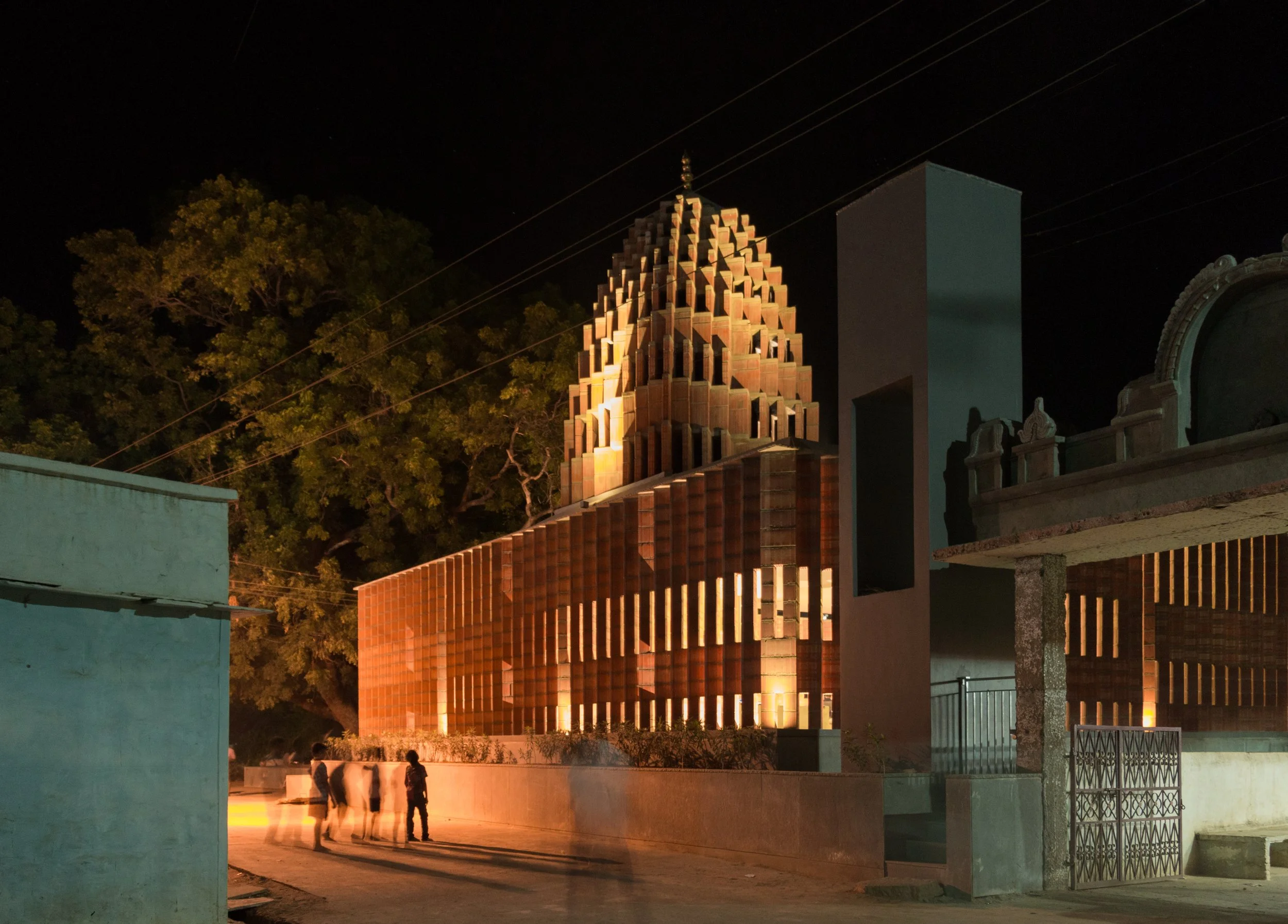
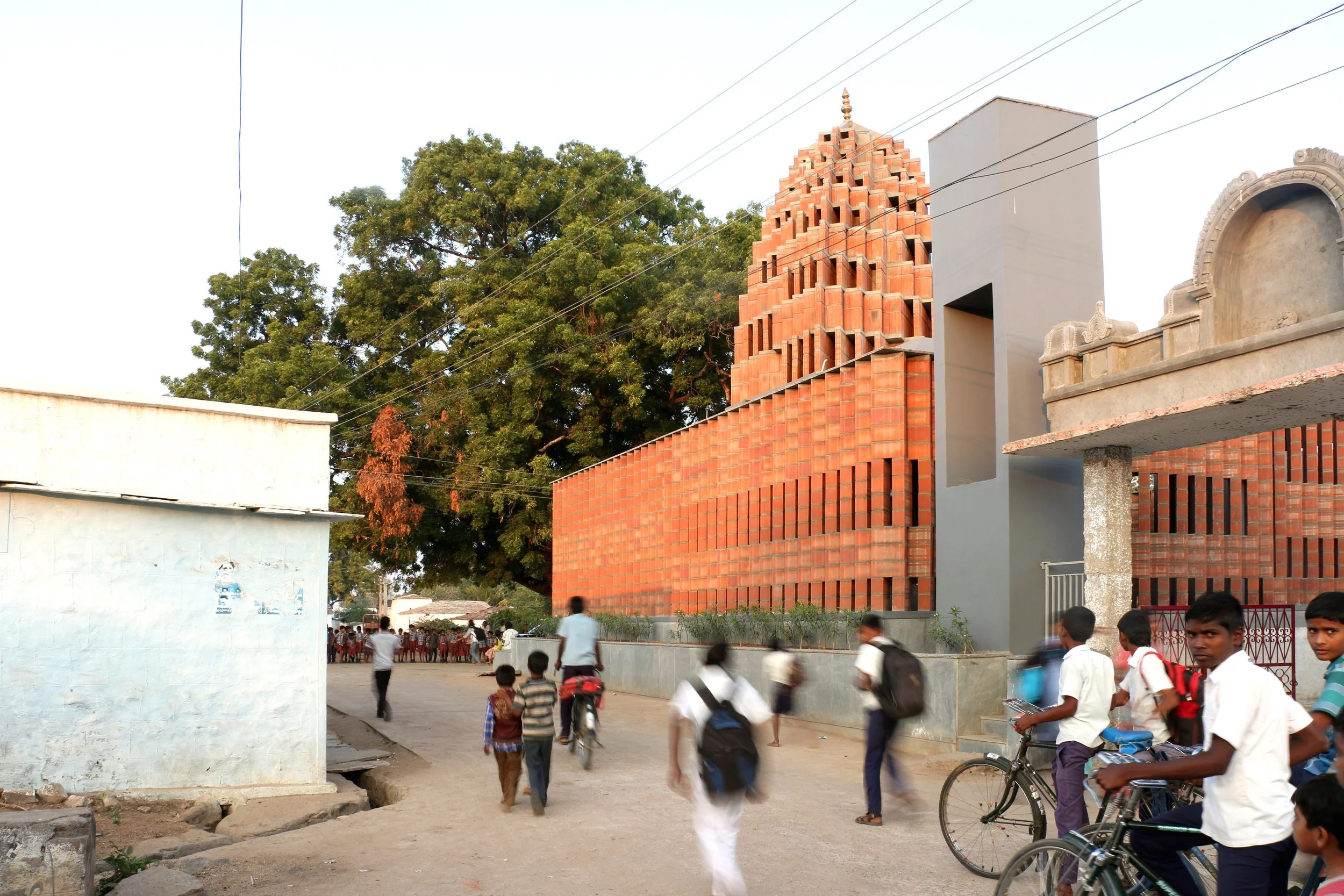
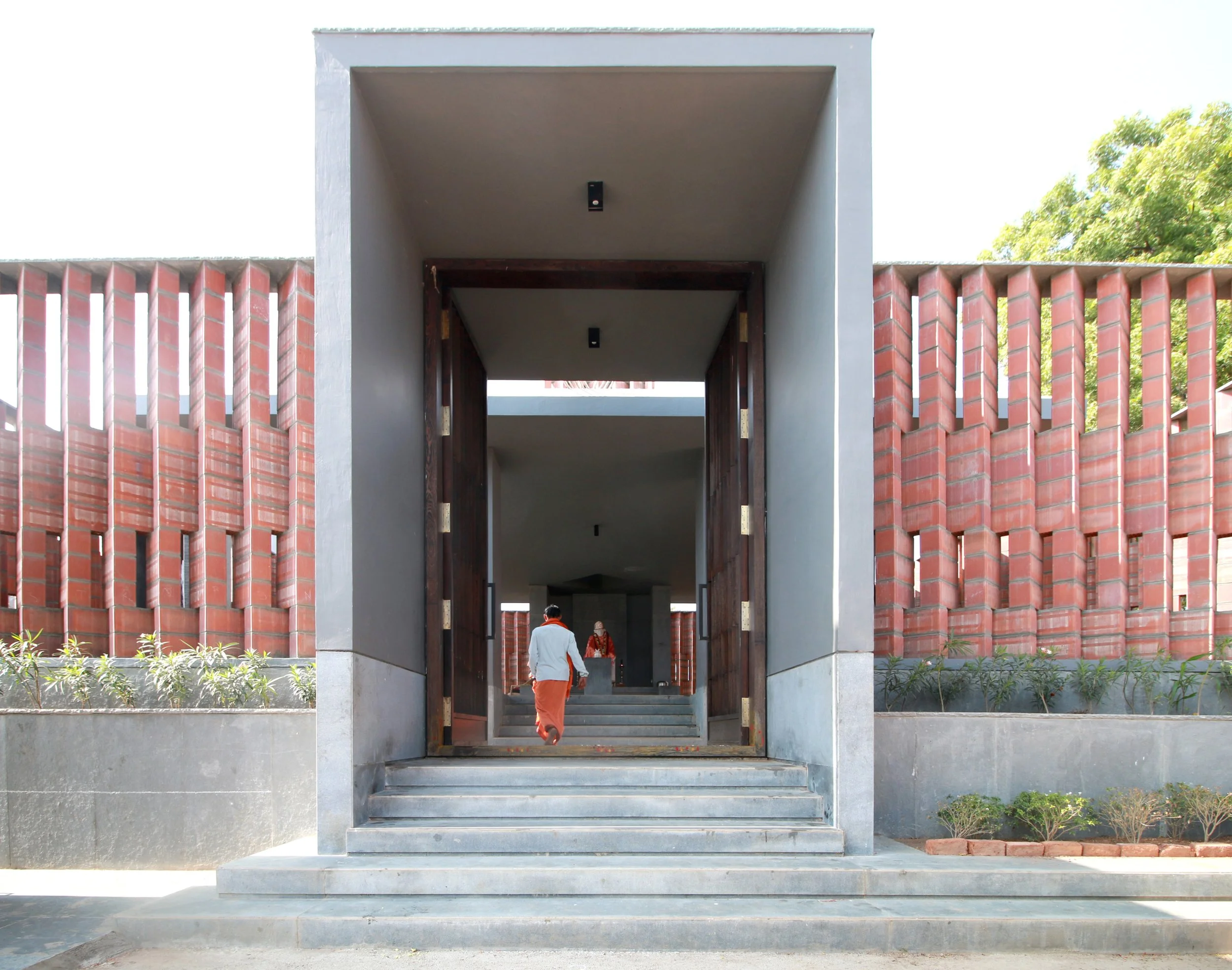
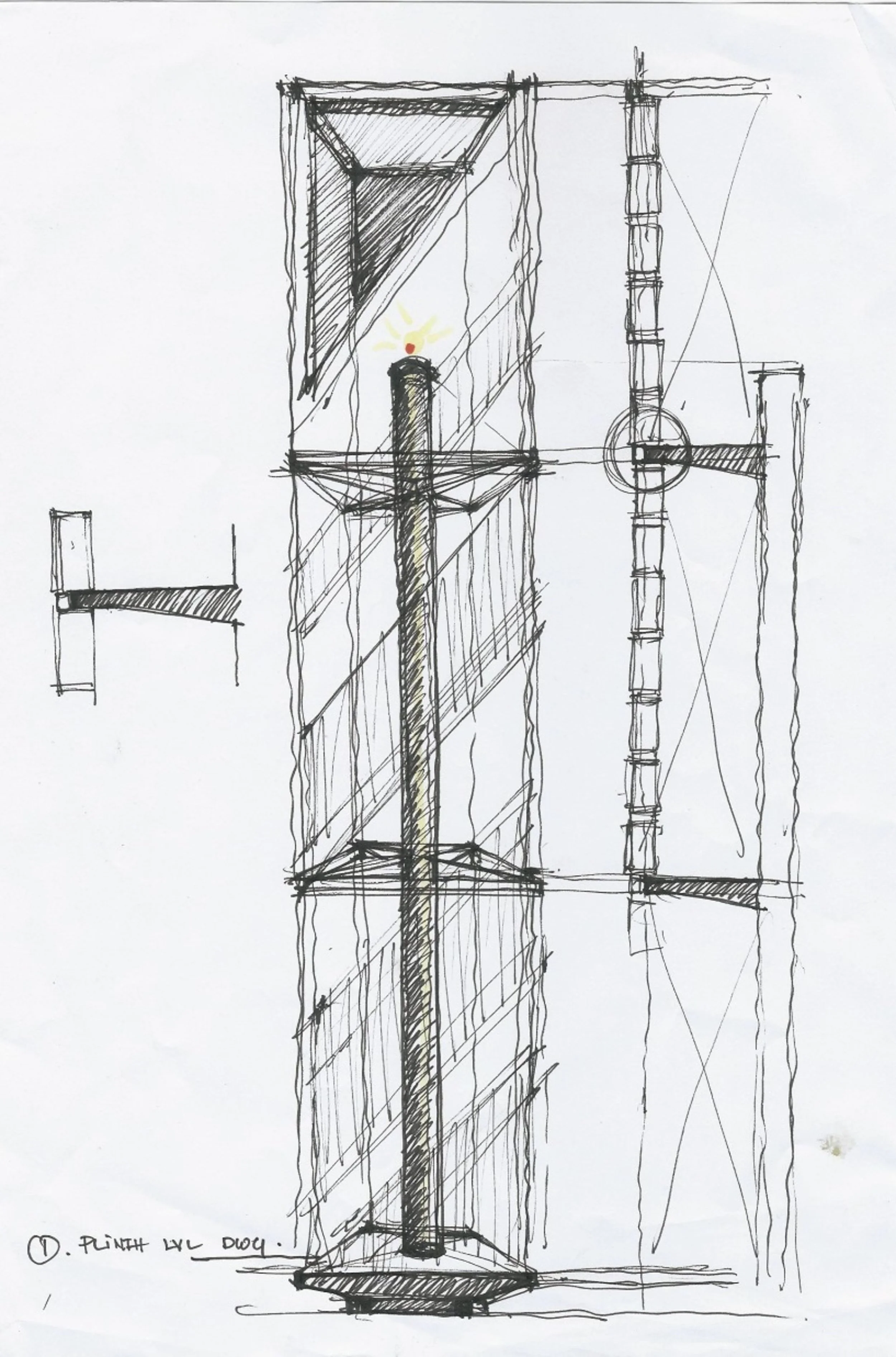
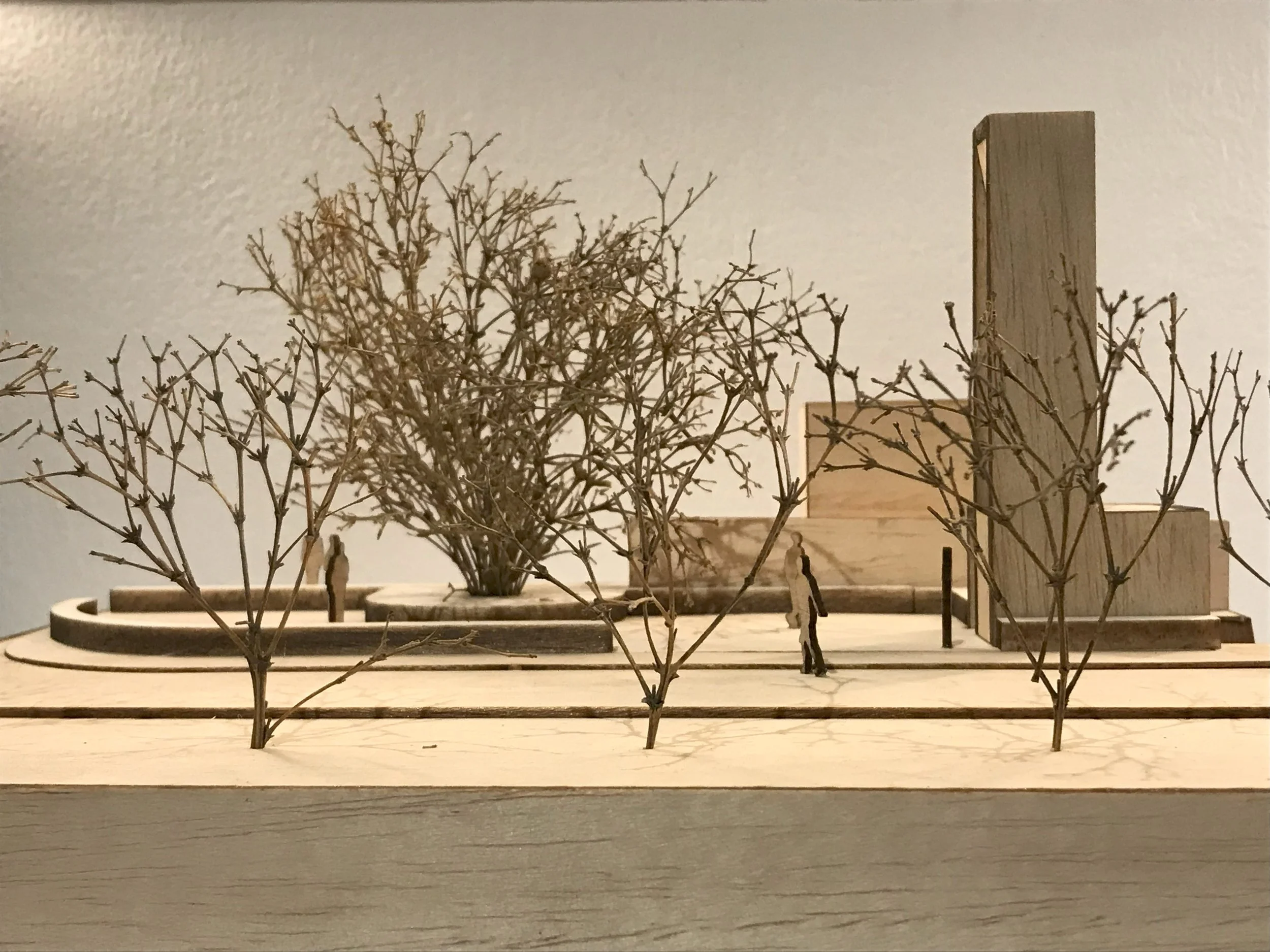
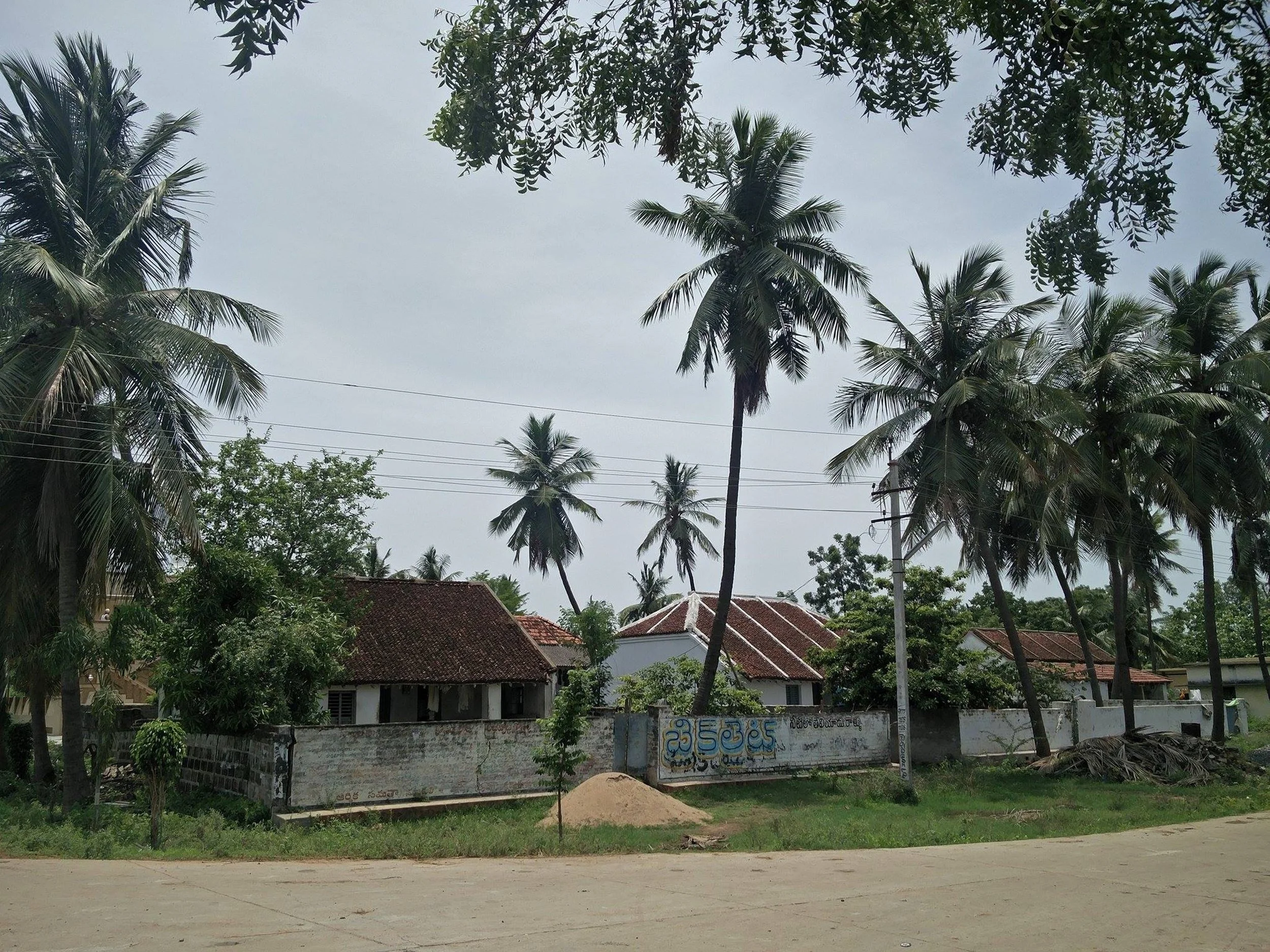
The old Ramalayam temple was more than a spiritual space; it was a community hub, hosting gatherings and serving as a reading room. Though small in scale, it carried deep cultural value. Over time, moisture damage caused severe structural decay, leading the community to rebuild rather than repair.
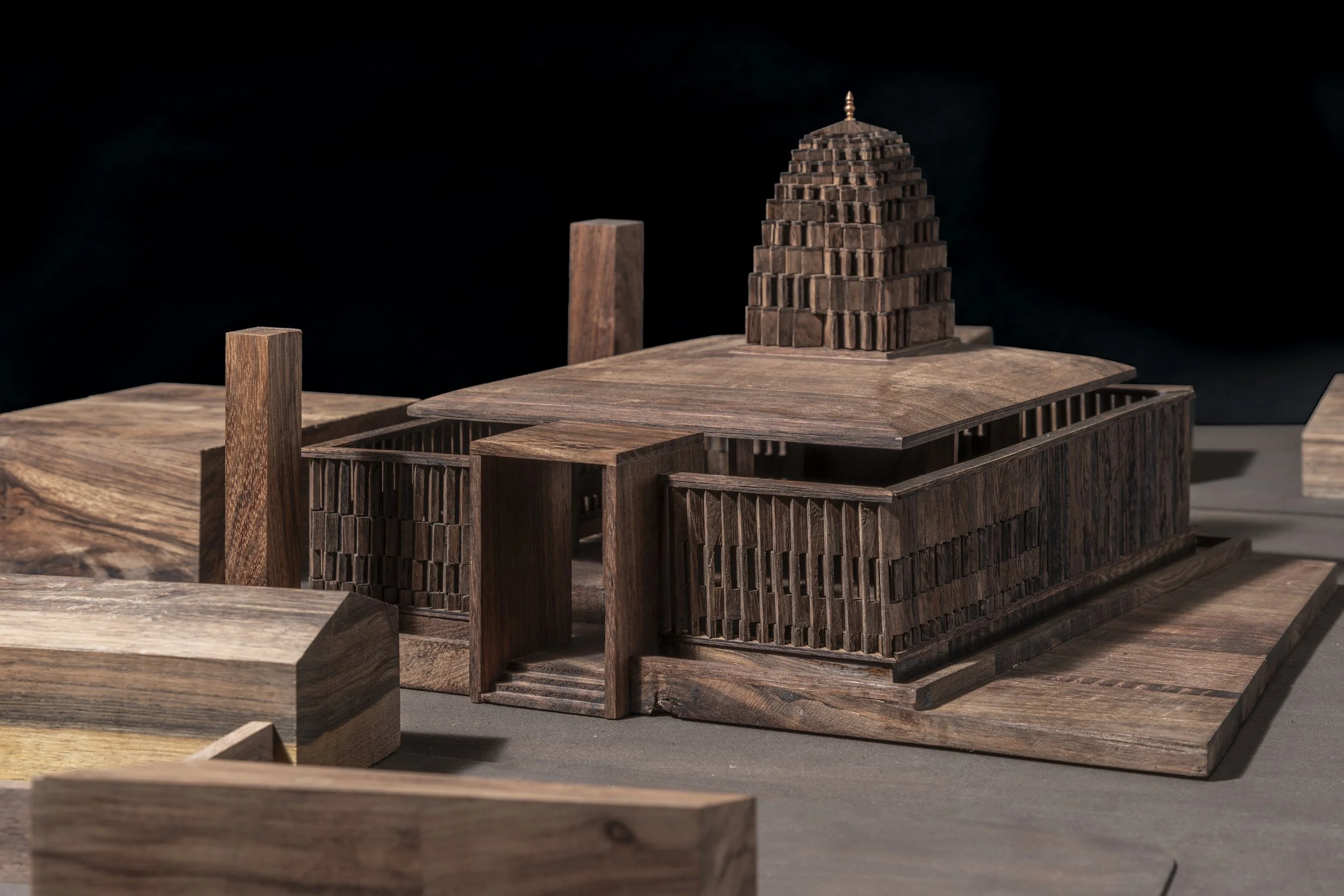
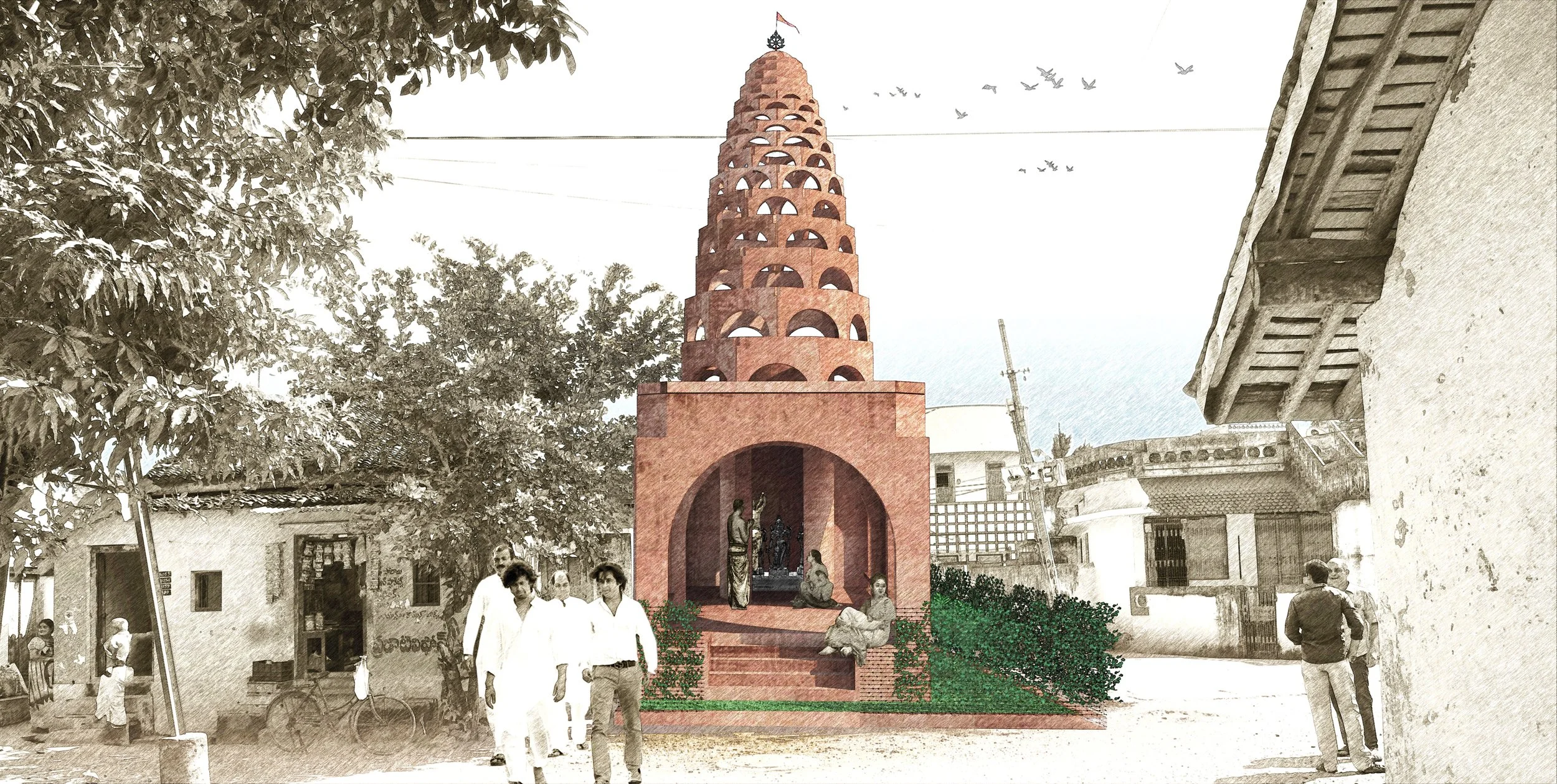
With a compact footprint of just 14 by 28 feet, the new design does not recreate the old temple but reinterprets its essential spatial and structural elements. The modest arches of the original temple become the foundation of a new architectural vocabulary, evolving into a defining structural and visual language.
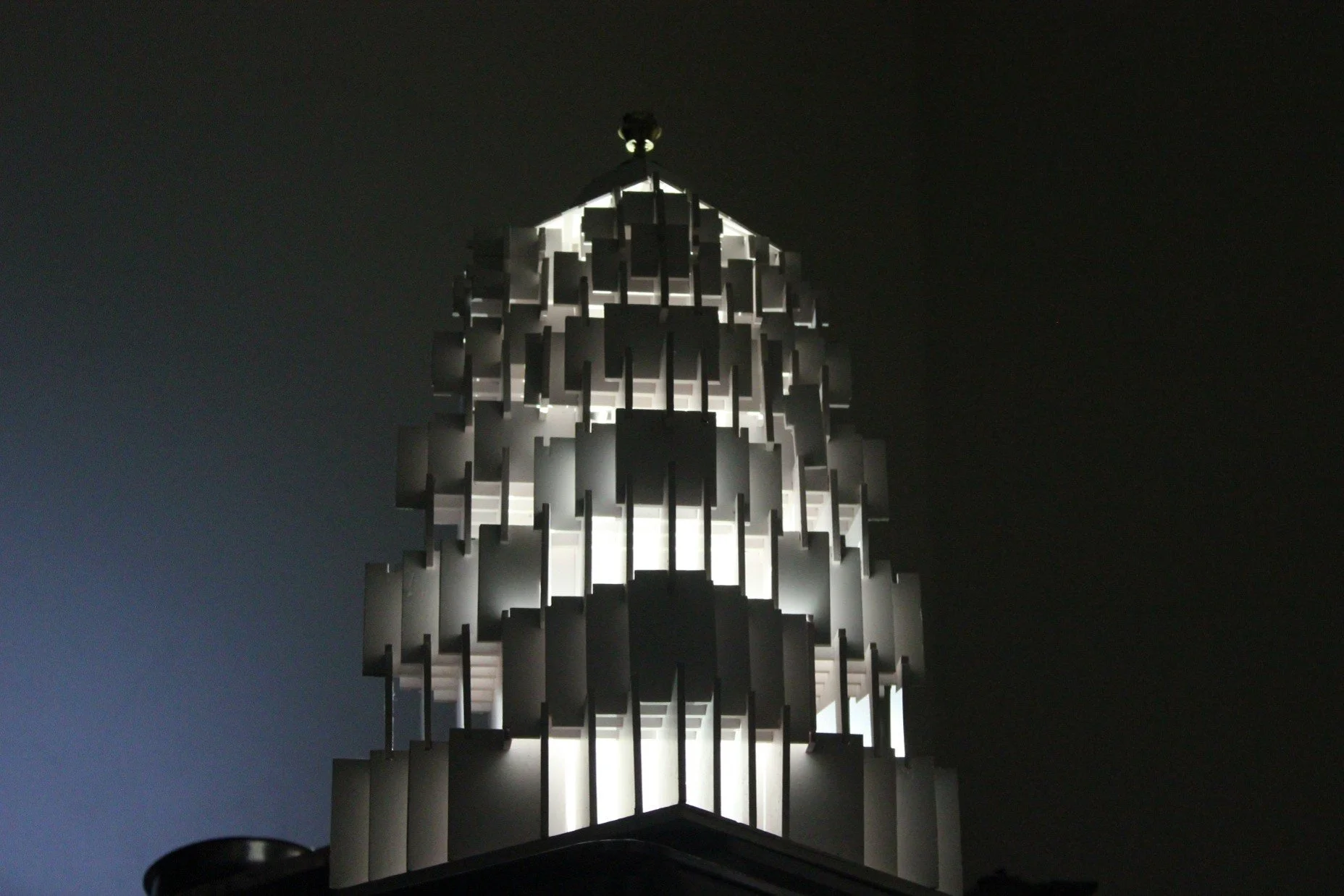
A square front hall welcomes social gatherings, continuing the temple’s community role. This space leads into the sacred zone, where the external gopuram is conceptualized as a hollowed octagonal shaft. Its faceted faces feature semi-circular openings on each side, gradually shrinking as the structure rises and recalling the tapering rhythm of historic temple towers.
Inside the shaft, a solid, windowless, tapered cylinder forms the sanctum—an inward, light-free space. This contrast between the solid, opaque sanctum and the porous, perforated outer shaft expresses a duality—of solid and void, positive and negative space, light and shadow.
Program: Social Space
Location: Andhra Pradesh, India
Surface: 33 square meters
Project Team: Hari Krishna, Ujjwal Sannala, Abhijeet Singh, Naresh Nallapuneni







-
The Rural Plaza offers the visitor three different ways of experiencing the landscape around. 'The Platform' offers everyone to meet, interact and share; 'The Bus stop' is a pavilion open to the landscape, and 'The Tower' raises 32 feet above the ground, which can be accessed through a small and dark entrance. Inside a unique view into the sky awaits the visitor - and the sunlight, that comes in through the opening turns the brick into vibrant red colour give people a different, a new view on their surroundings and the tower also serves as a reference location and entry for the village. It is a spiritual place for the individual experience as well as a meeting place for the village.
Program: Social Space
Location: Andhra Pradesh, India
Surface: 190 square meters
Project Team: Hari Krishna, Ujjwal Sannala


-
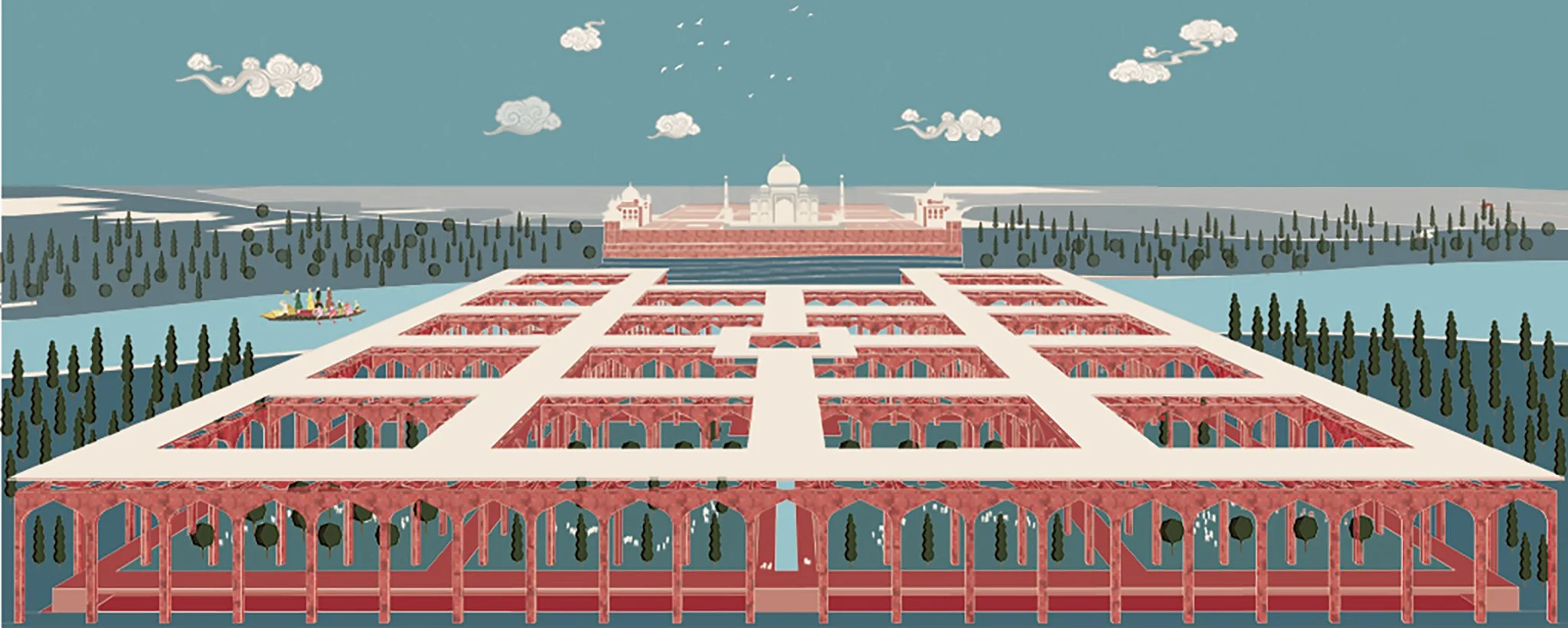
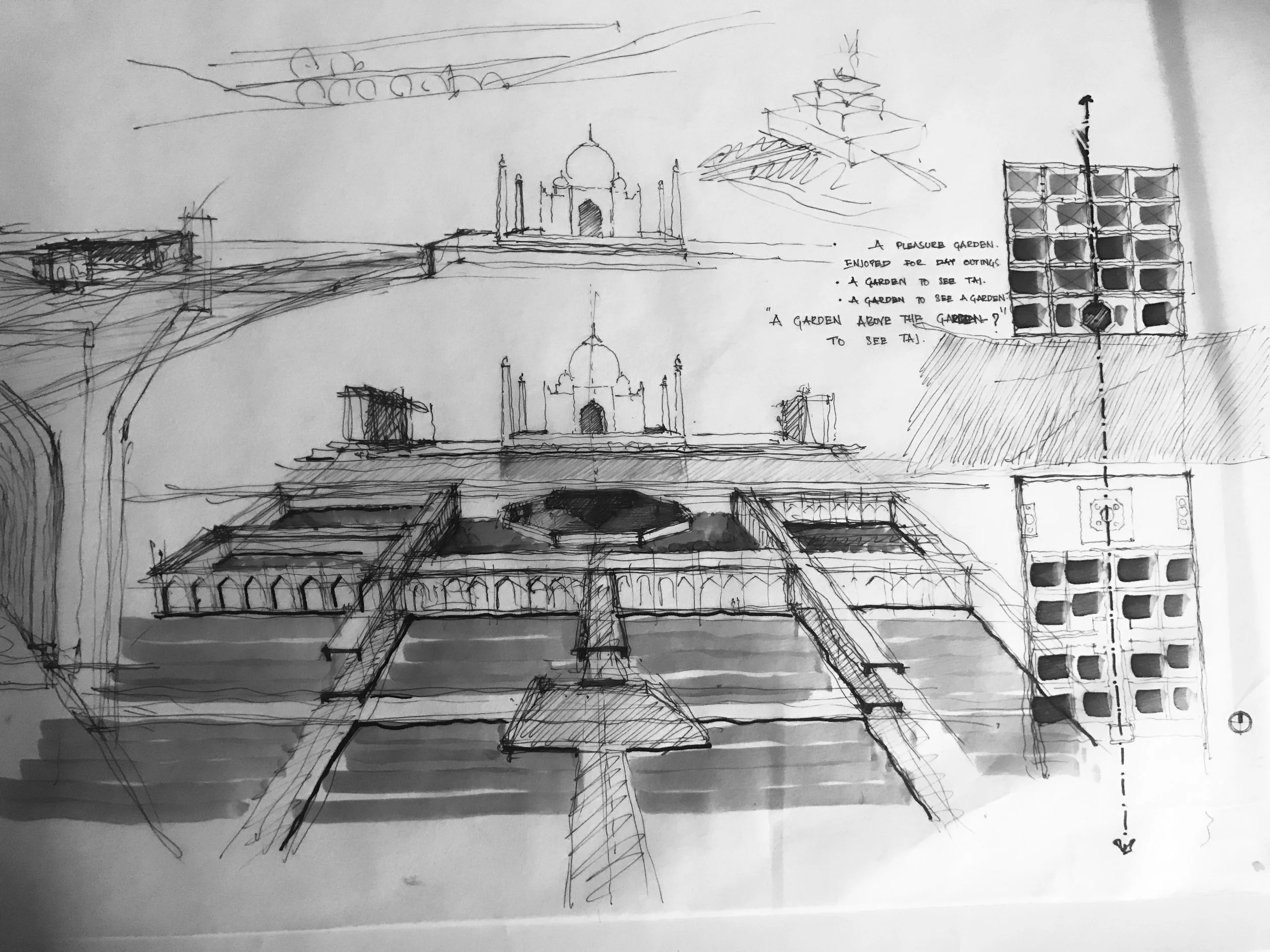
The Taj was never experienced in isolation, you always perceived it through desired frames, the central idea of the proposal is to multiply the experience
Immersed in the surreal, enchanting world of the Taj, seated at the centre of 42 gardens, ignored for many centuries is Mehtab Bagh or Black Taj. Co-existing with the historical context and culture, the emerging design ideal aims to resurrect the gardens of the past while reconnecting it to the soul of Agra, i.e. Taj Mahal.
An epitome of the heart of Shah Jahan itself, emerging from inside out is a space that is reserved, subtle and sincere with every opening filled with the Taj and its memories. Anchored by the physical reality of the remains of Mehtab Bagh, the structural relics and garden layout form the basis of the design parti.
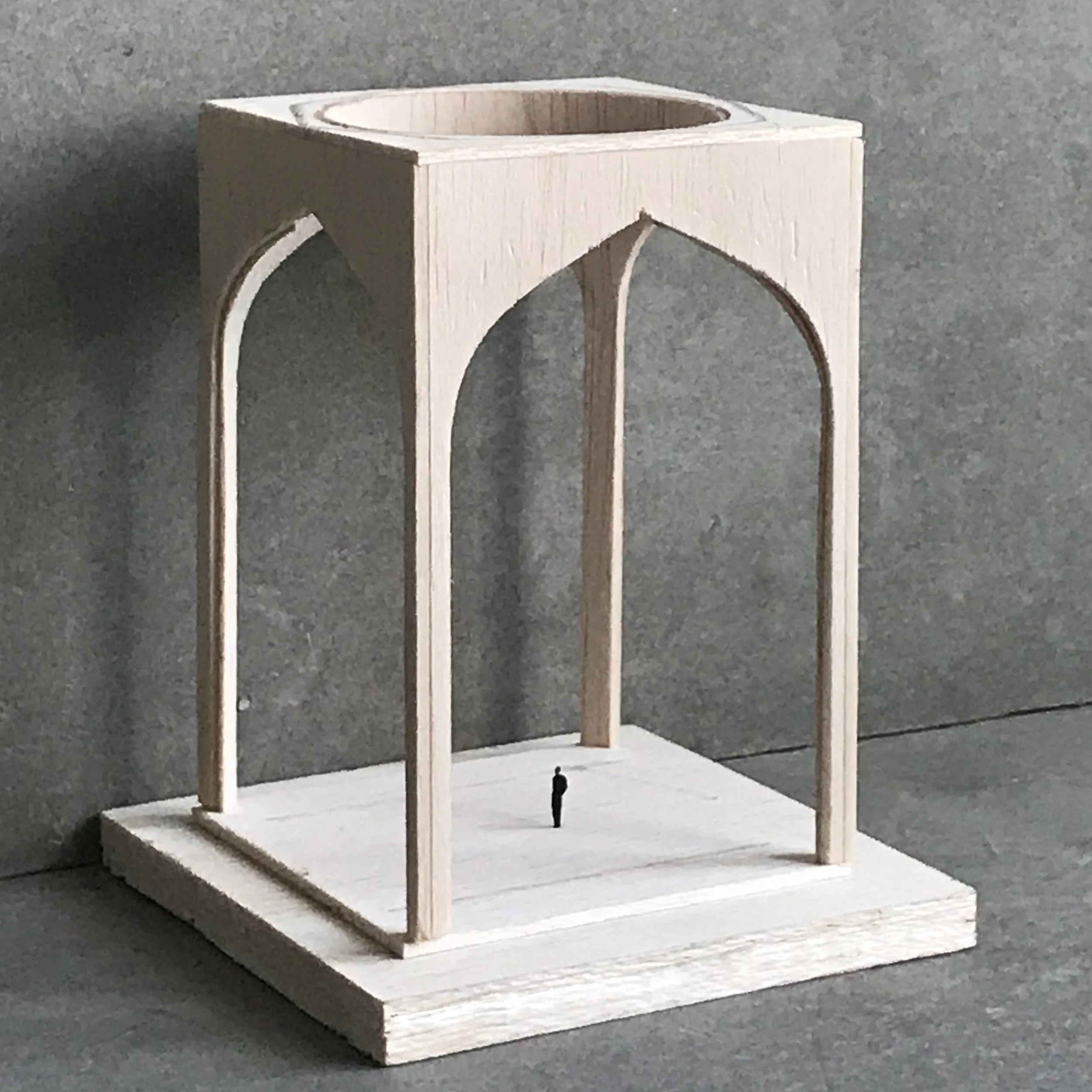
The architectural vocabulary reflects a recurring sequence of arches framing Taj, making it appear more layered than it is, sometimes deliberately hiding it to heighten the surprise when its re-framed back into view. In addition, the frames also open onto the surrounding environment which become points of orientation throughout the journey.
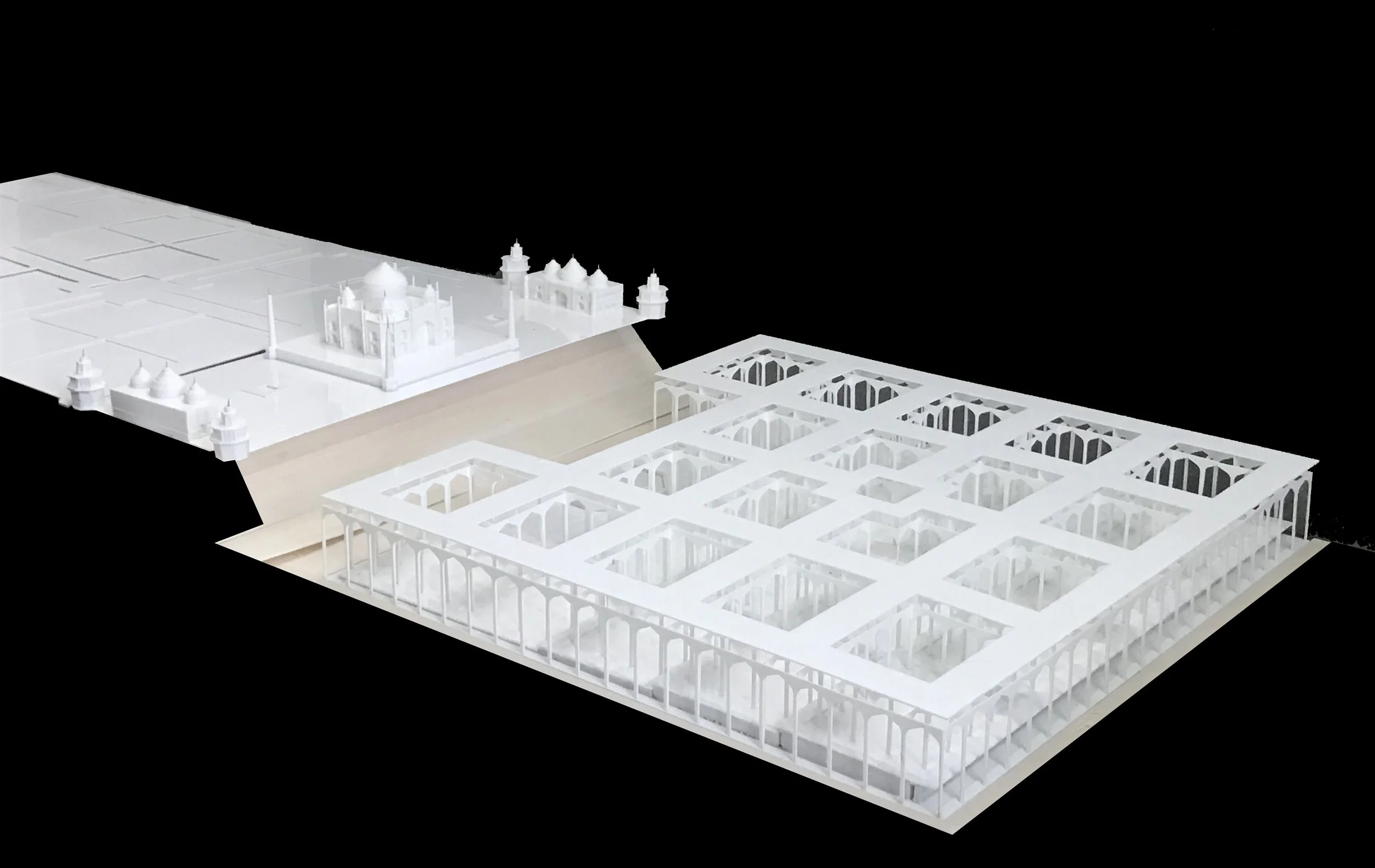
Segregated into two sets of experiences, the ground level is a series of arches framing the stepped terraces with water channels evoking a memory of the Shali mar gardens. Accommodating temporary galleries, shops and gardens, it also attempts to facilitate the preservation of the cultural heritage of Mughal era.
Mimicking a carpet in the air, the roof level creates an illusion of a physical connection to the Taj and enables them to experience it at the same plane. Framed by traversing bridges and staircases leading up to an open pavilion with a waterfront, a visual affinity is re-established with Taj.
The design offers a humble yet strong reinterpretation of the essence of the place. Comprised of a porous shell implying the emptiness in Shah Jahan’s heart, the voids are filled with gardens of hope, respite through water and echo the deeply ardent responses to the stunningly beautiful Taj.
“Creating a garden to see a garden begs many questions of love, of the hopelessness of it; as if to say that there was no purpose in life, but to observe that love as the sun rose till it set and then when stars lit the sky.” - with excerpt from Tracing Narratives
Program: Conceptual Architecture Competition
Location: Agra, India
Project Team: Hari Krishna, Venu Gopal, Subash, Ayaz, Vishweshwar, Ujjwal Sannala, Vanditha Sangewar, Vivek Sattoju, Chandra Prakash, Gayatri
Collaborators: Praneetha Akunuri (text)
Awards: Honourable Mention



-
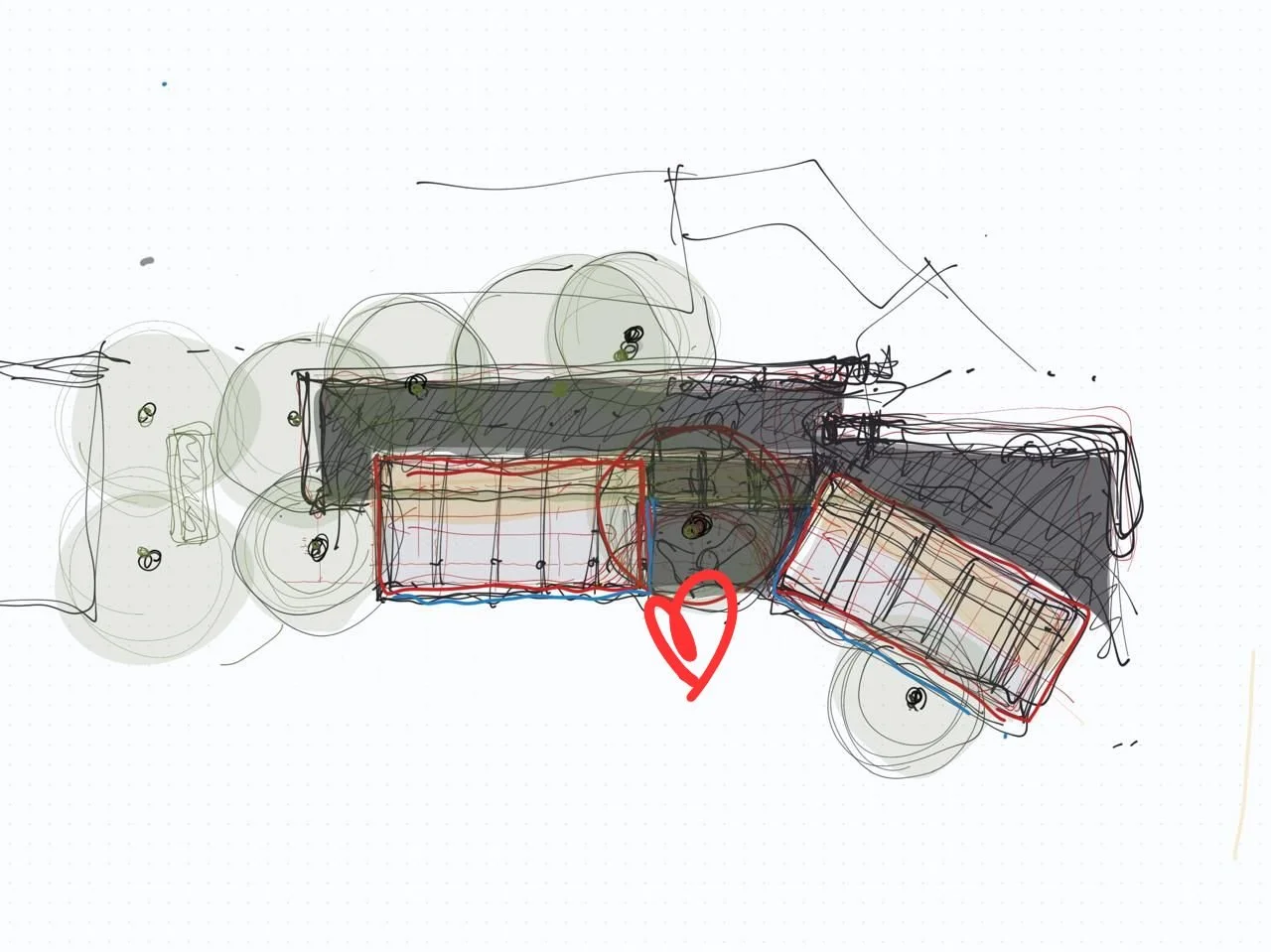
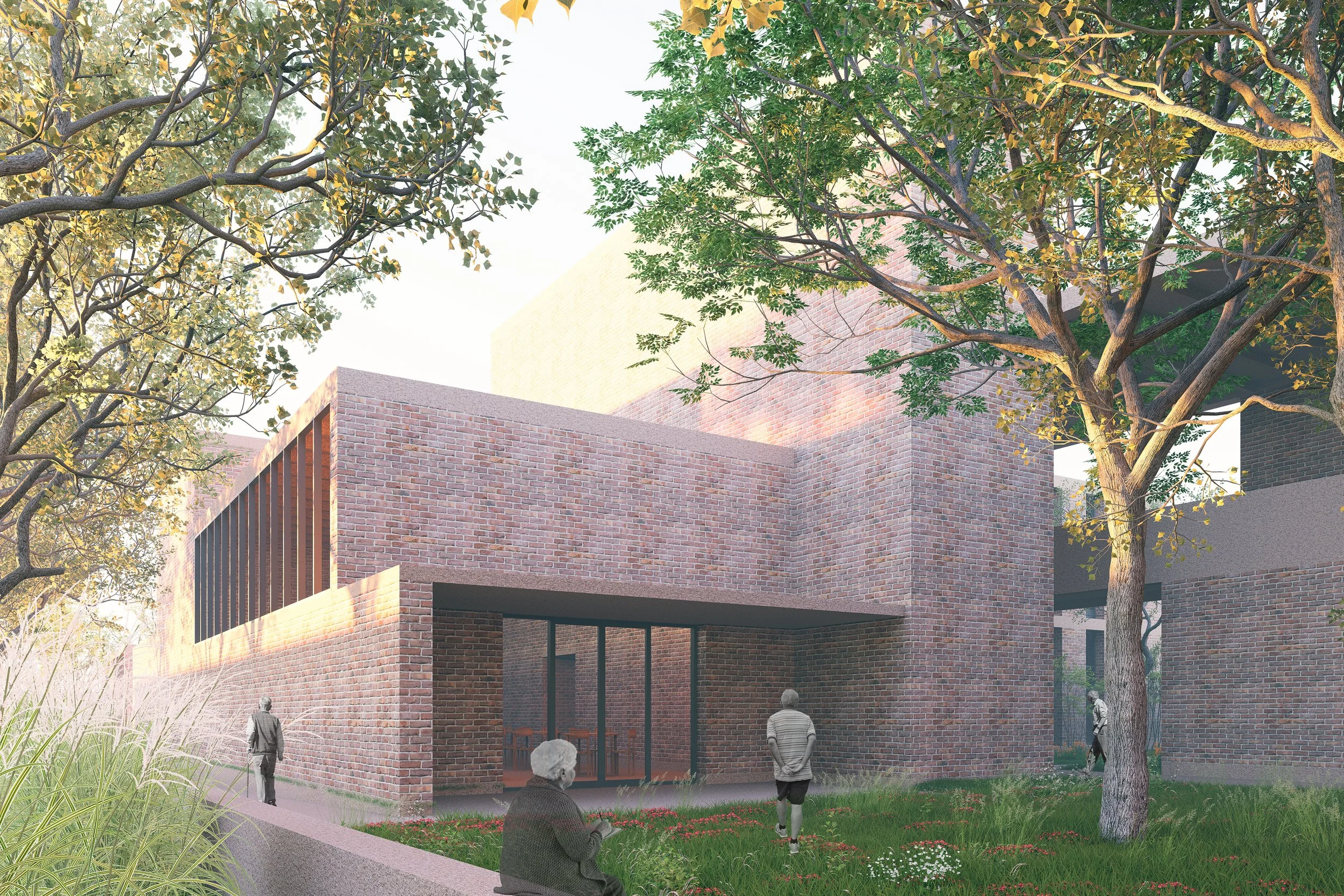
The large group of seniors in our society need more diverse possibilities of living in active and inspiring surroundings, which requires new type of building.
They wanted a place that hold all the features needed for old age, and at the same time a strong focus on the sense of community that can bring people together.
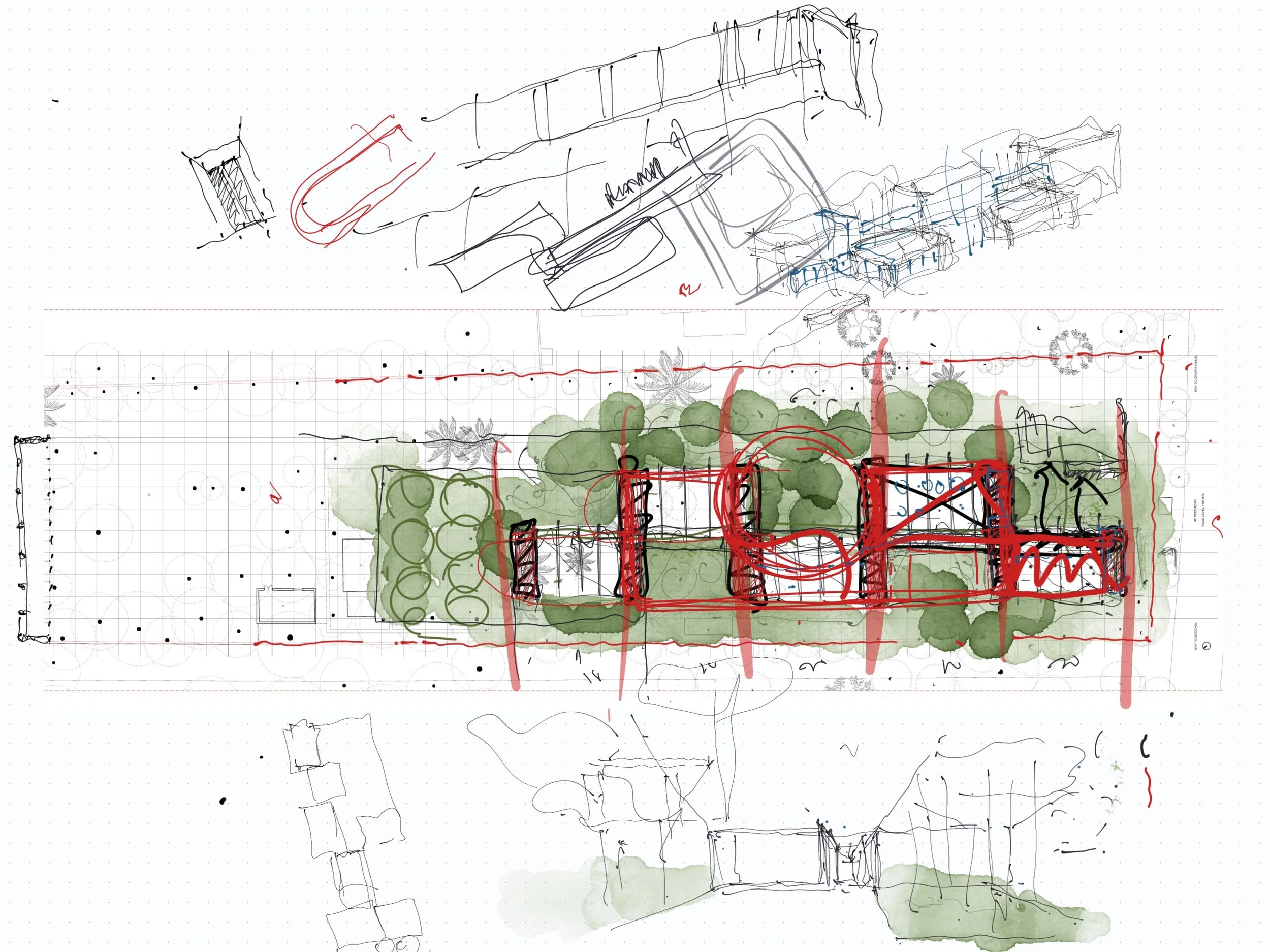
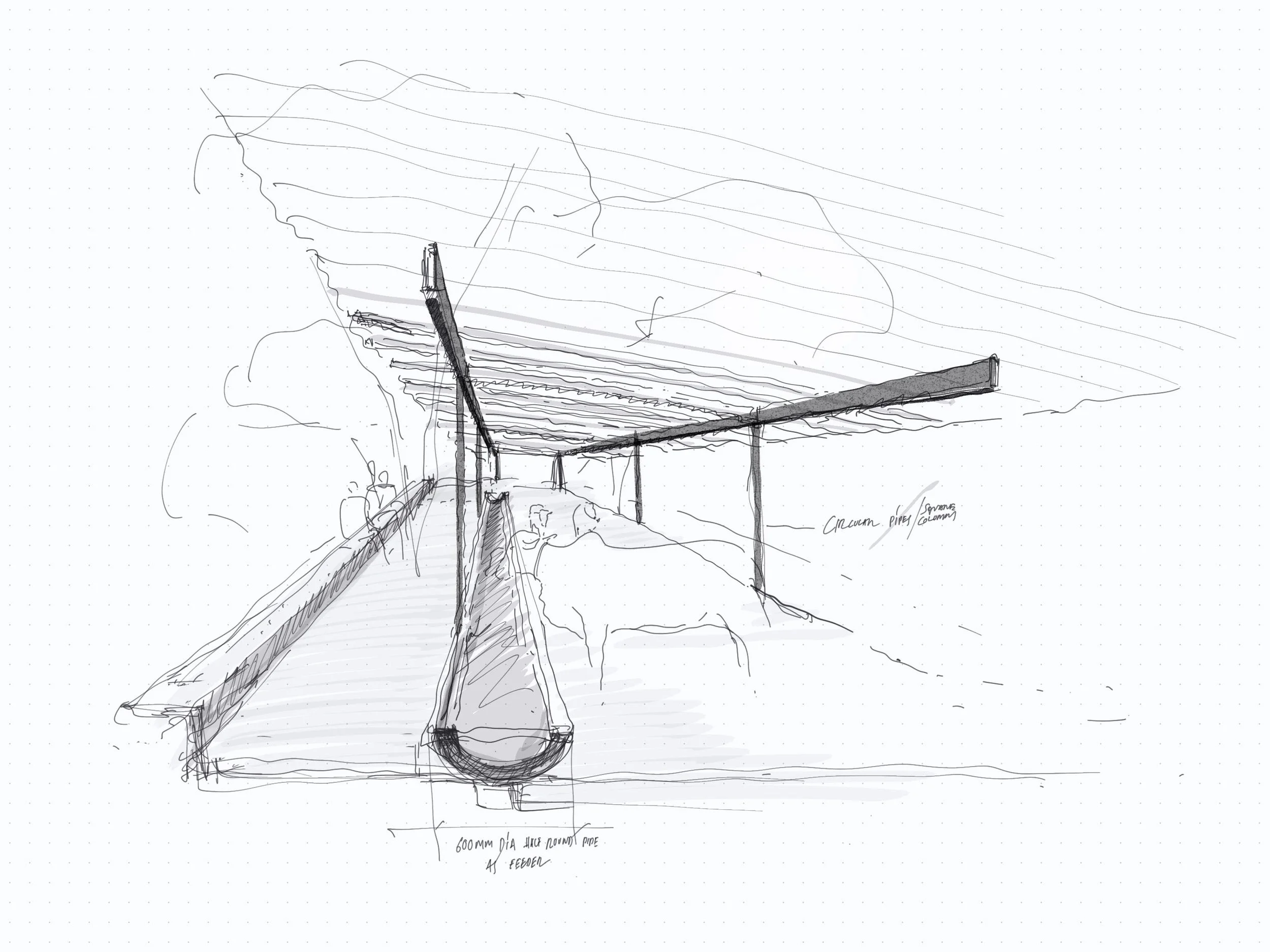
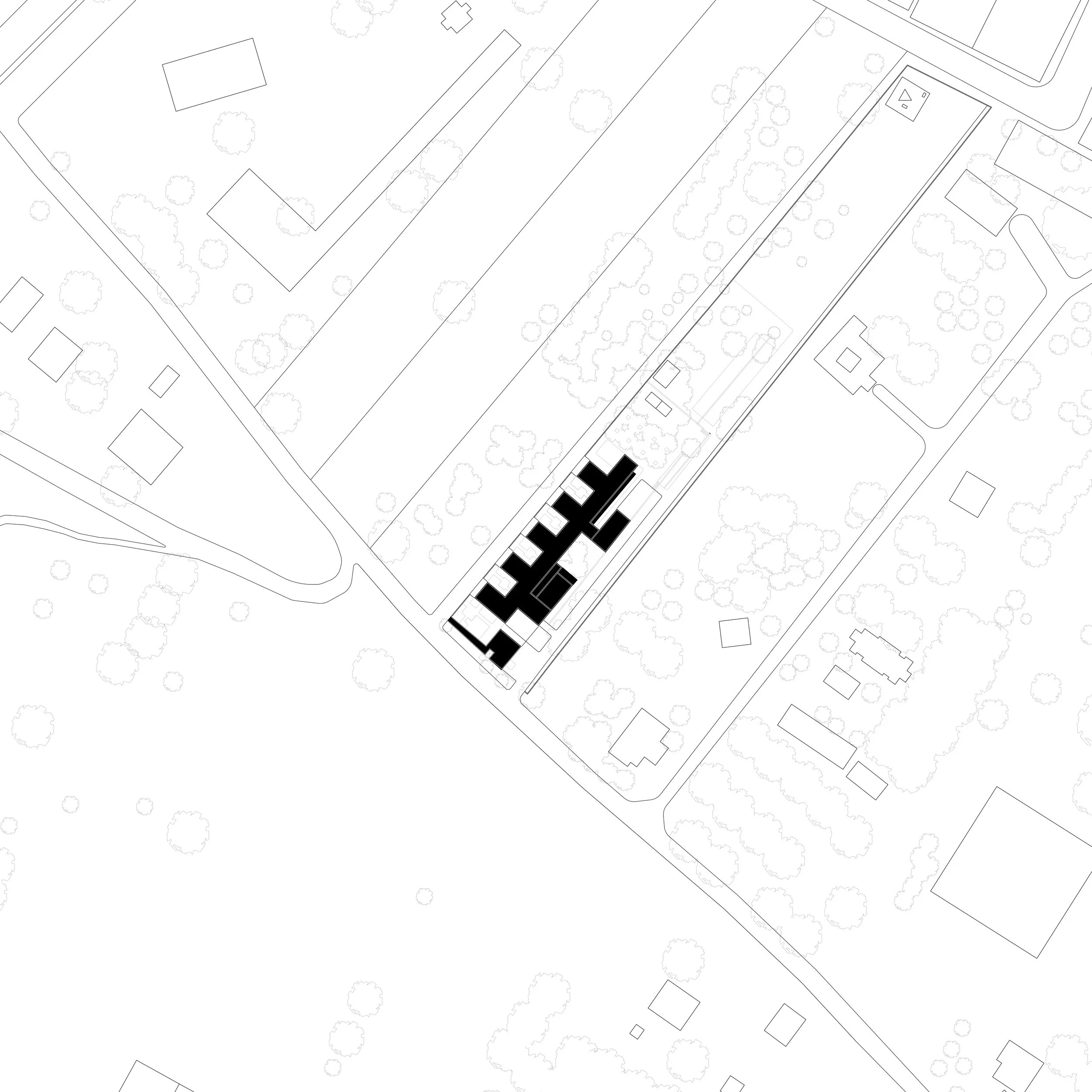
Spanning a long and narrow 260-metre plot in Medchal, the internal circulation begins at the main entrance and extends northwards as a pedestrian street, connecting a series of blocks and leading towards green recreational areas at the northern end of the site.
It is planned for people of old age, healthy and sick and for the ones with dementia, which is an illness that often tends to start early on, when people are neither old nor physically ill.
The structure is weaved into the existing landscape. Small squares, gardens create plenty of opportunities for social exchange as well as contemplation.
There are spaces for animals and vegetable gardens, offering meaningful daily activities that support well-being. Cars remain on the periphery, keeping the central areas safe and calm for gentle movement.
Program: Healthcare
Location: Hyderabad, Telangana, India
Surface: 2000 square meters
Project Team: Hari Krishna, Vanditha Sangewar, Sai Purushotham
Collaborators: Sridhar-Simon Peter Engineer (structure), Sravanthi Gumma - Studio Earth and Space


-
“And into the forest I go, to lose my mind and find my soul.” — John Muir
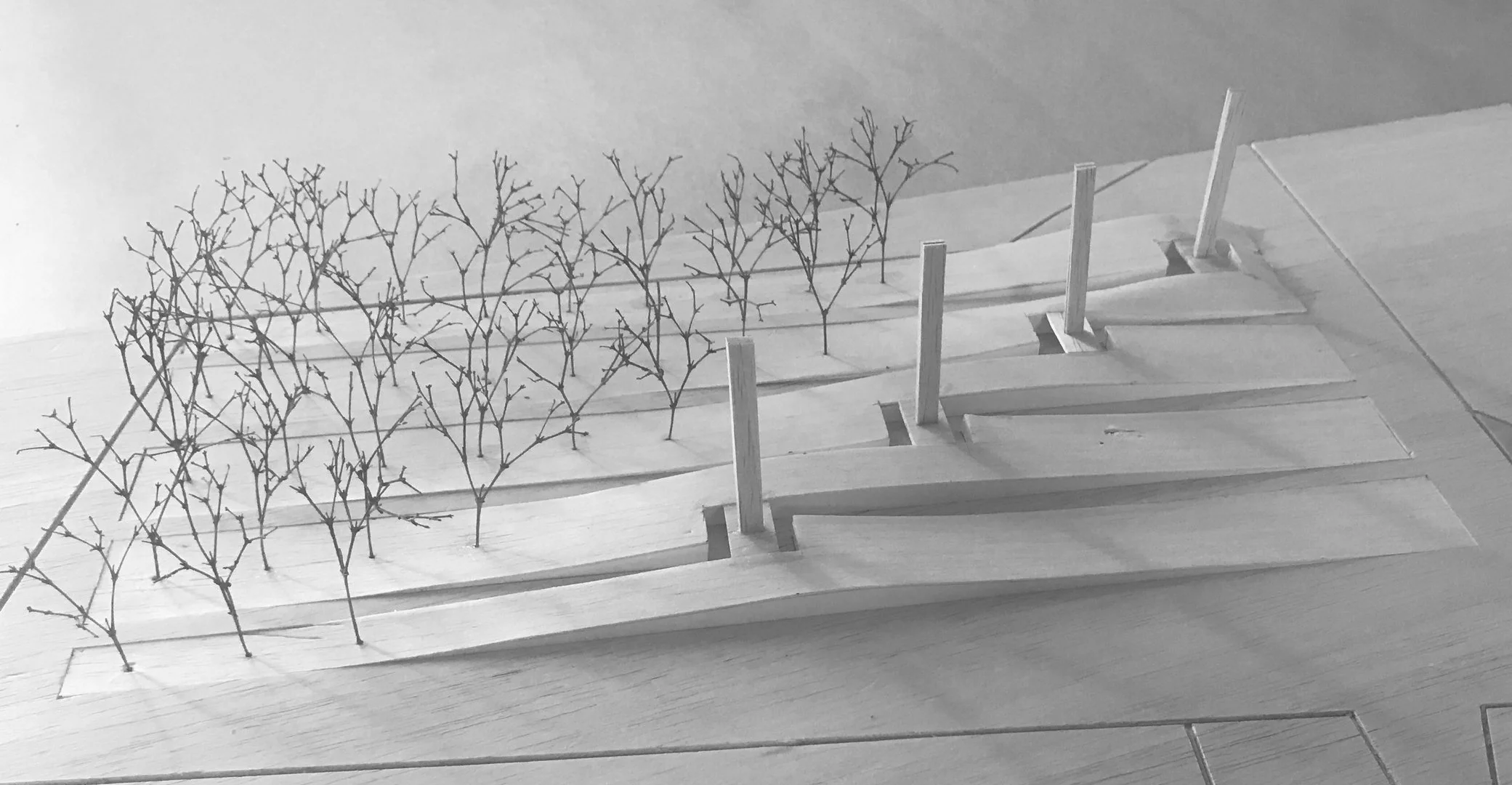
The crematorium is designed as a quiet, reflective landscape rather than a conventional building. The focus is on the relationship between land, trees, and movement—creating a calm environment that supports the emotional journey of those visiting.
The site is divided into two zones: one for cremation, and the other for contemplation and remembrance. A series of linear pathways connect these zones, guiding visitors gradually through the space.
Along the paths, there are small gathering points—places to pause, reflect, and say goodbye. These are integrated into the landscape with sensitivity, using natural materials and planting to maintain a sense of peace and respect.
The cremation area is marked by vertical elements like chimneys, placed carefully within the landscape to create a strong but respectful presence. As visitors move forward, they are gently led into a green, open space designed for quiet thought and healing.
This crematorium is designed not just as a place for rituals, but as a healing journey through landscape.
Program: Crematorium
Location: Nizambad, Telangana, India.
Surface: 12,220 square meters
Project Team: Hari Krishna, Venu gopal.








-
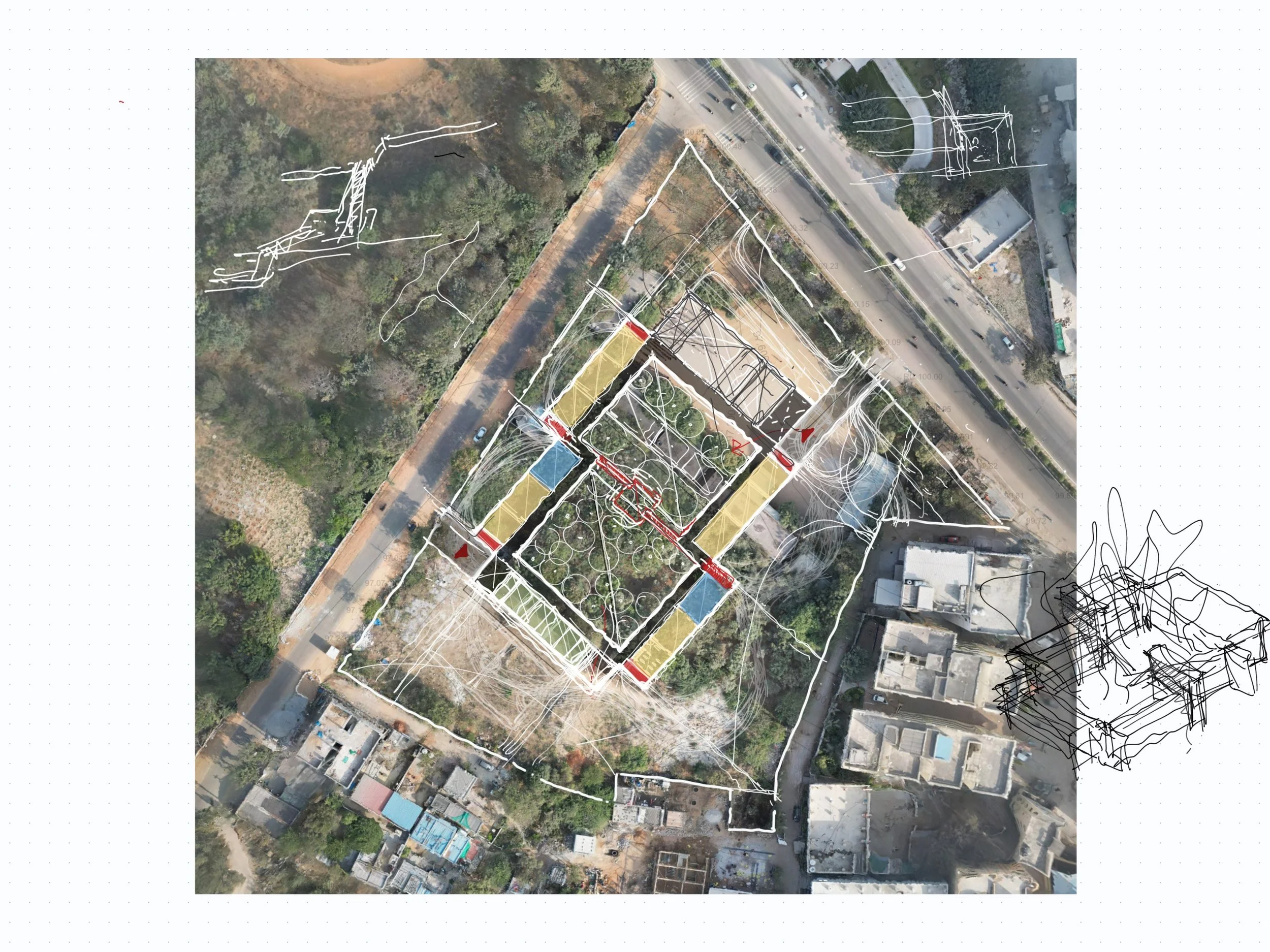
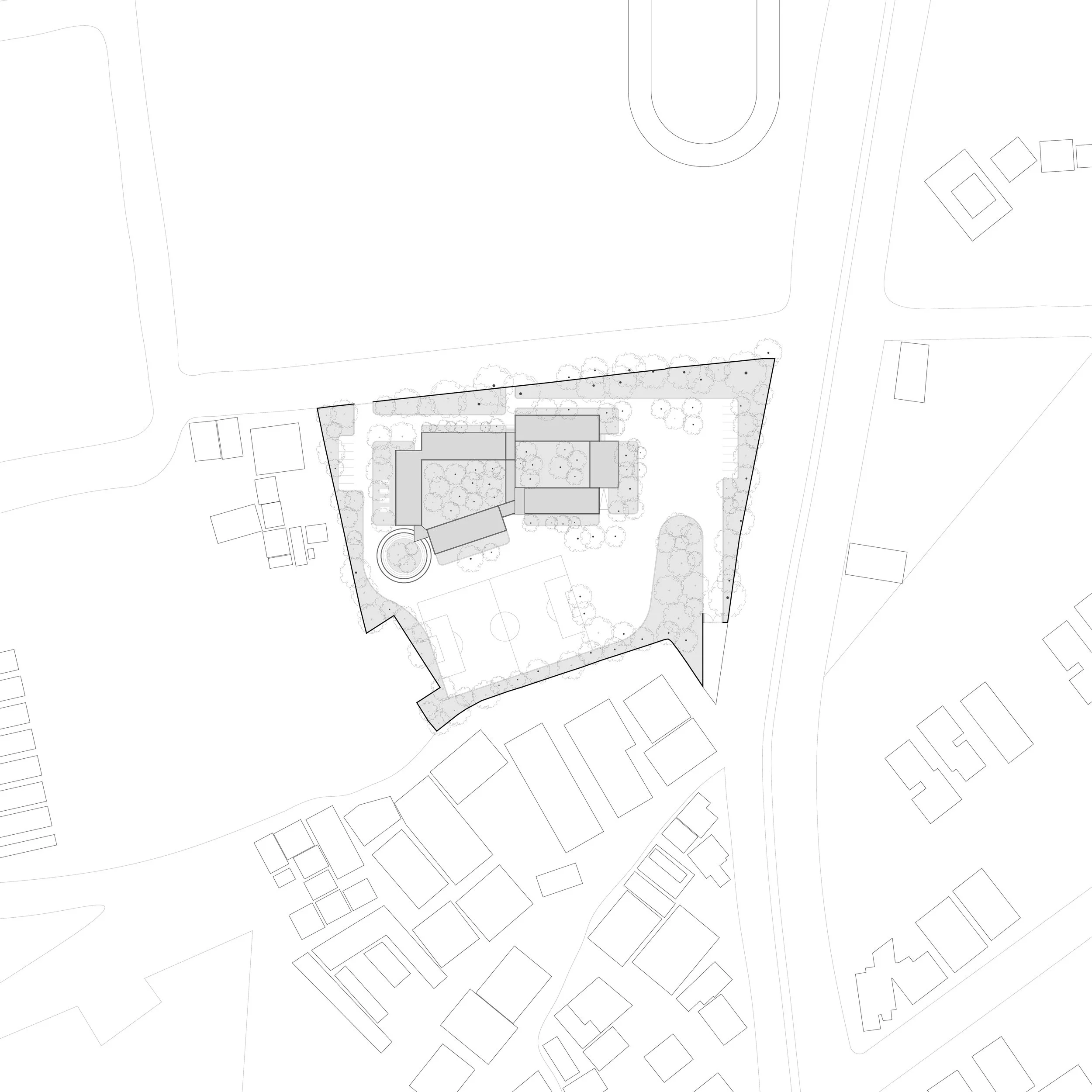
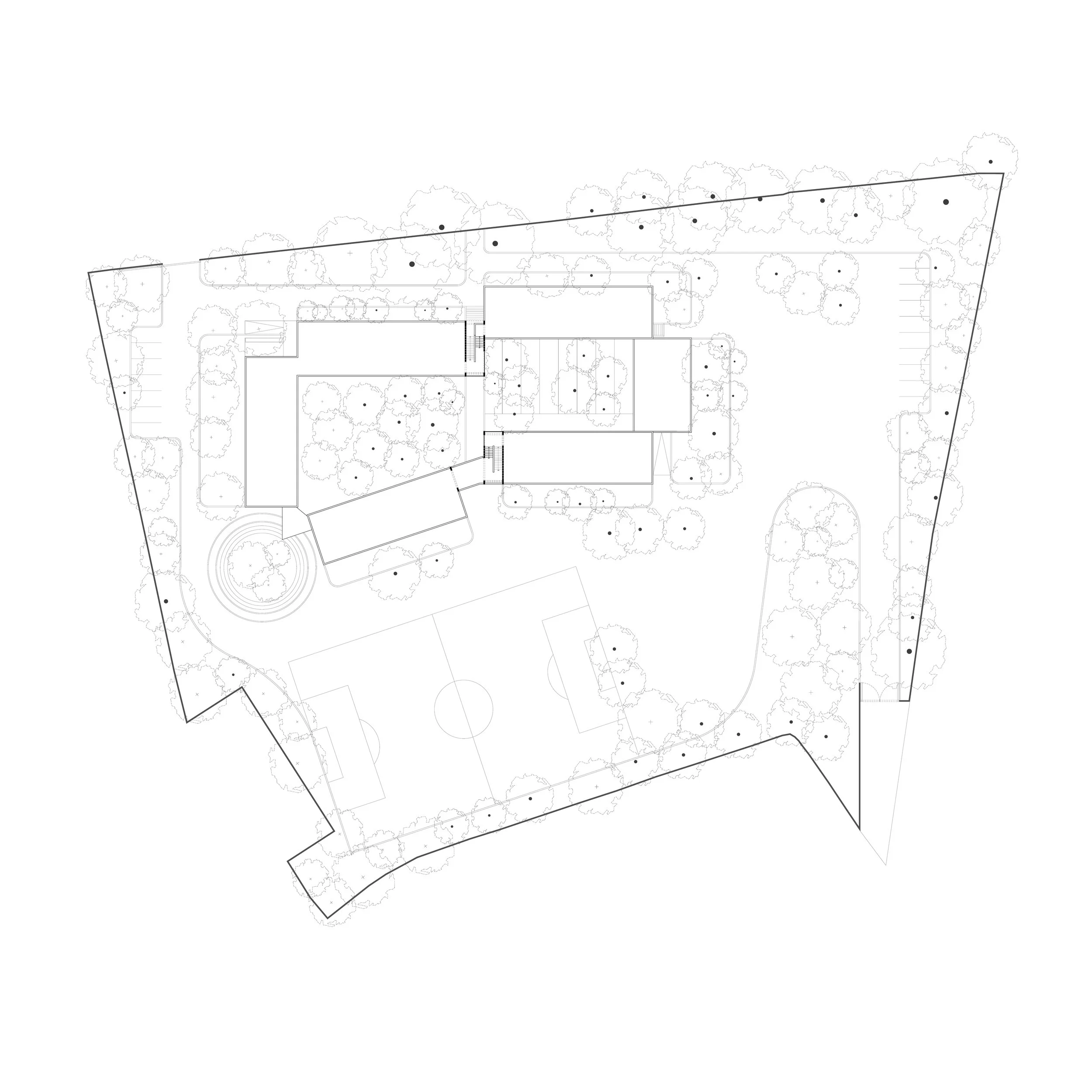
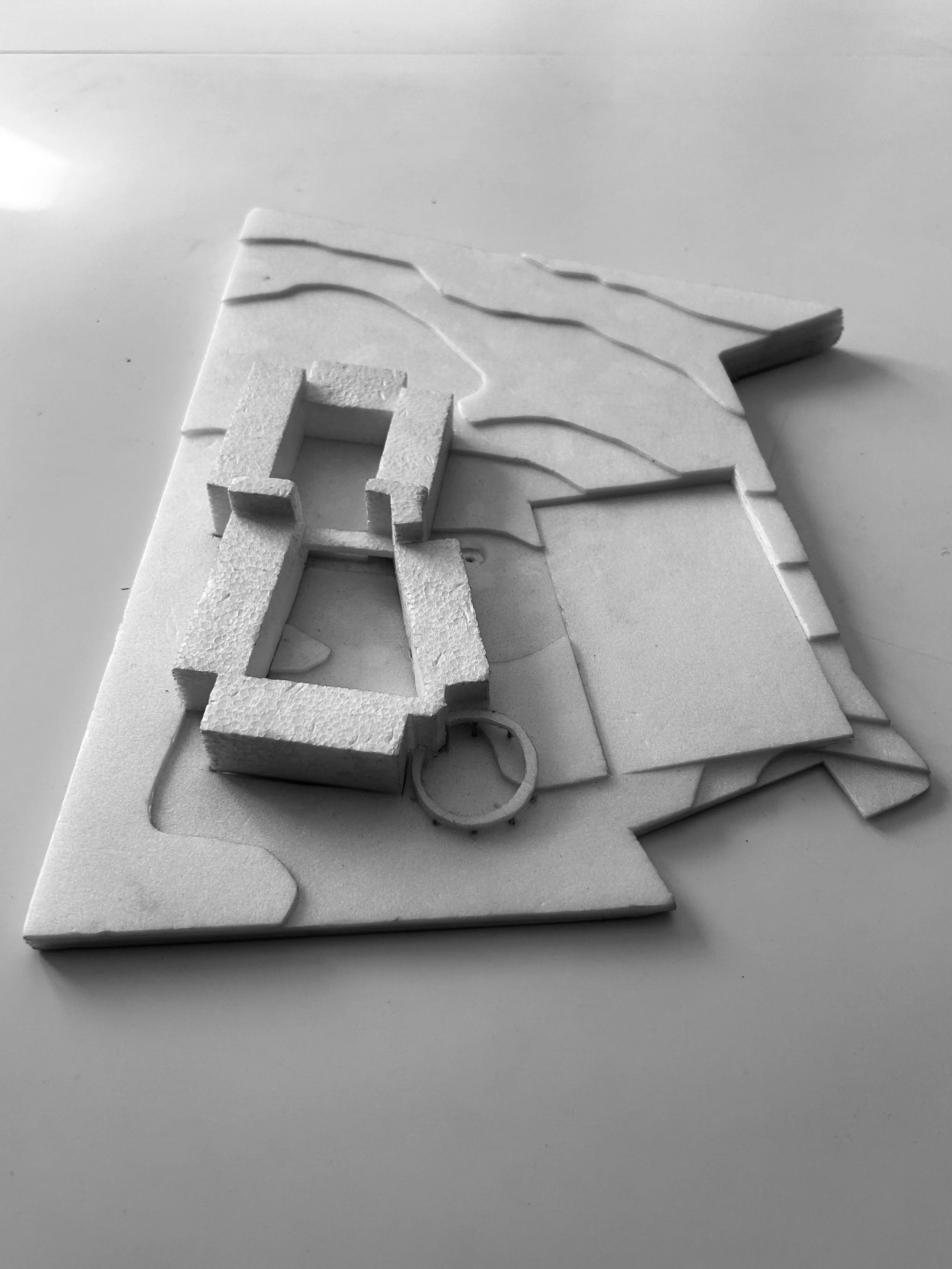
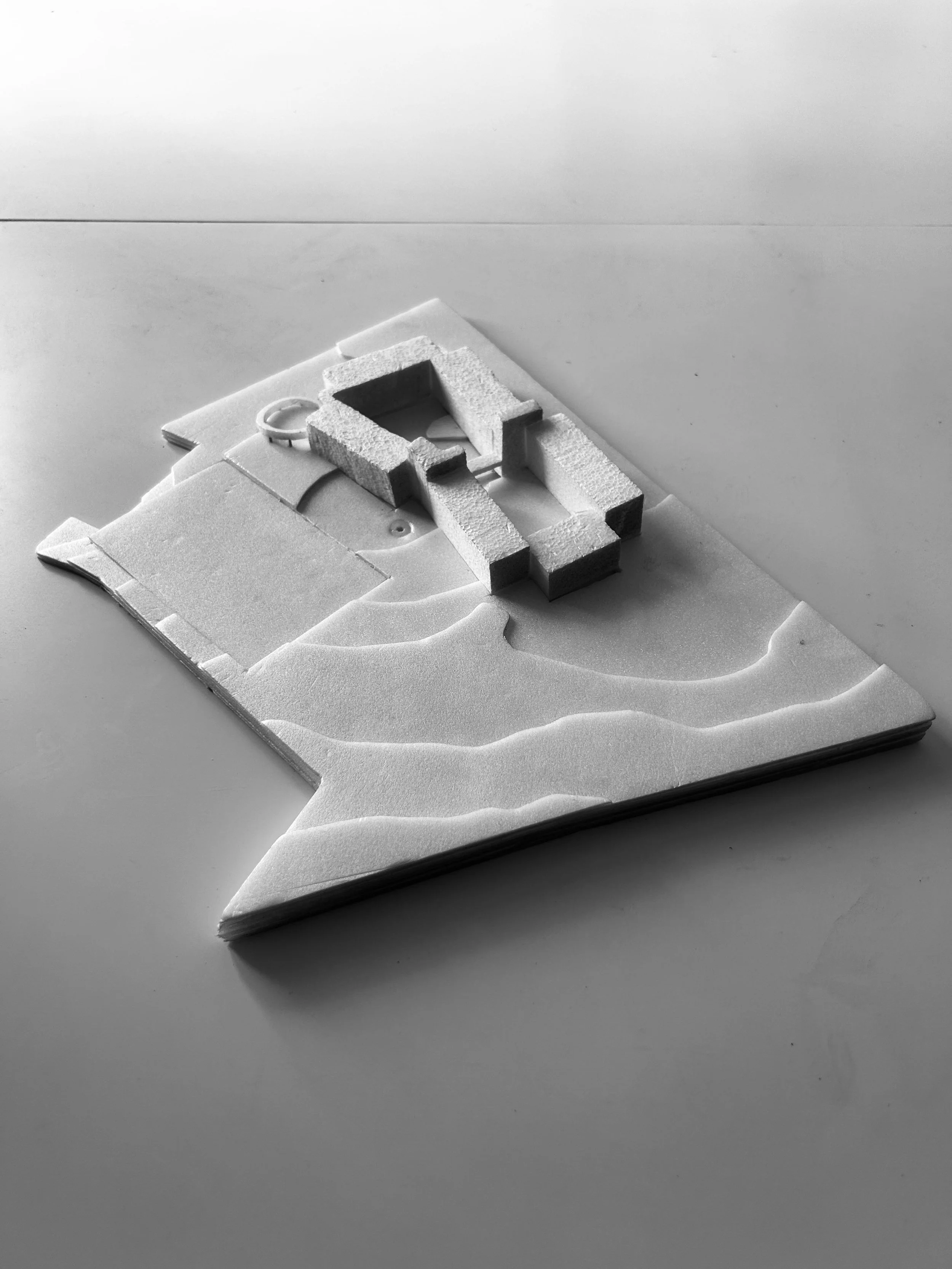
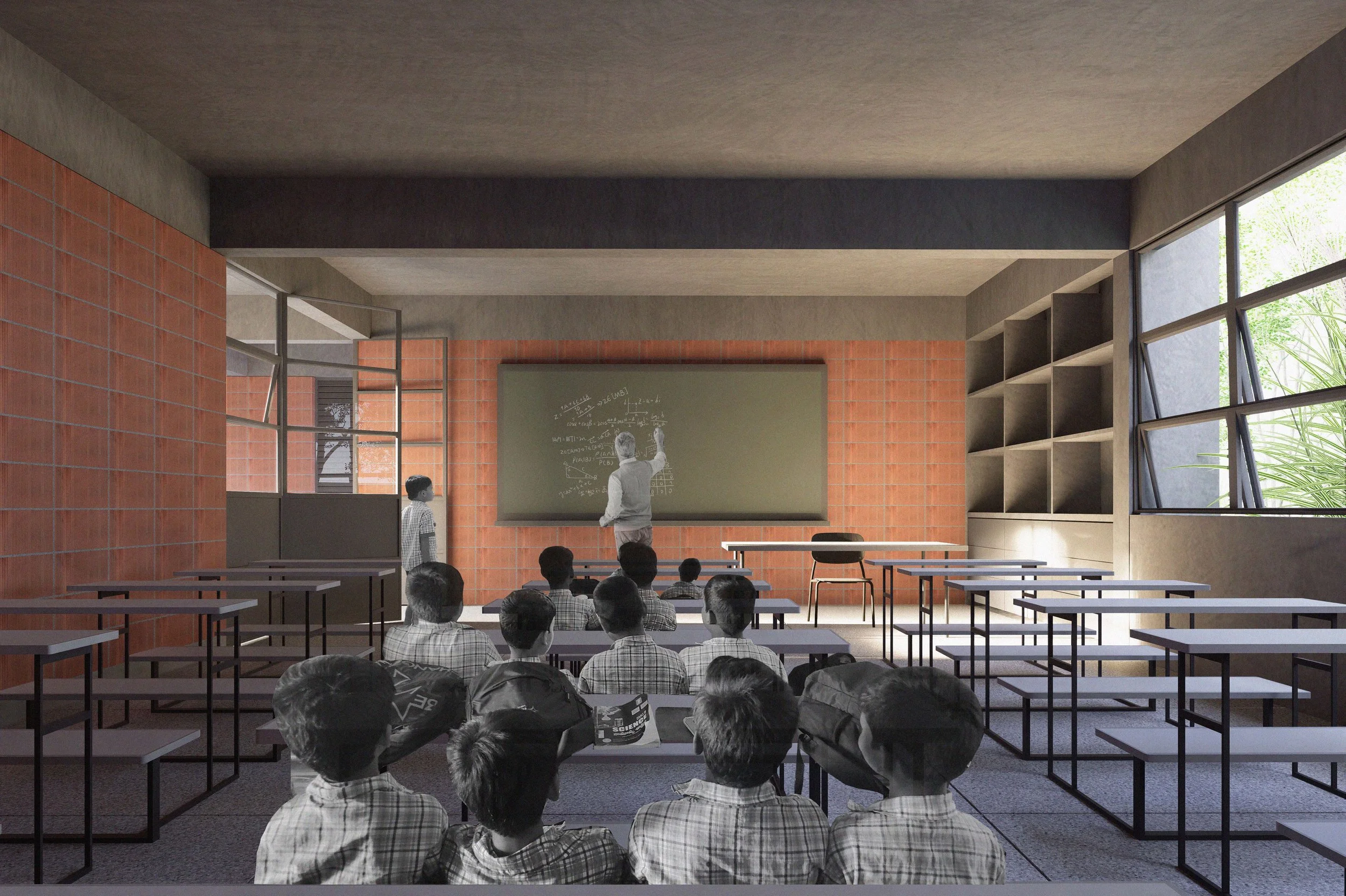
The site is located within a dense urban context and is defined by a cluster of existing trees, which bring a distinct natural character to the otherwise built surroundings. Currently, the site is occupied by an old government school.
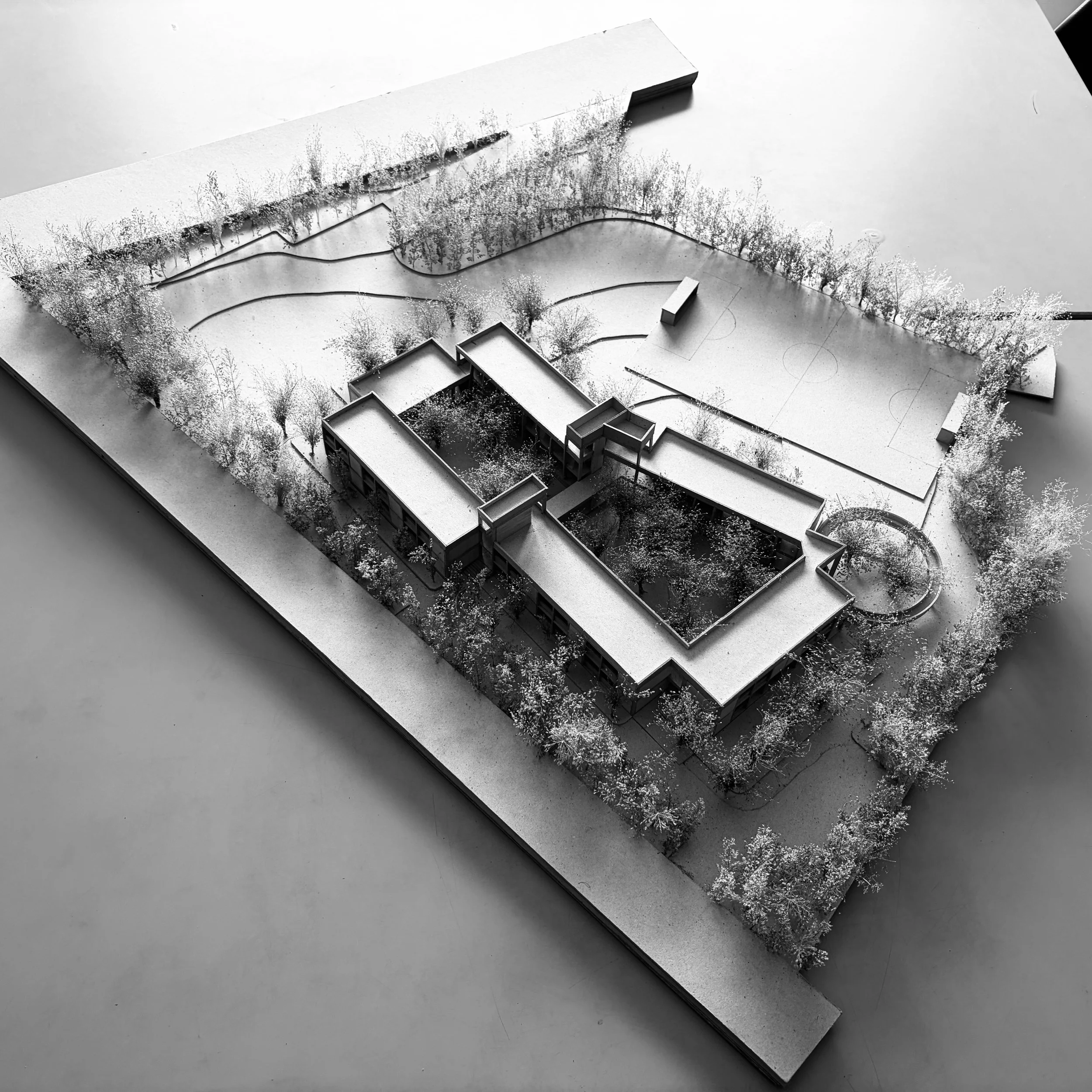
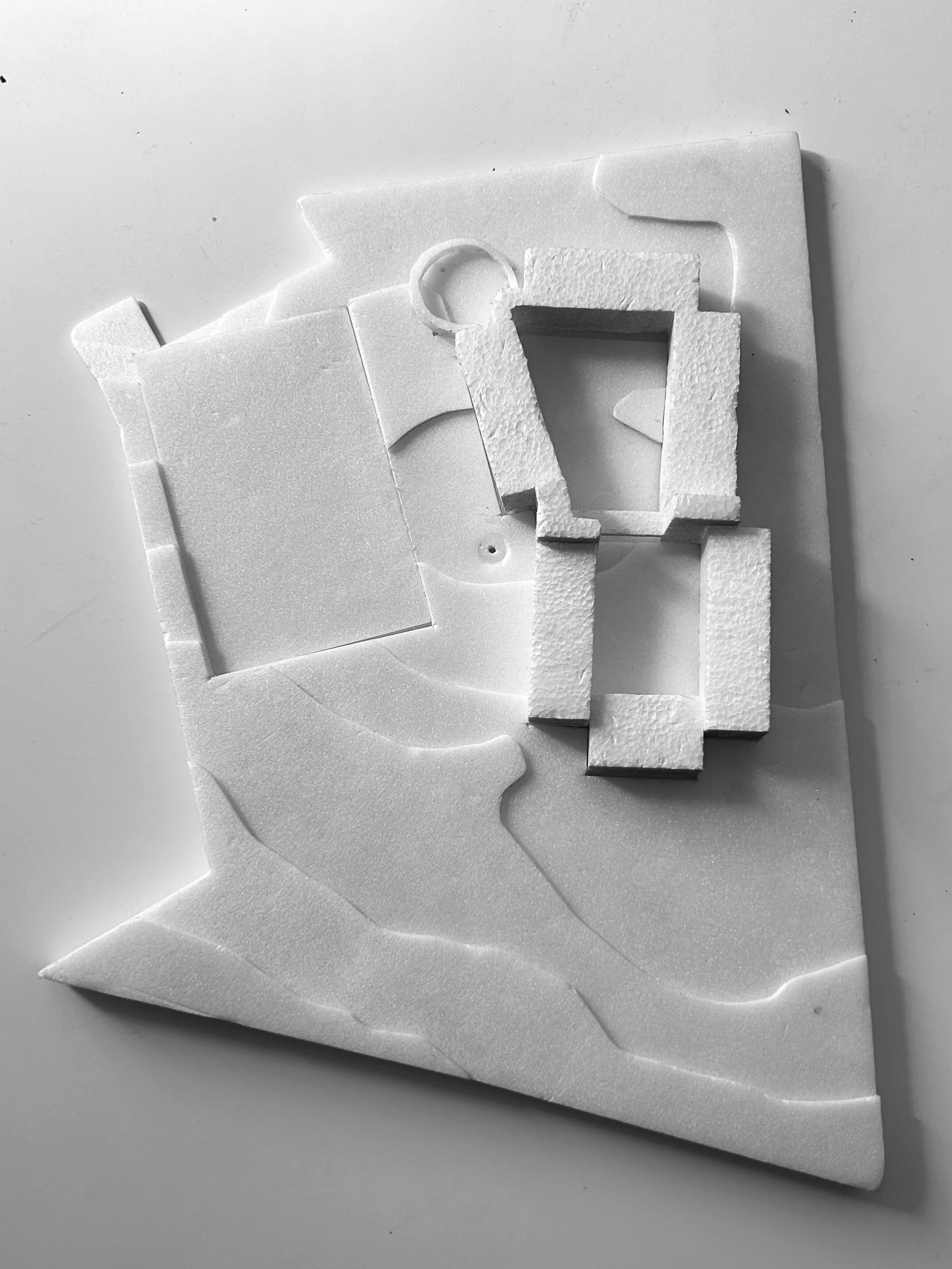
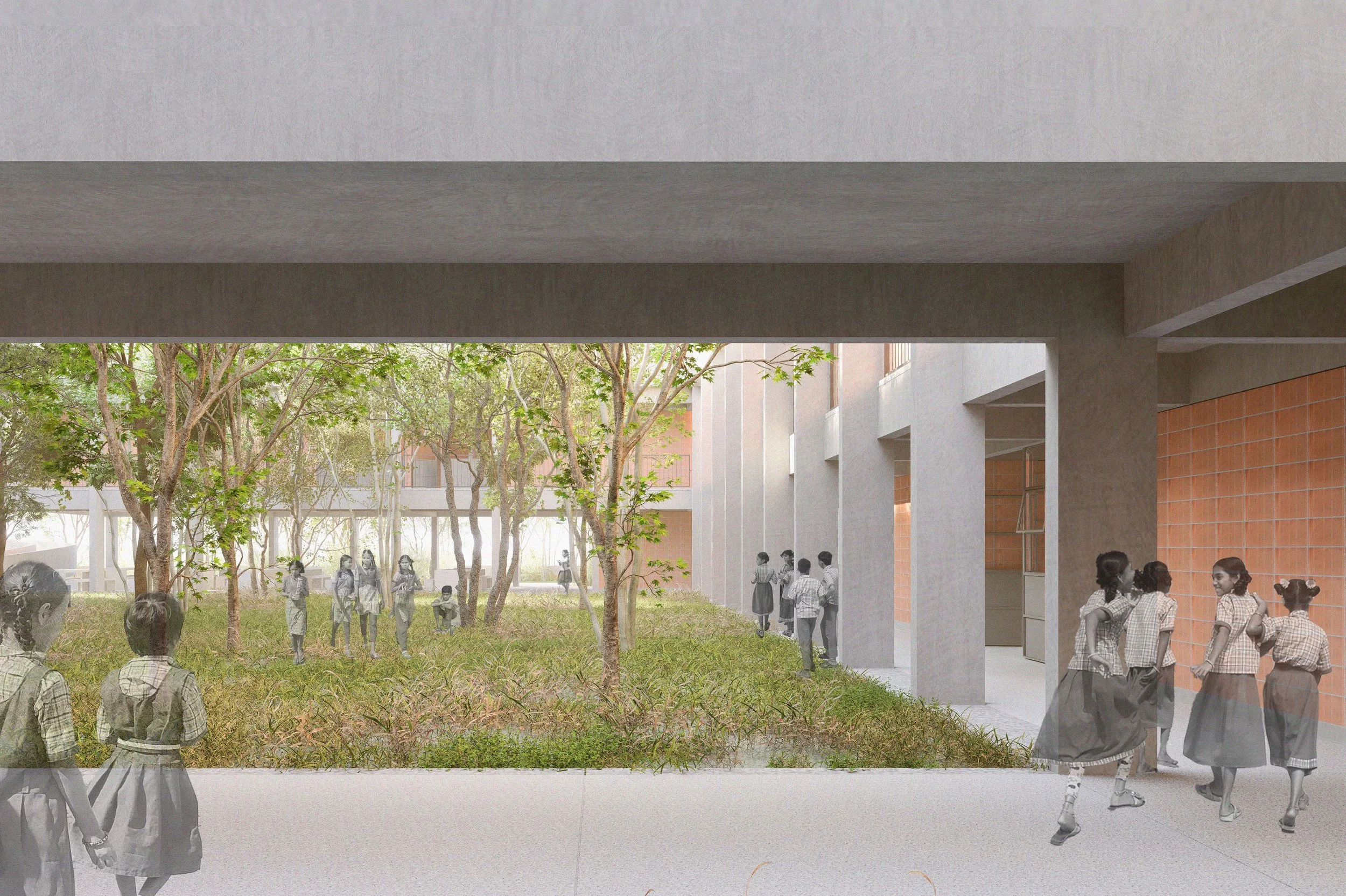
The primary objective of the design was to preserve these existing trees as much as possible. After several studies, a compact, vertical massing strategy was adopted to minimize the building footprint and enclose the central courtyard on all sides. This approach reduces the building’s impact on the site and establishes a contained, unified built form, protecting the overall composition from future external interventions.
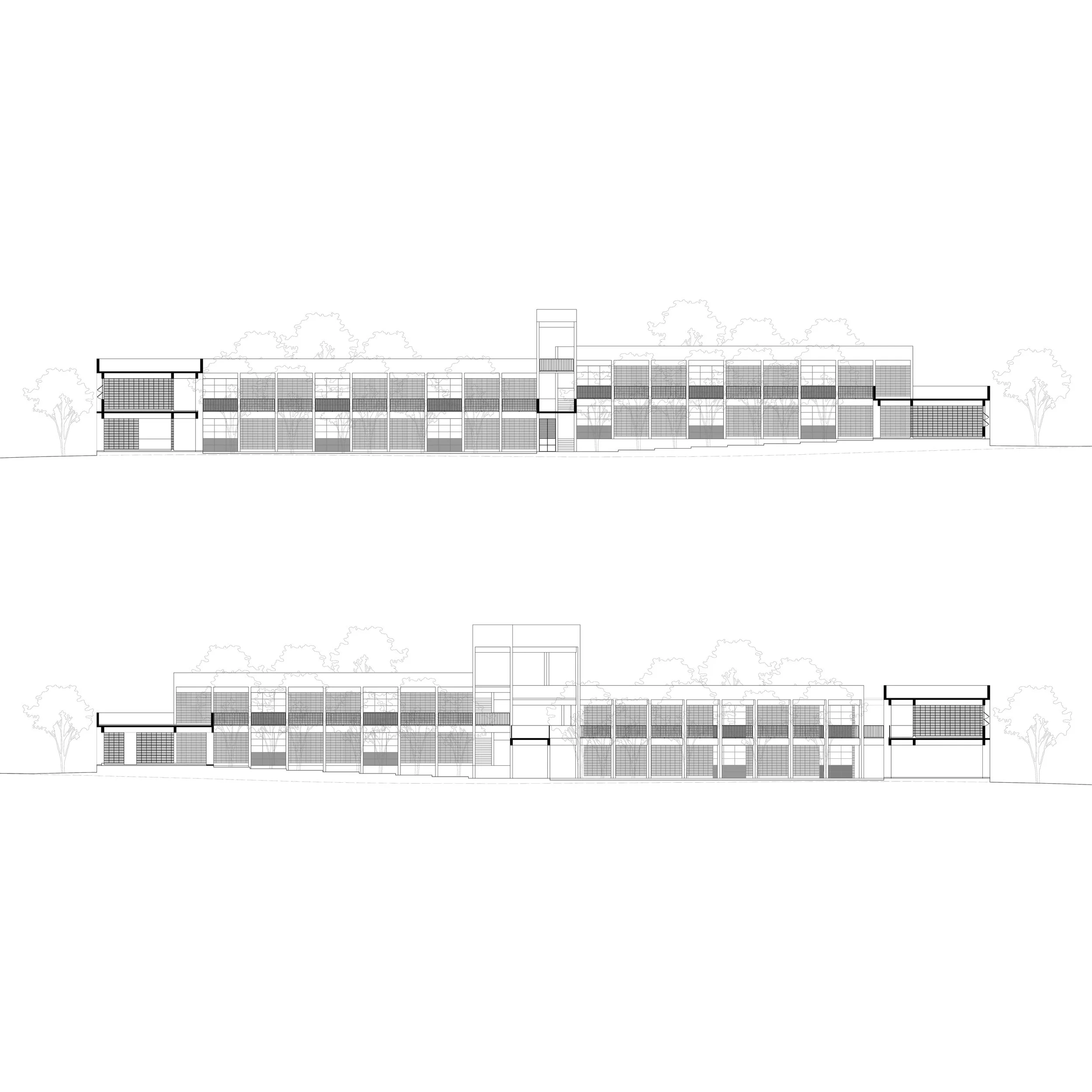
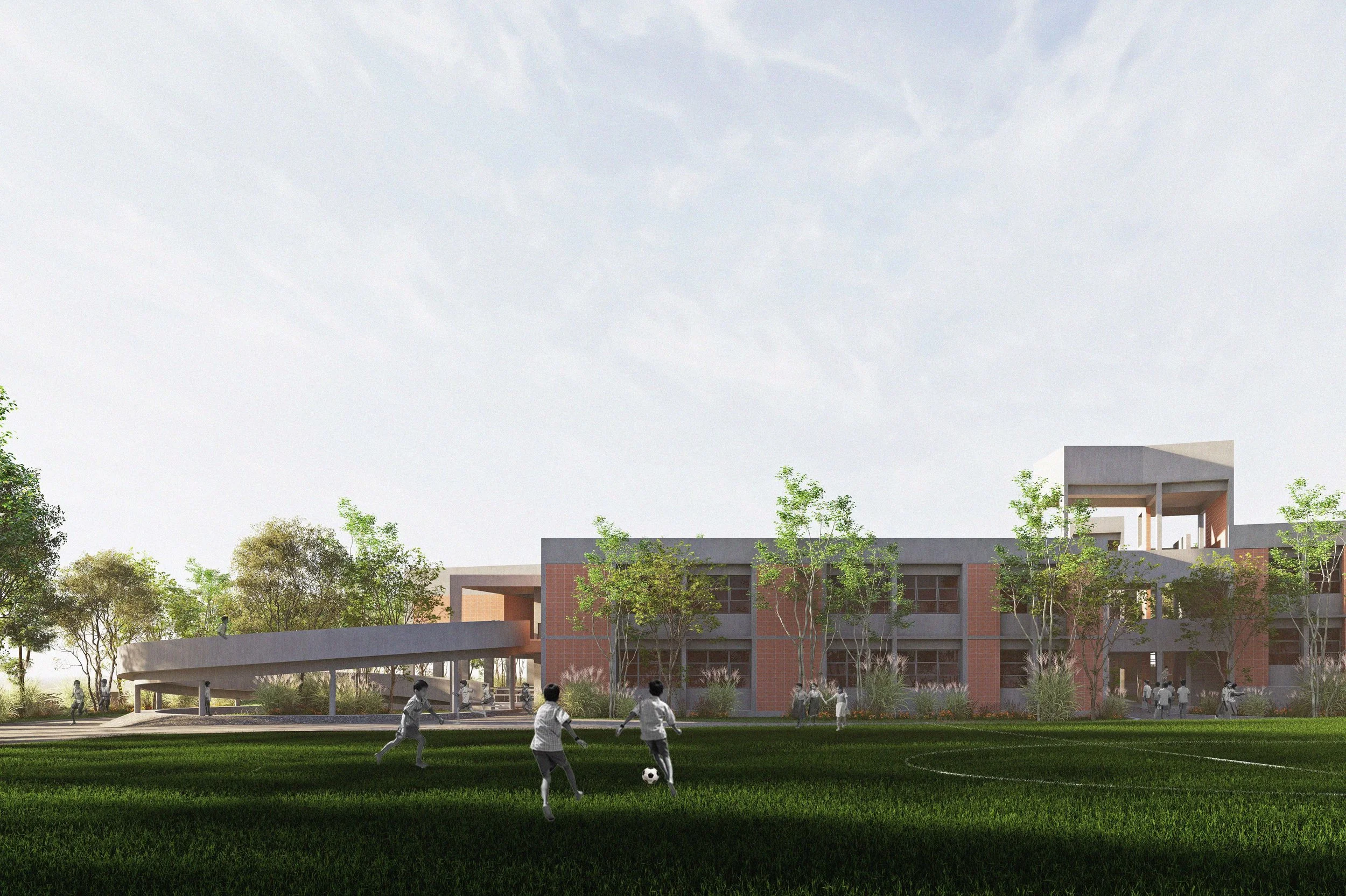
The site’s natural slope, with a level difference of over ten feet from north to south, informed the two-level organization of the school. The higher northern side accommodates the primary school in three wings, two of which are used for classrooms. The lower southern side houses the secondary school, also arranged in three wings with two classroom wings. A central bridge spans the courtyard, dividing it into two zones and serving as the main link between the two levels. Staircases at both ends of the bridge provide vertical movement, while a circular ramp at another corner of the site offers an accessible route between the levels.
The main entrance is located on the northeast side, where the adjacent road sits higher than the site. From here, a gently sloping ramp leads into an open-ended corridor, forming the primary access route and guiding movement toward the central courtyard.
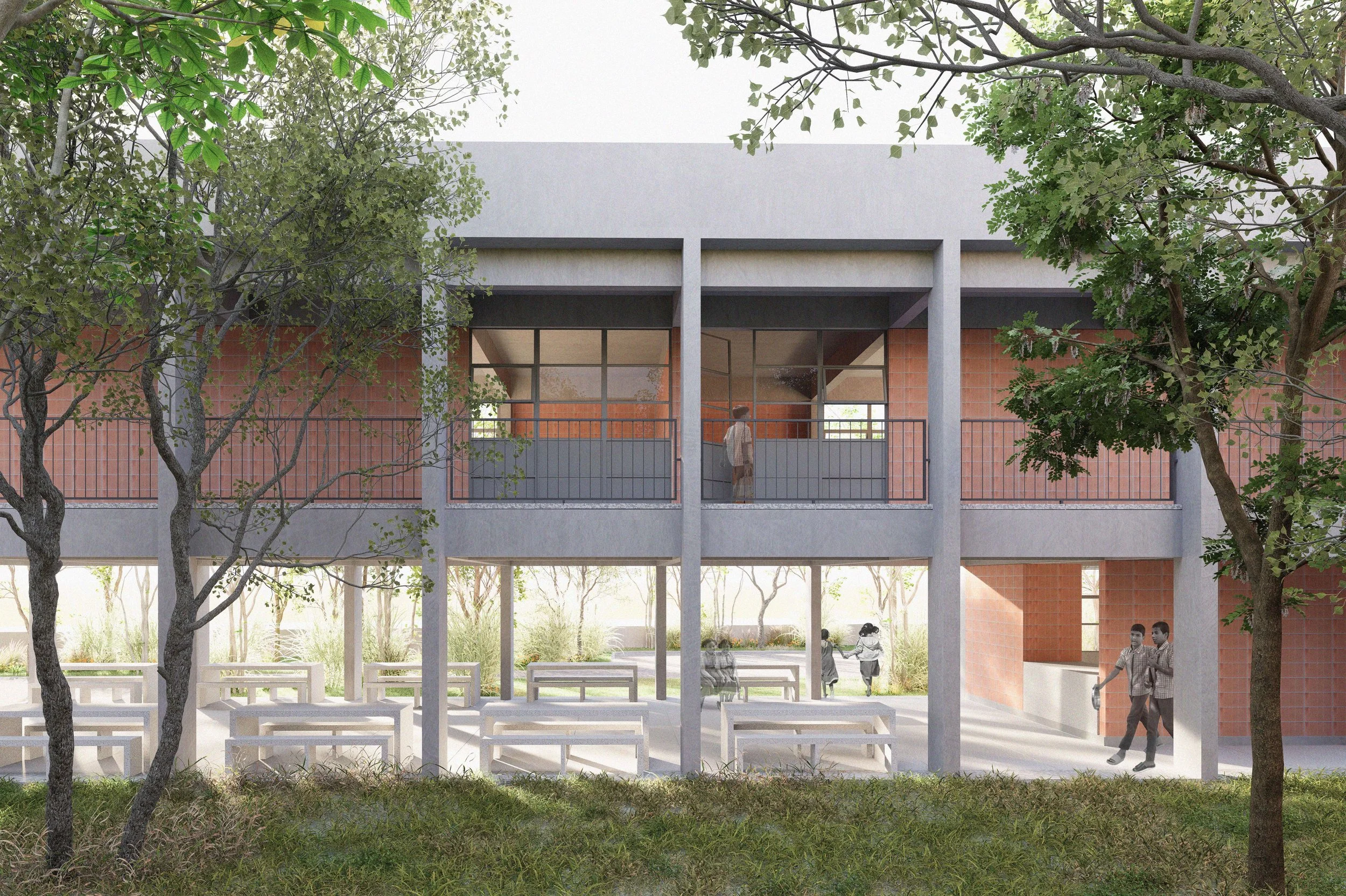
The ground floor accommodates key academic spaces, administrative areas, and the dining hall, while the first floor houses laboratories and additional classrooms. Restrooms are distributed on all floors and are integrated into corridor zones, allowing spaces for informal student interaction.
The courtyards form the core of the campus, providing spaces where students from both primary and secondary schools gather, play, and experience the outdoors. Exposure to sunlight, rain, and wind creates an engaging environment that becomes part of the students’ daily learning and recreational activities.
Circulation and informal gathering spaces overlook the courtyards from different levels, reinforcing the courtyard’s role as the heart of the school and encouraging interaction beyond formal classrooms.
Sports facilities are positioned along the eastern edge of the site, creating a functional relationship between the open play areas and the built form.
Program: Educational
Location: Gowlidoddy, Telangana, India
Surface: 3.2 Acres
Project Team: Hari Krishna, Vishishta Talusani, Surya Teja Makloor.
Collaborators: Sridhar-Simon Peter Engineer (structure),Dileep-RRA (MEP Consultants)






-
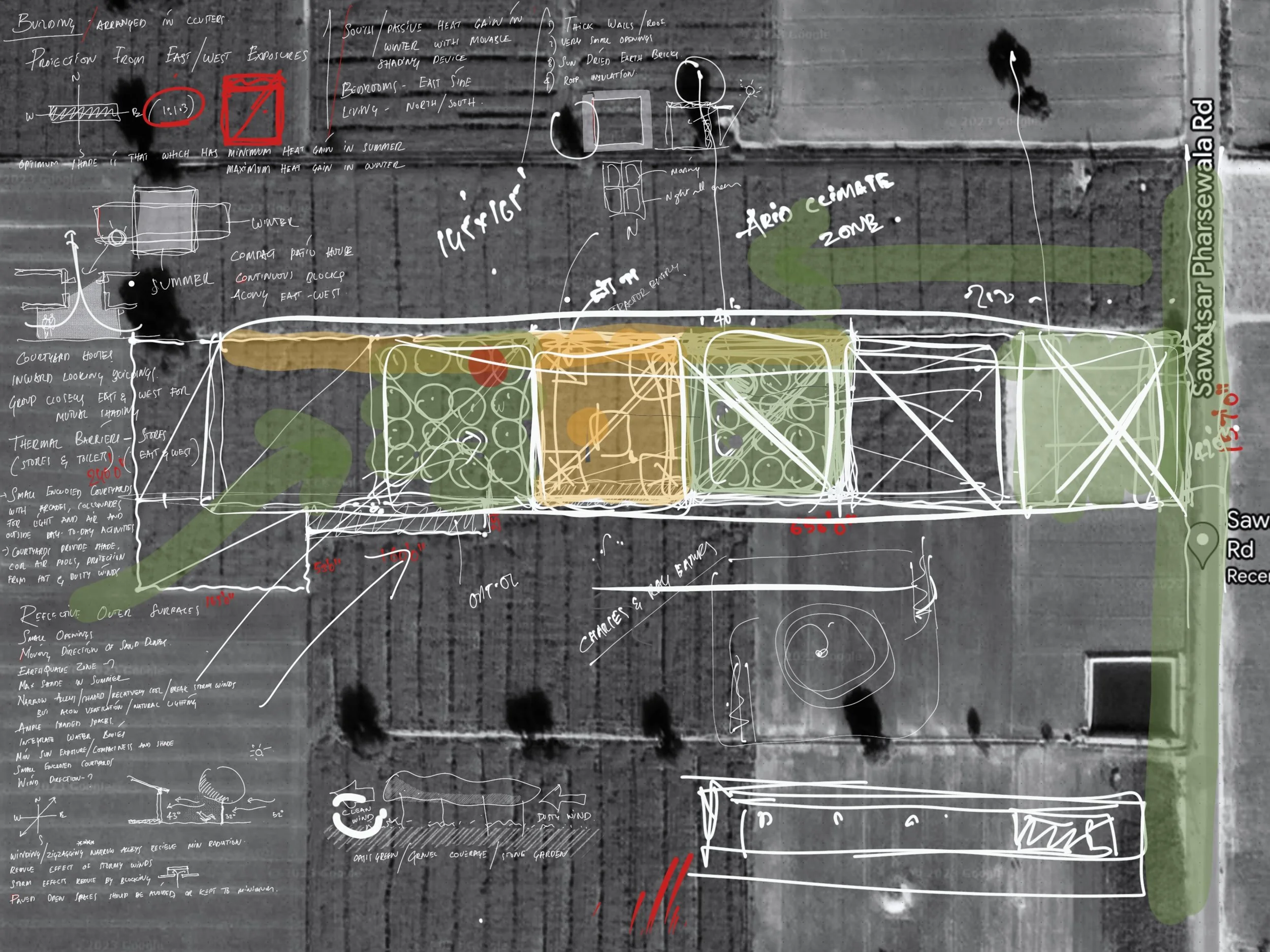
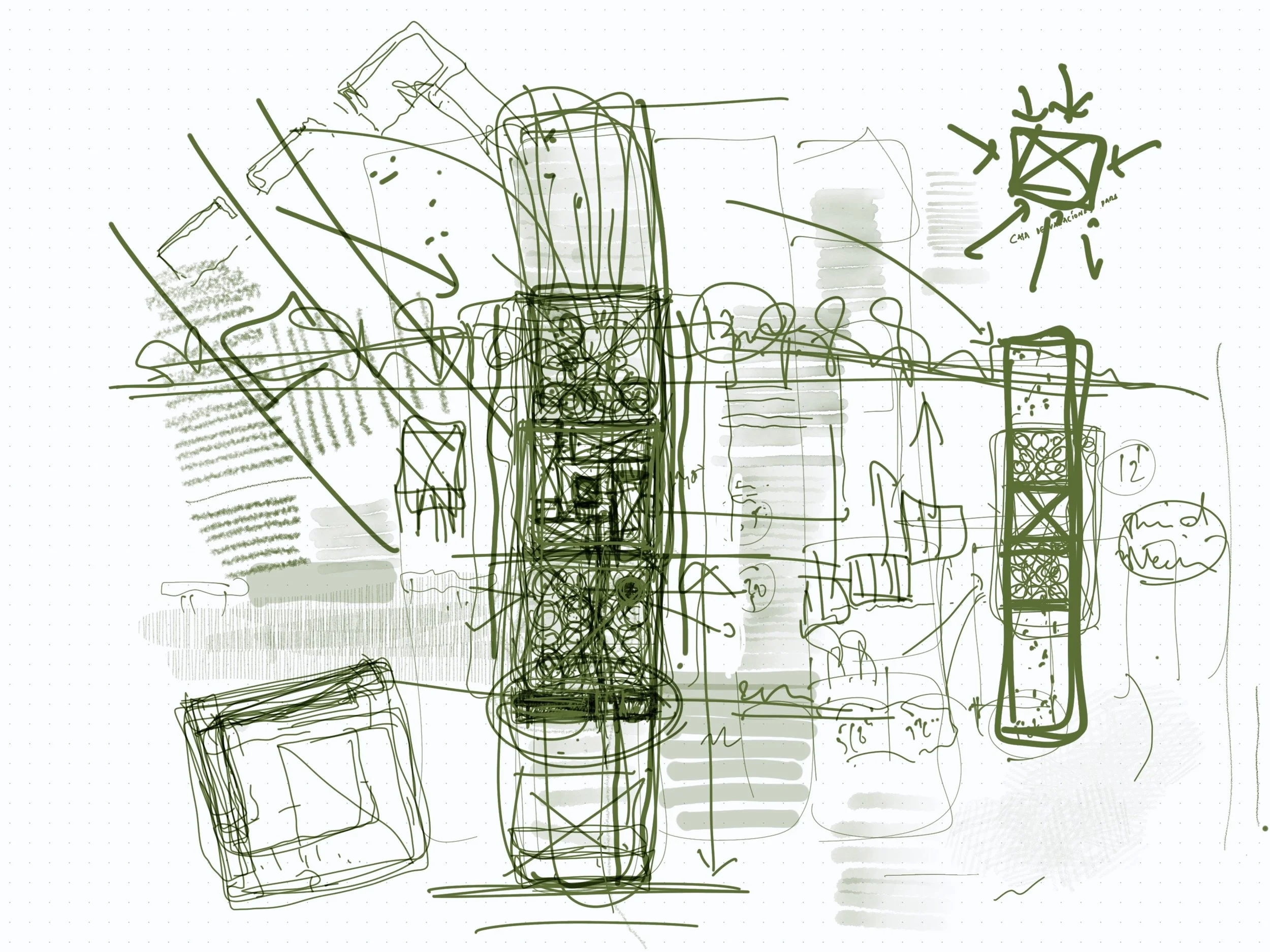
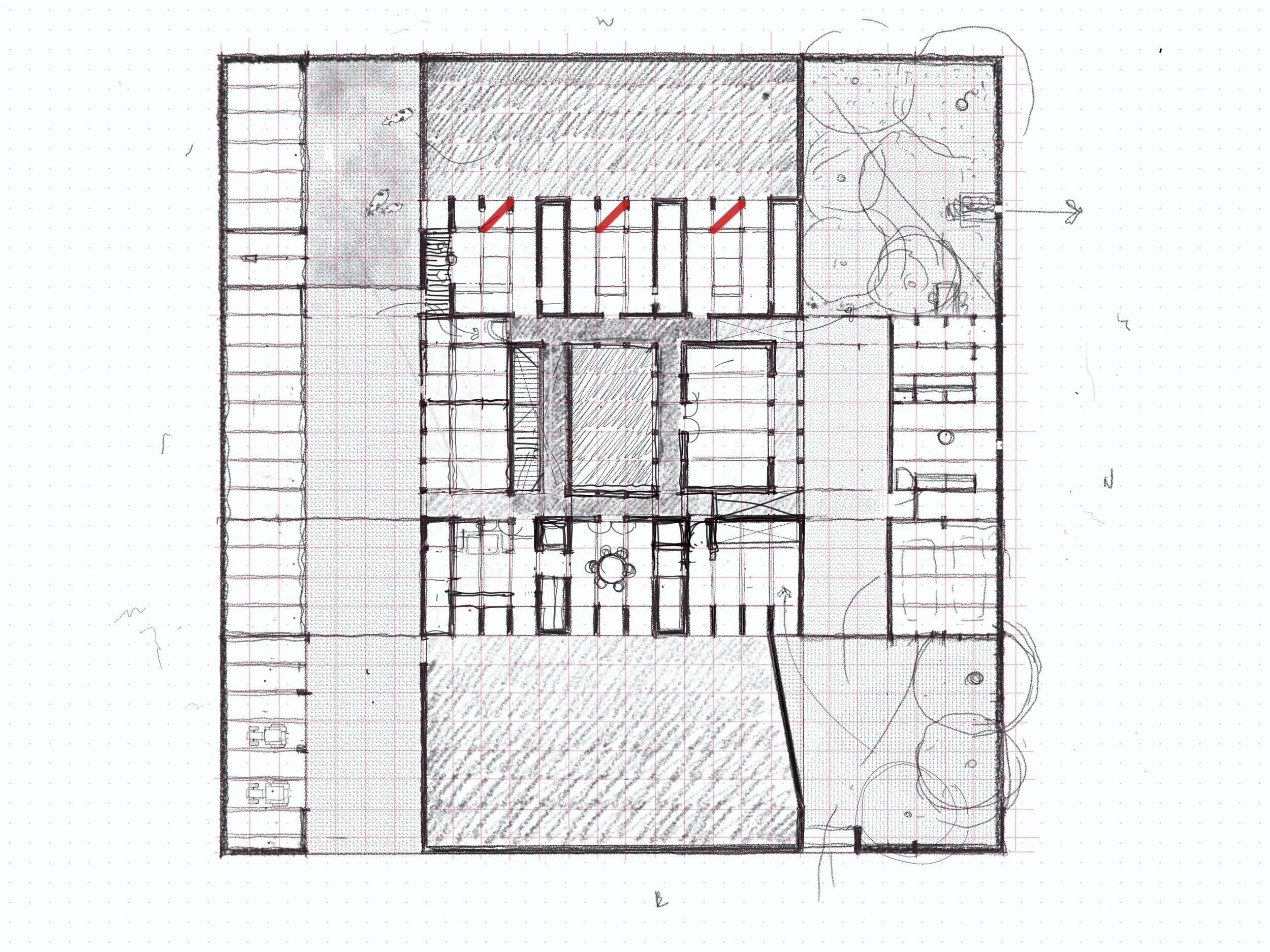
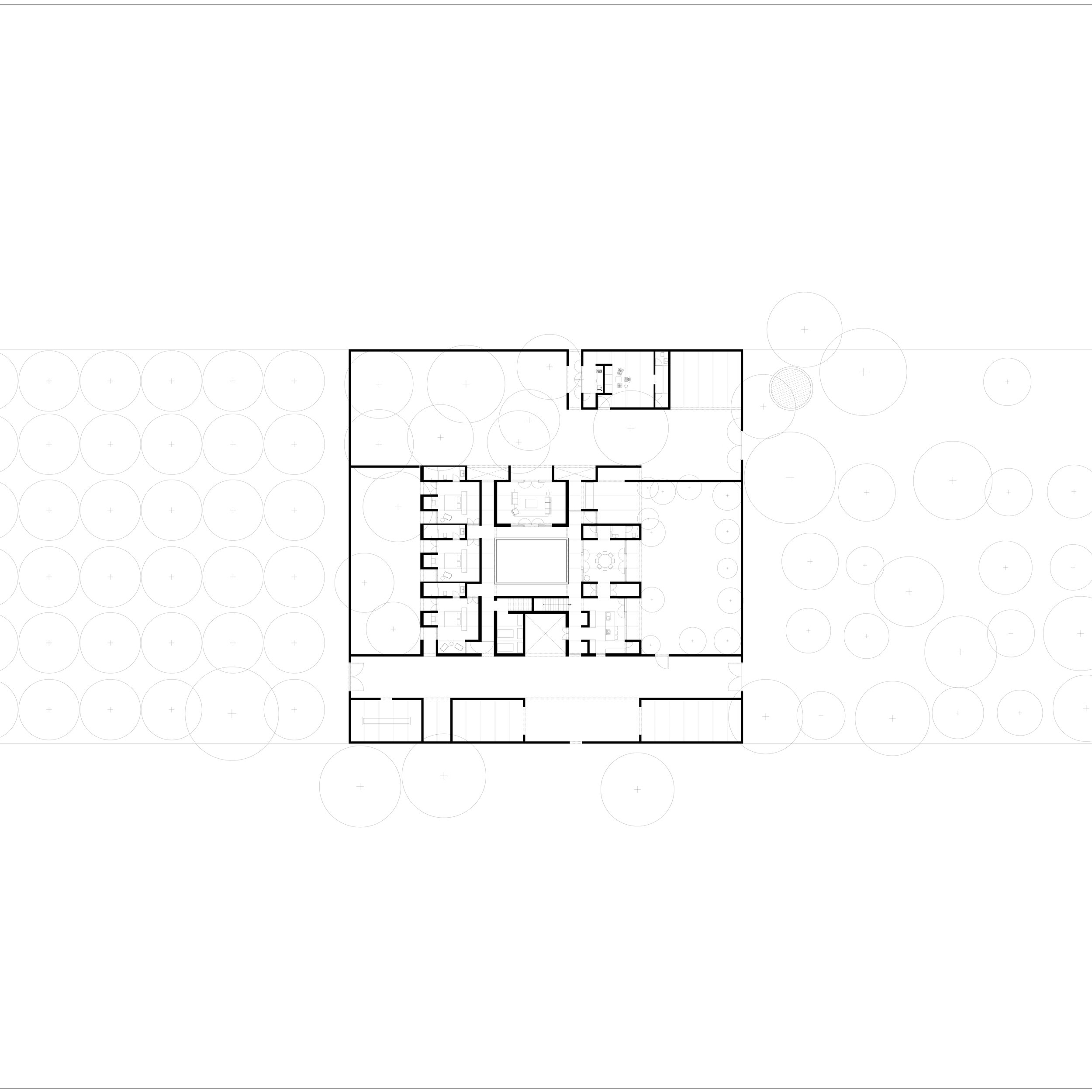
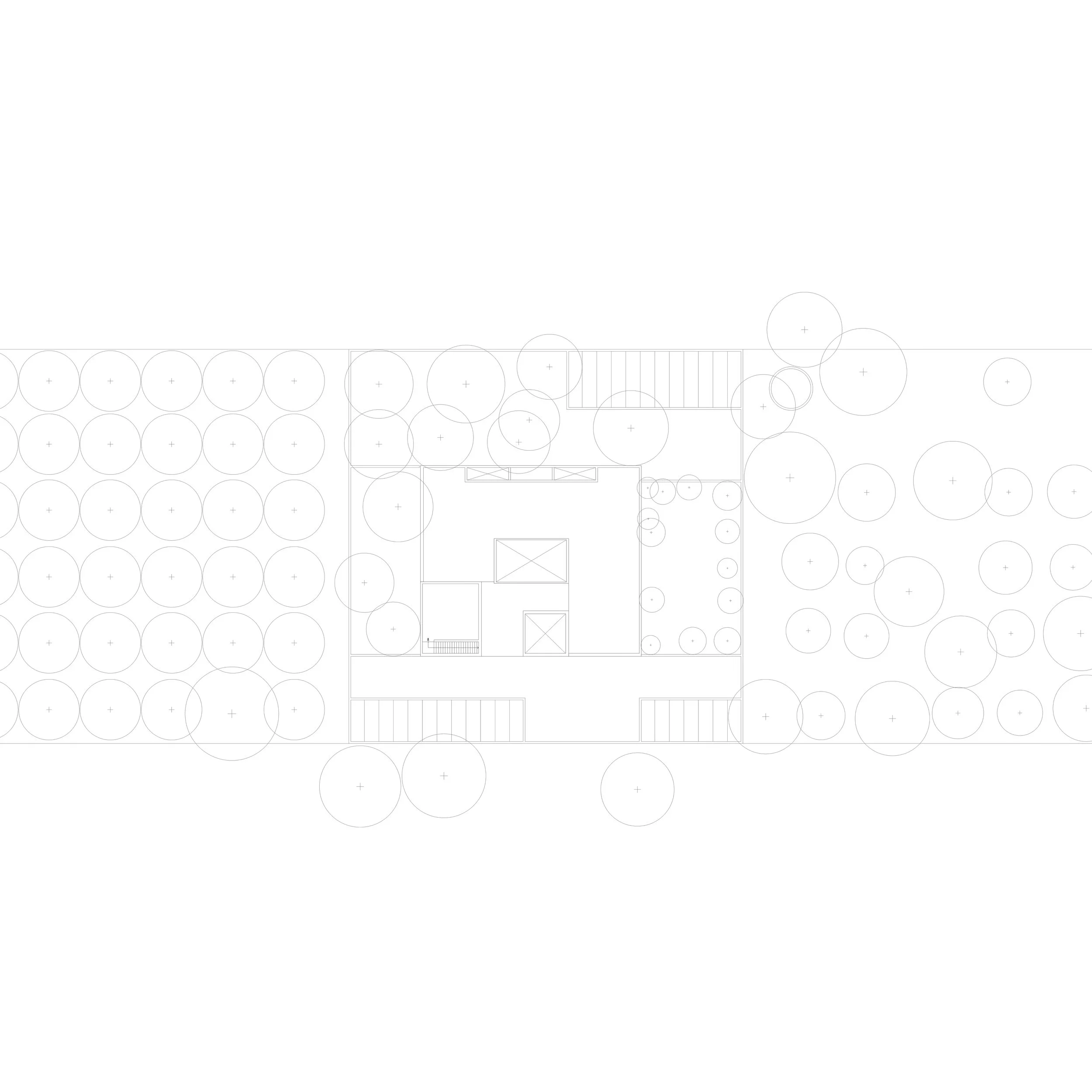
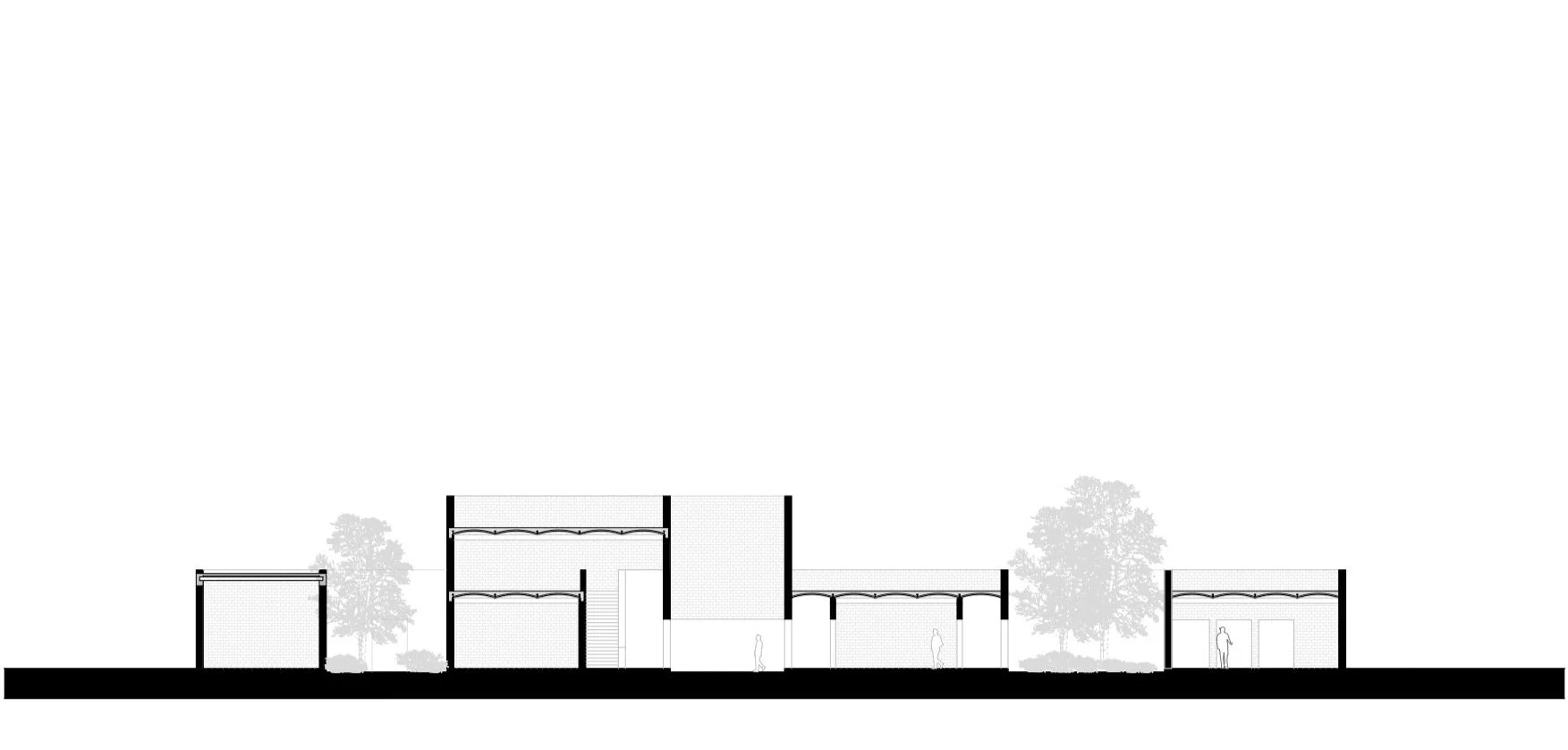
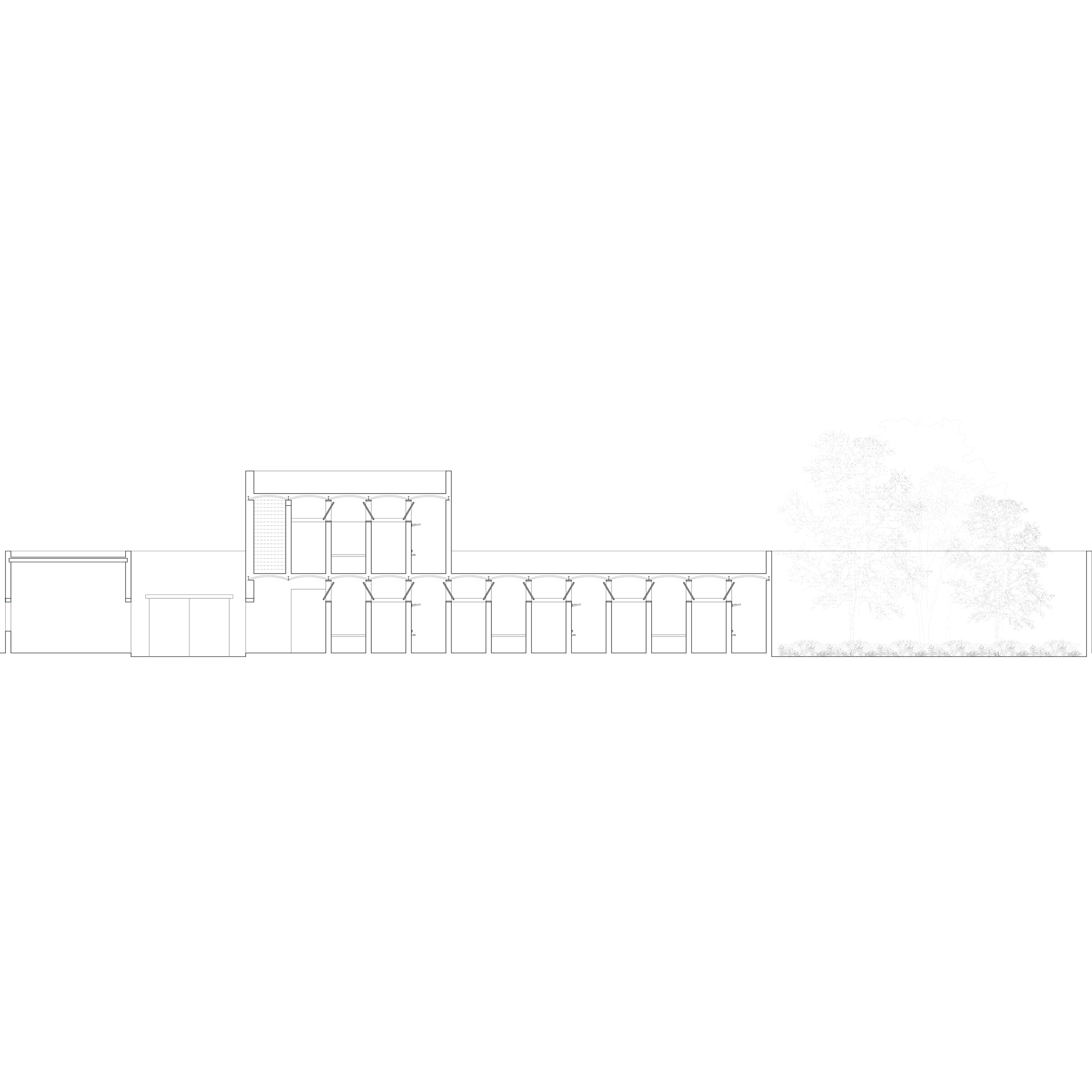
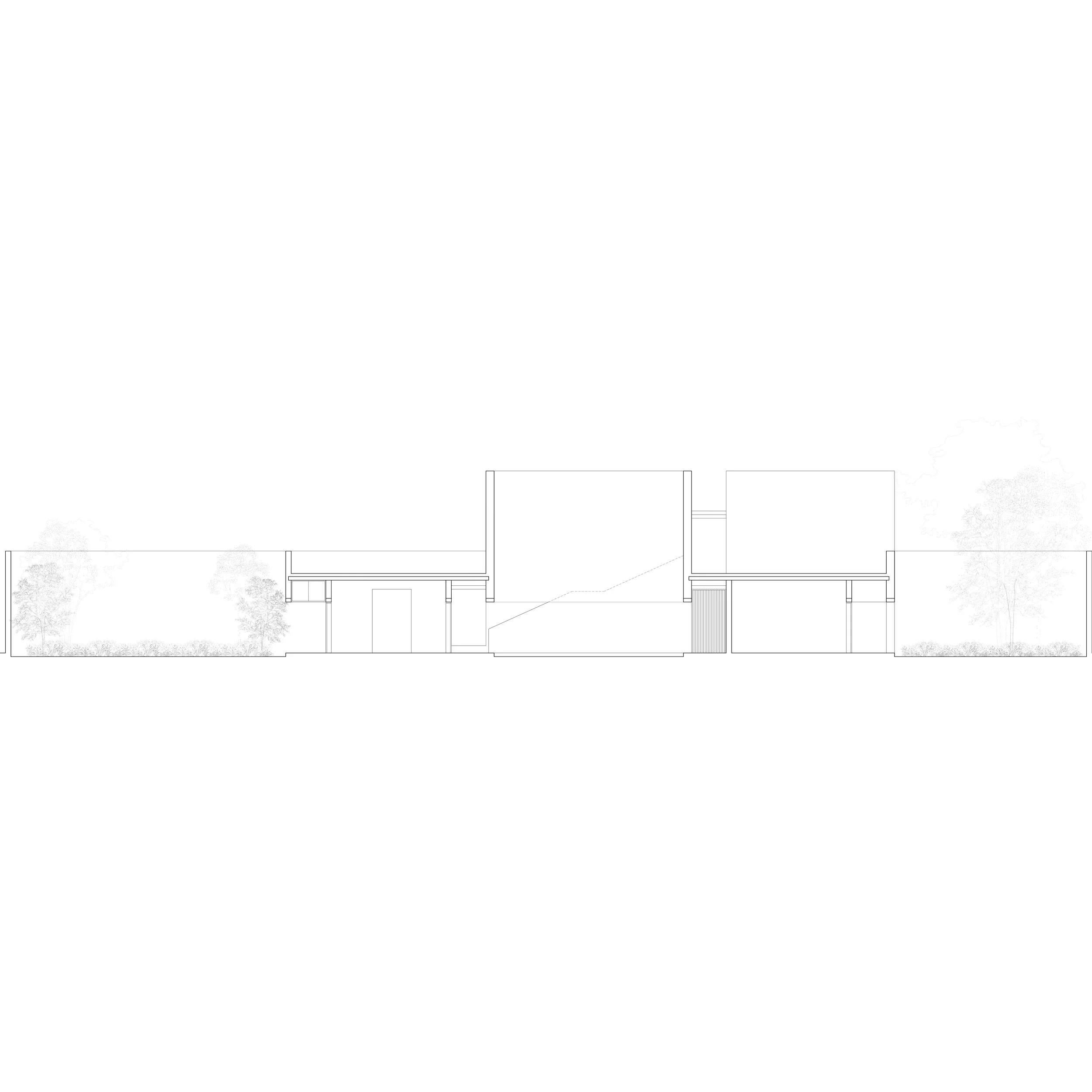
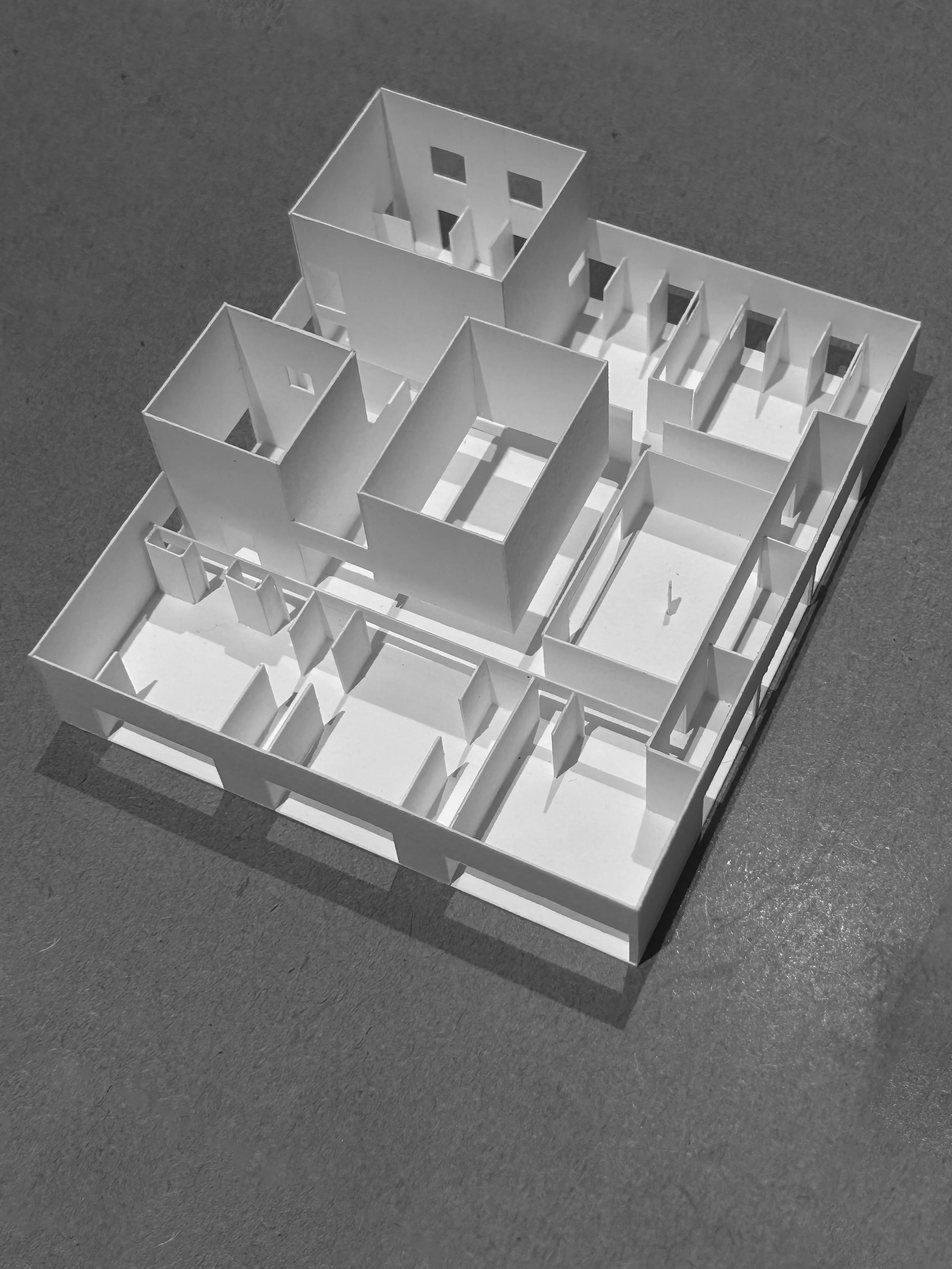
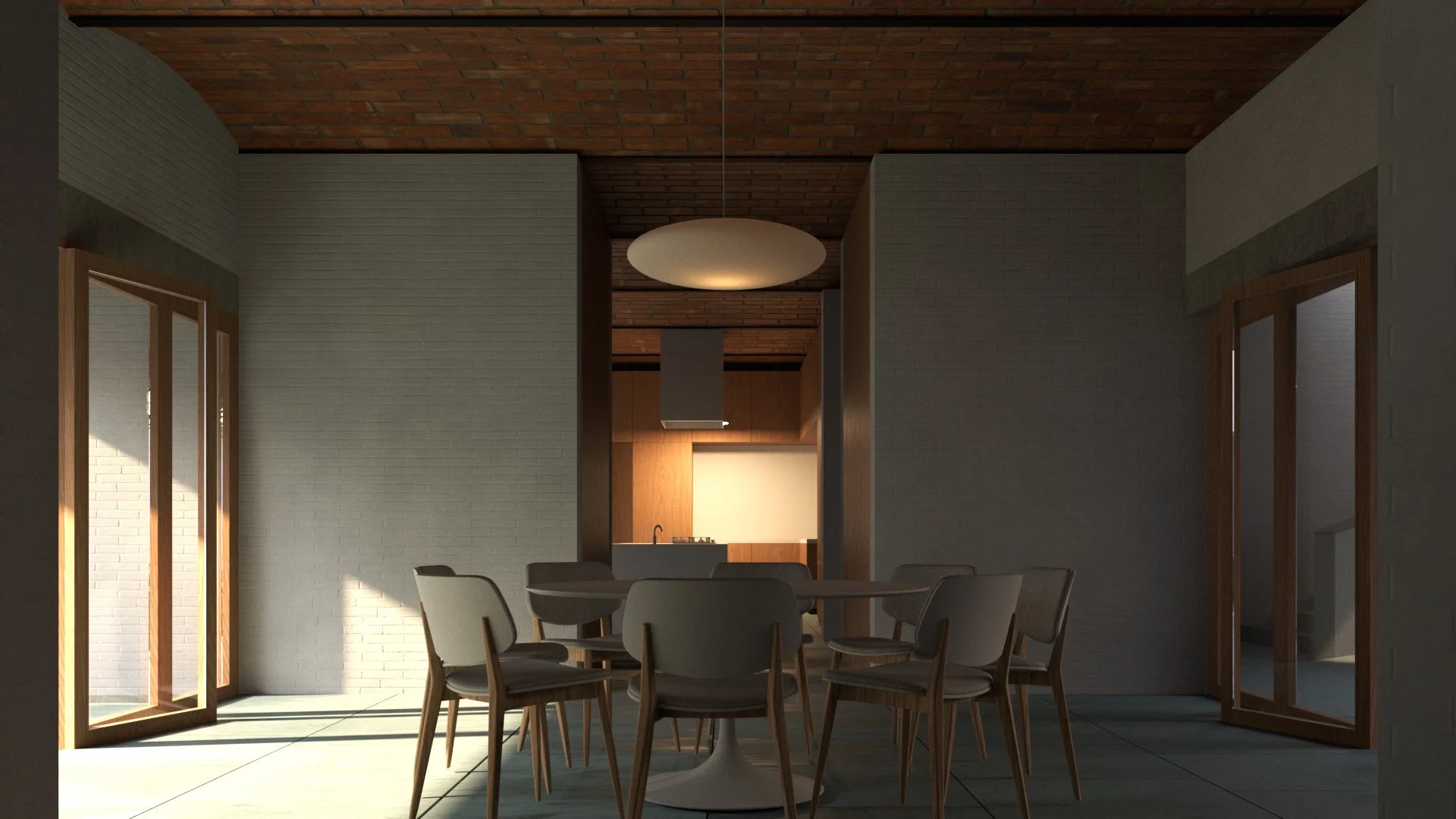
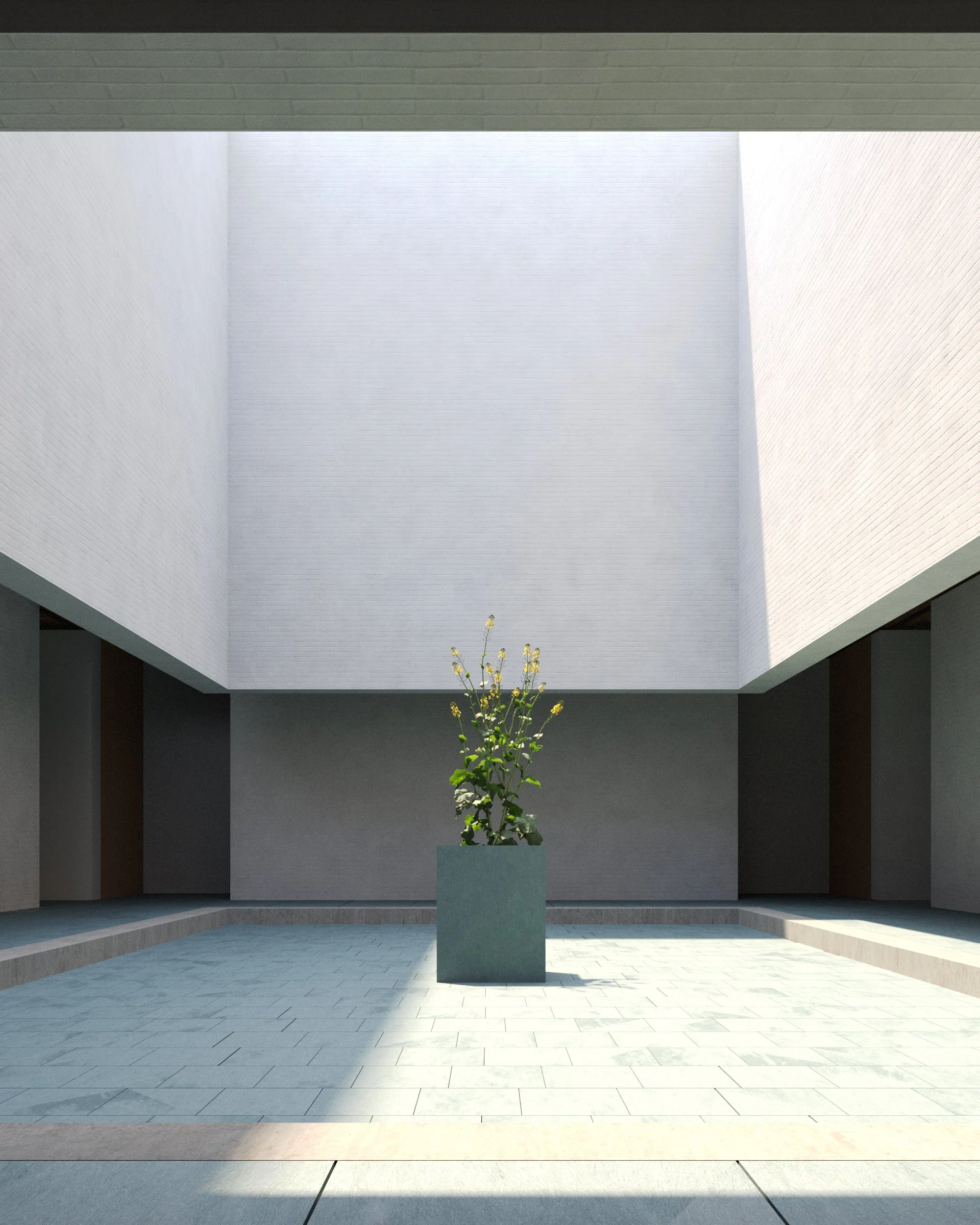
The house is a contemporary manifestation of the traditional slab construction method. Internally, the house is characterized by exposed brick jack arches ‘hidden’ from the exterior. House is a simple volumetric scheme modulated by a series of load-bearing walls that generate a sequence of living spaces. The interior rooms of the house and its support spaces are arranged around central courtyard or successions of gardens, each characterized by unique experience. One single material, handmade brick, in continuity with the earth, defines the house. This local material imbues the house with a natural relation to the landscape. Experientially, the house offers a vertical connection to nature (sky and sun) through the courtyards and a horizontal relationship to the man-made landscape.
Spatially, the ground floor comprises a five-layered configuration- from south the storage areas, circulation, house primary spaces (dining, living and master bed) and secondary spaces (pantry, powder room, dressing and master toilet) and the 5th layer of tertiary spaces (utility and guest area). The layering ensures thermal comfort. The entrance areas, dining, kitchen on the east and bedrooms on west visually and physically connected to the two courtyards.
Program: Residence
Location: Farsewala, Rajasthan, India
Surface: 330 square meters
Project Team: Hari Krishna, Gayatri Kodavali
Collaborators: Sridhar-Simon Peter Engineer (structure)


-
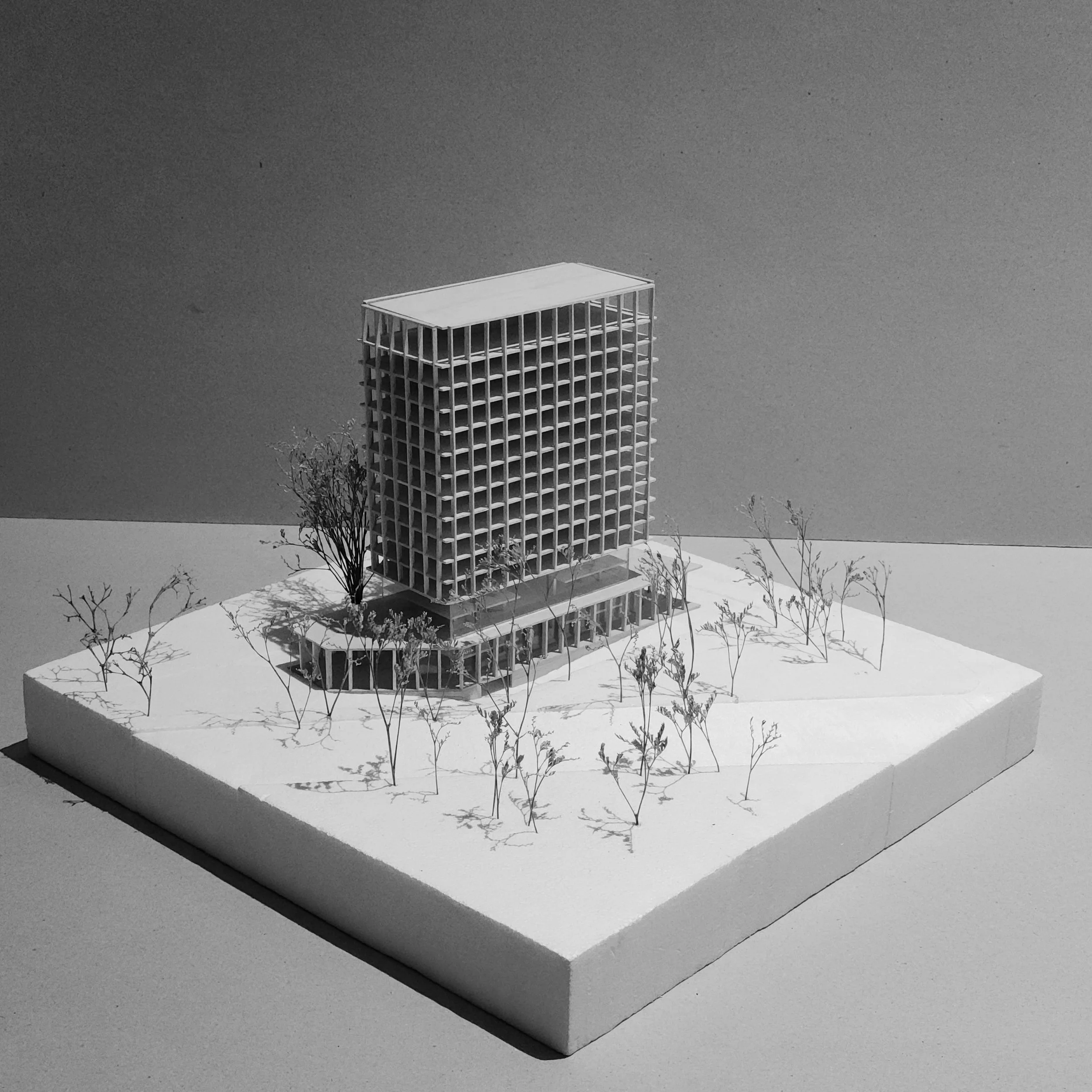
The brief called for an office building with narrow (25m x 75m)
footprint and a maximum height of 35m above street level. Situated on a corner plot, the volume is visible from two roads calling for a strong visual identity.
On the ground floor, the facade is recessed to form a double height colonnade defined by the freestanding columns,providing a sheltered public area and access to the ground floor on all sides. The ground floor accommodates two commercial units and an entrance to the underground on the north-east corner.
The main entrance is on the north and east facades, leading into a double height lobby. A pair of central cores provides the main structure and defines the internal arrangement for the twelve storeys of office space. Each office floor measures 828sqm with a further 130sqm balcony and a generous floor to ceiling height of 3.5m. The top floor is articulated as a ‘crown’ for the building, with a cafeteria.
Program: Mixed Use
Location: Khajaguda, Telangana, India
Surface: 14000 square meters
Project Team: Hari Krishna, Nikitha Kolakaluri.
-
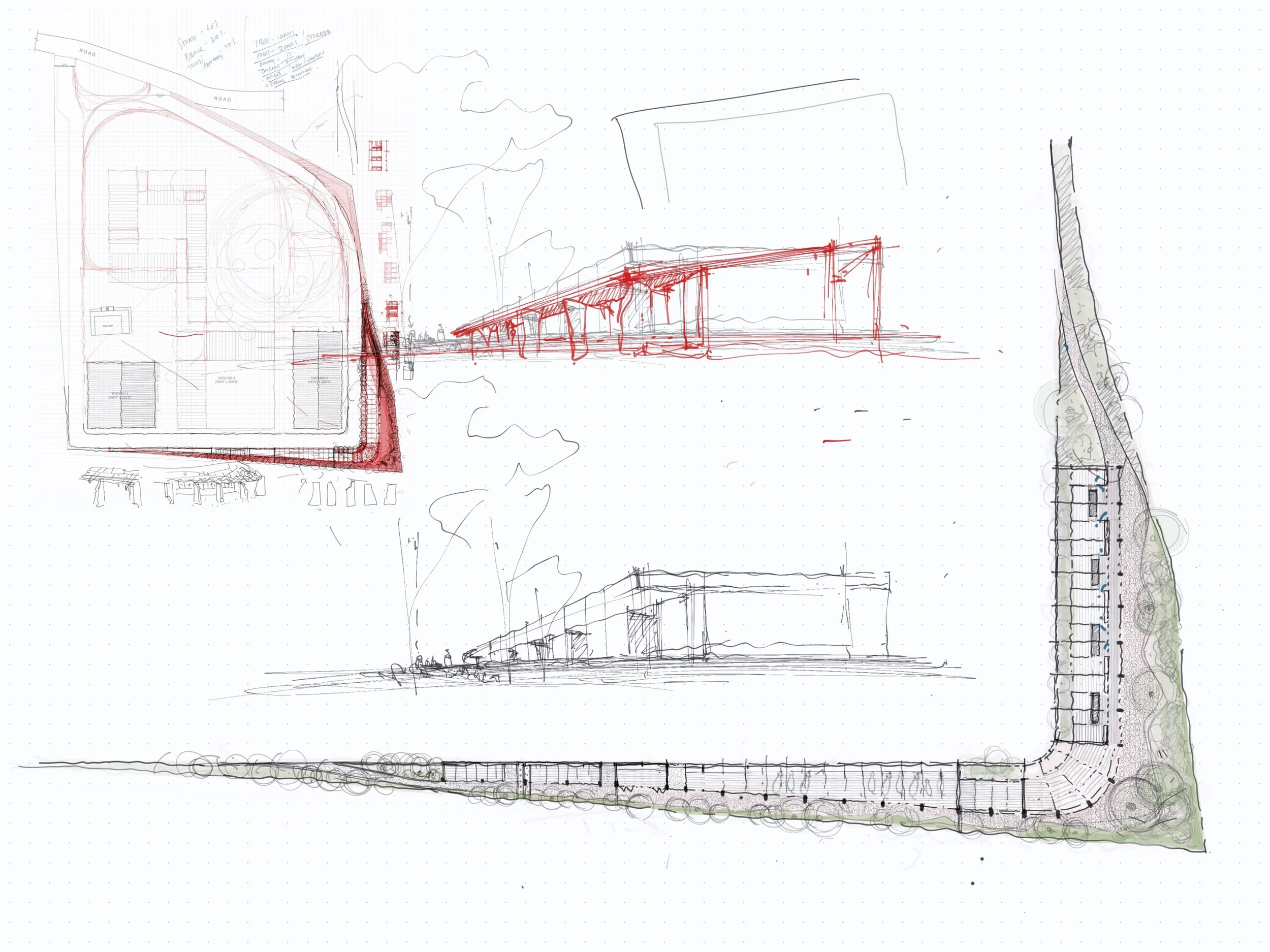
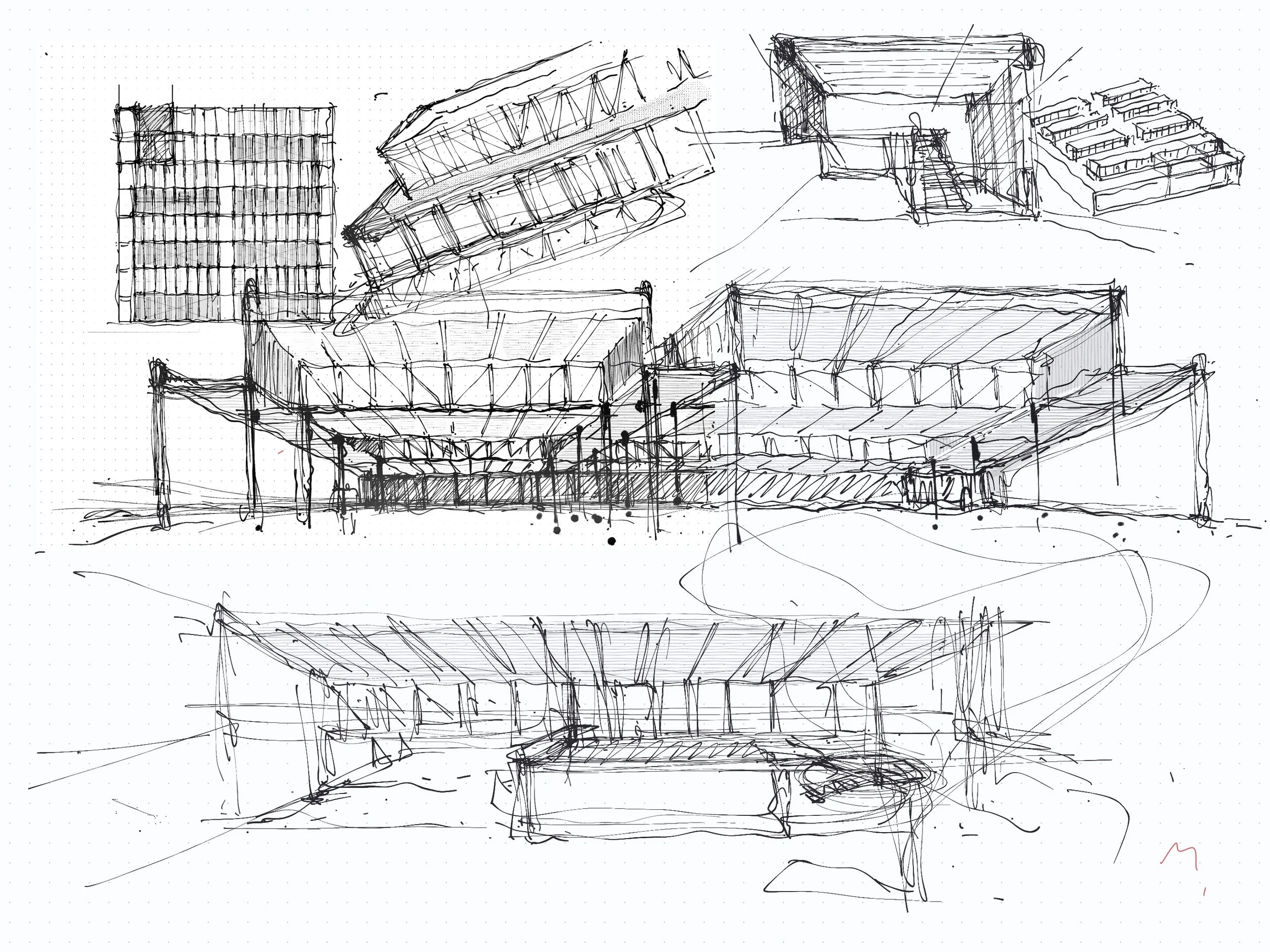
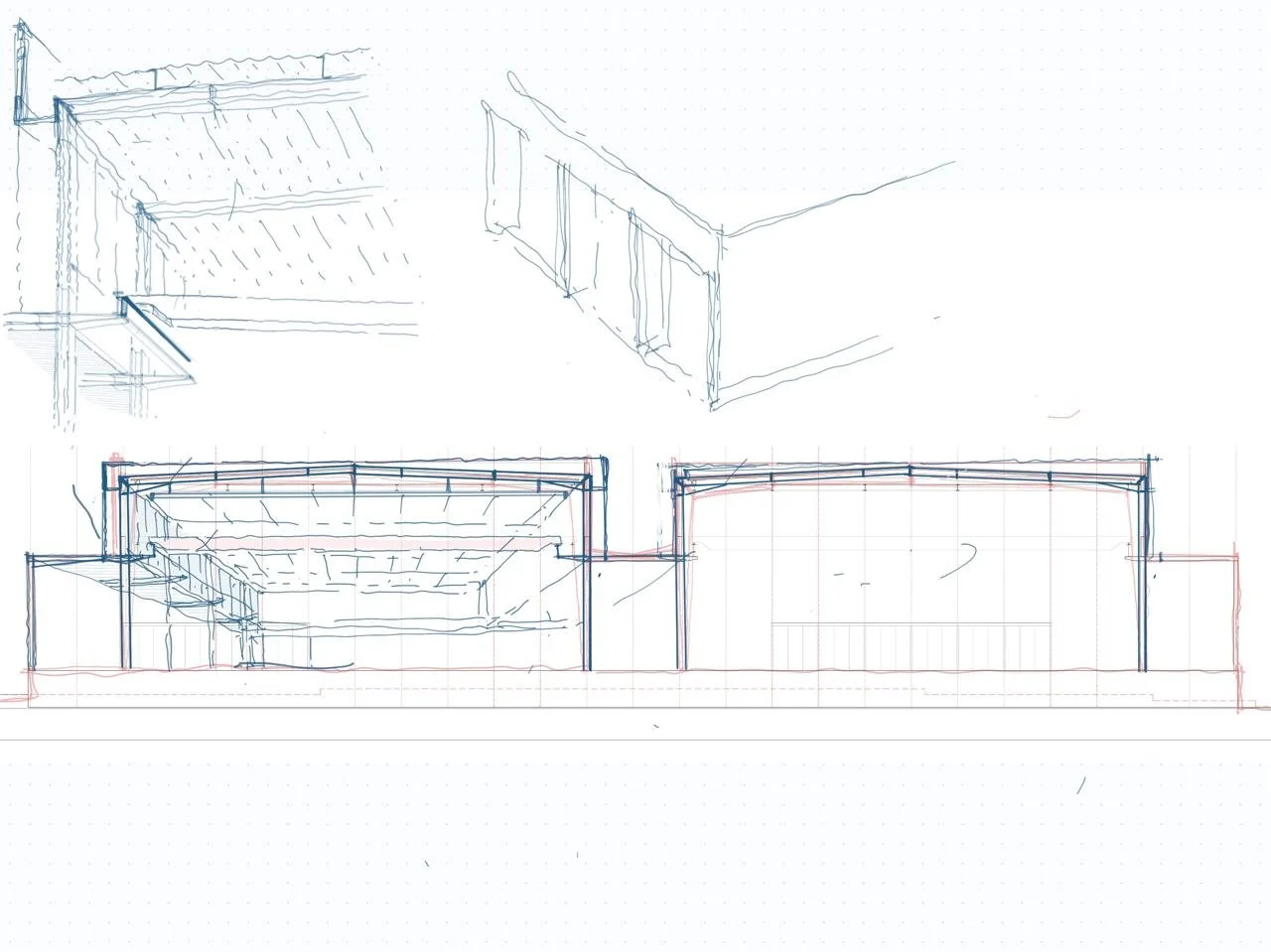
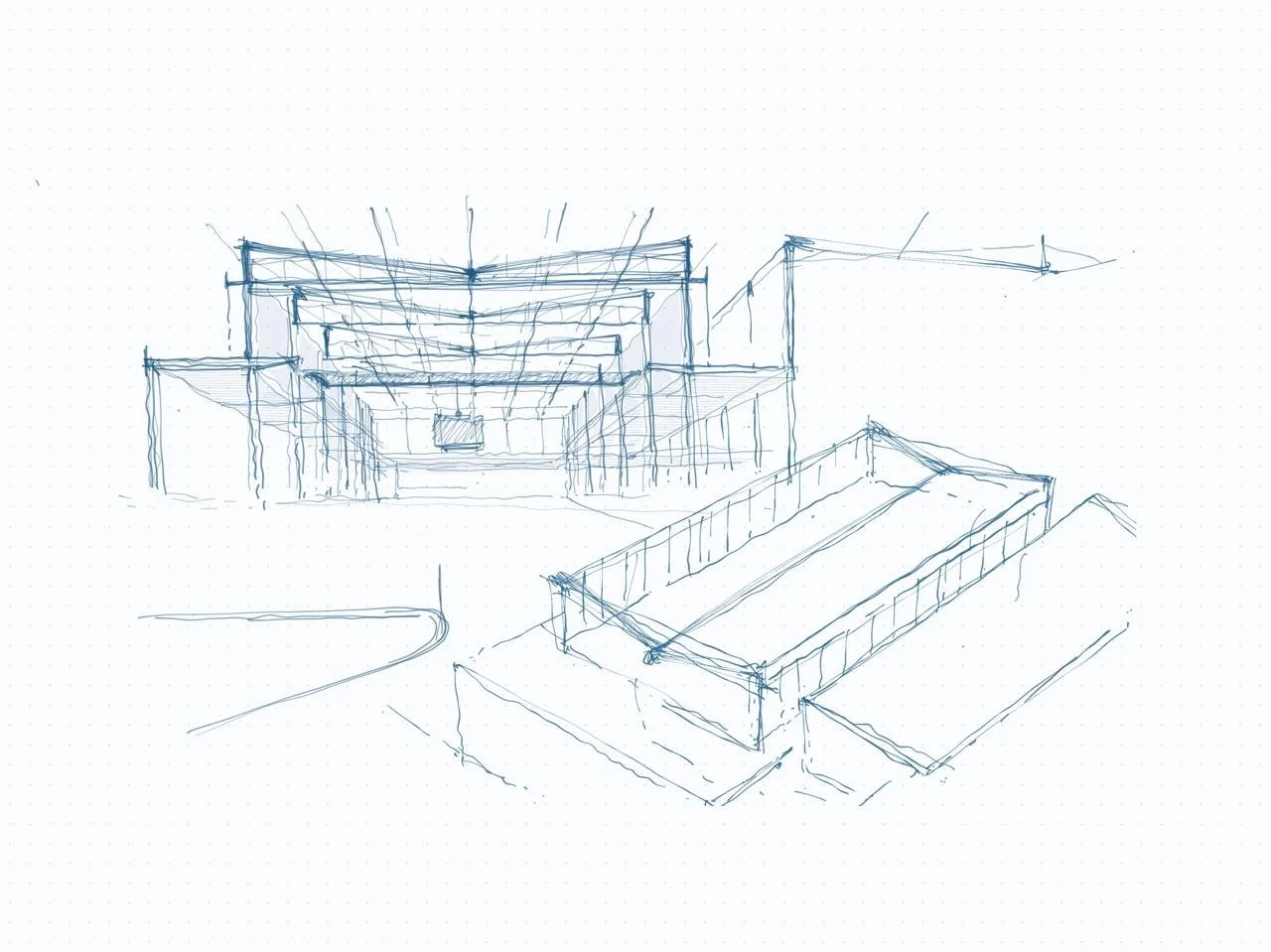
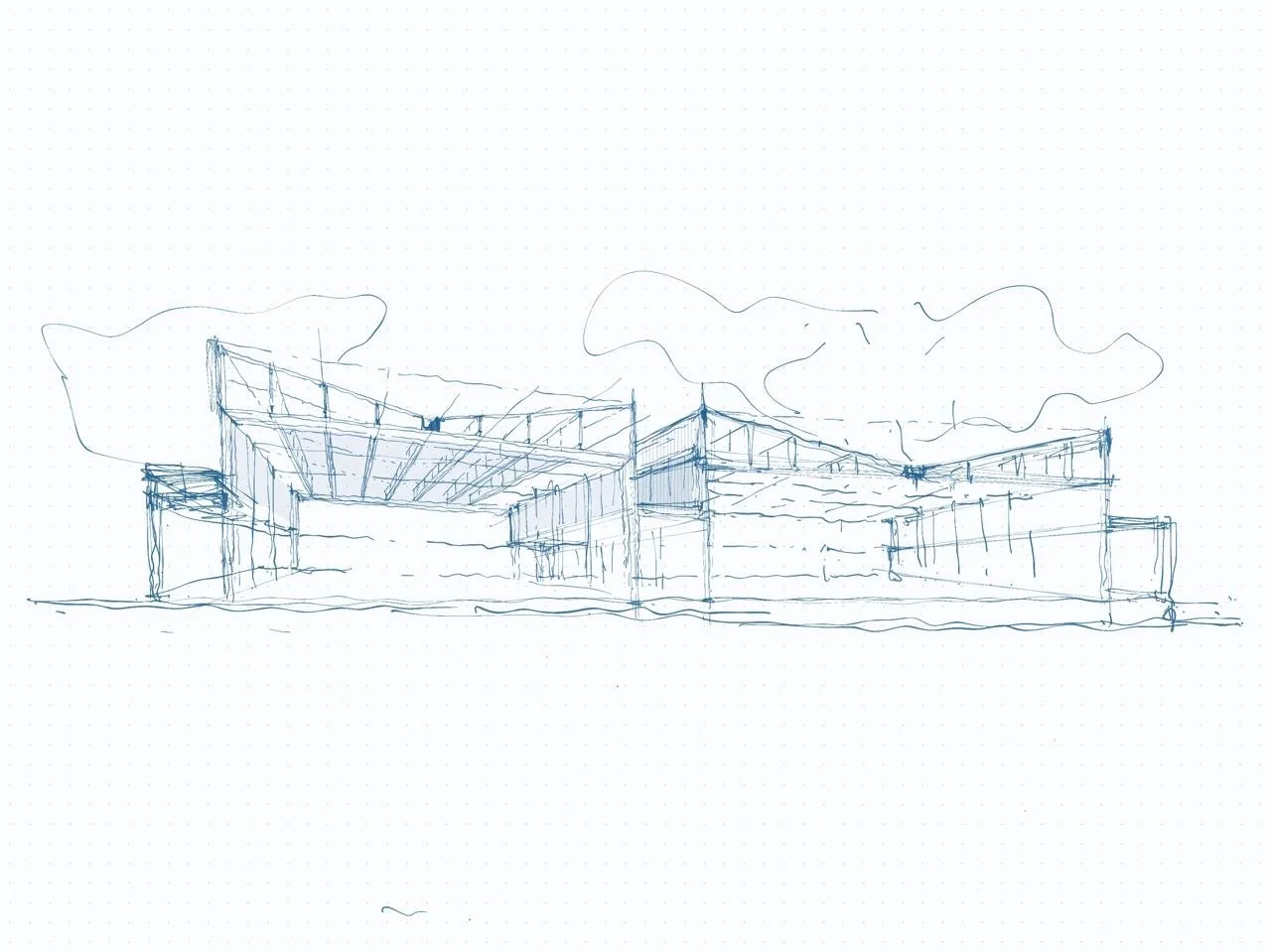
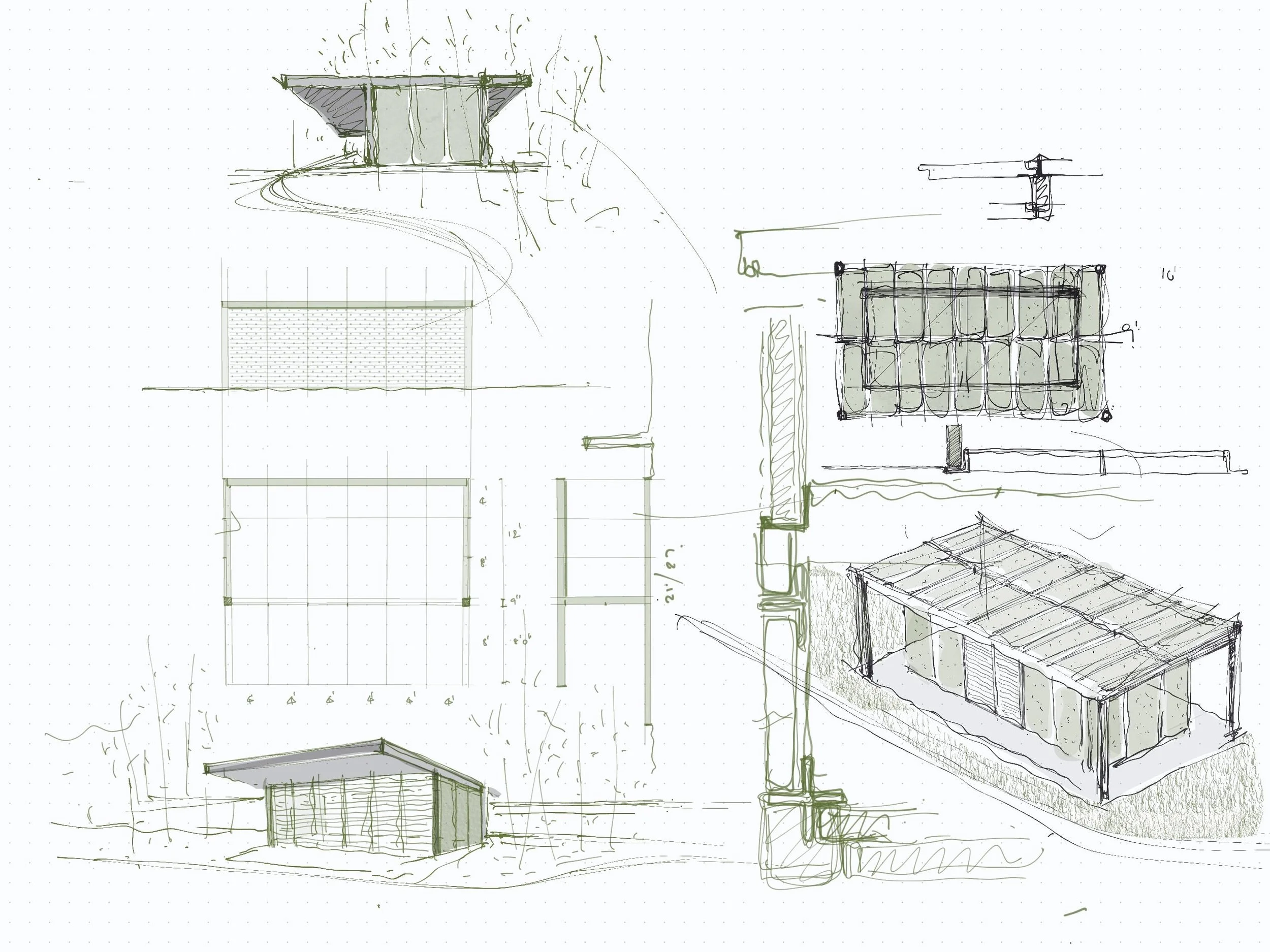
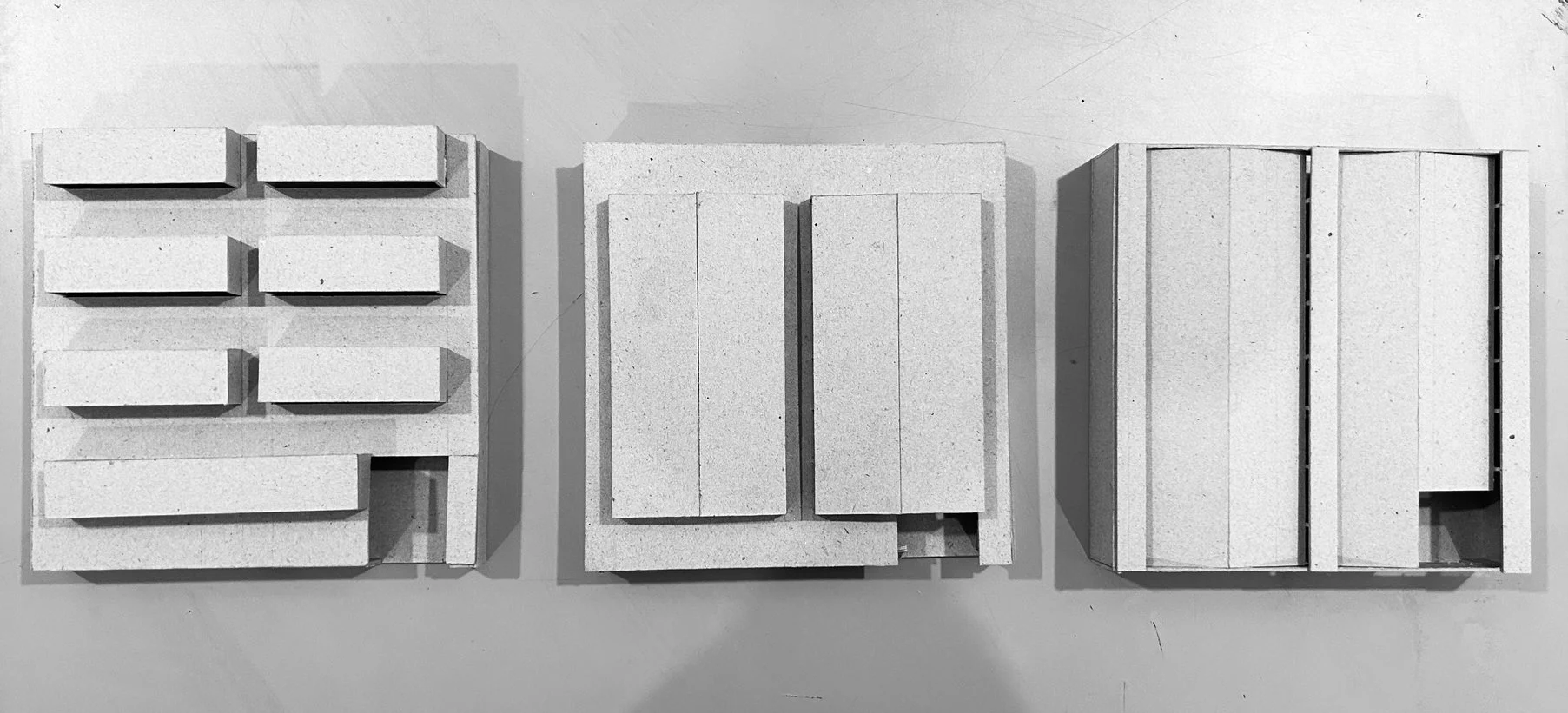
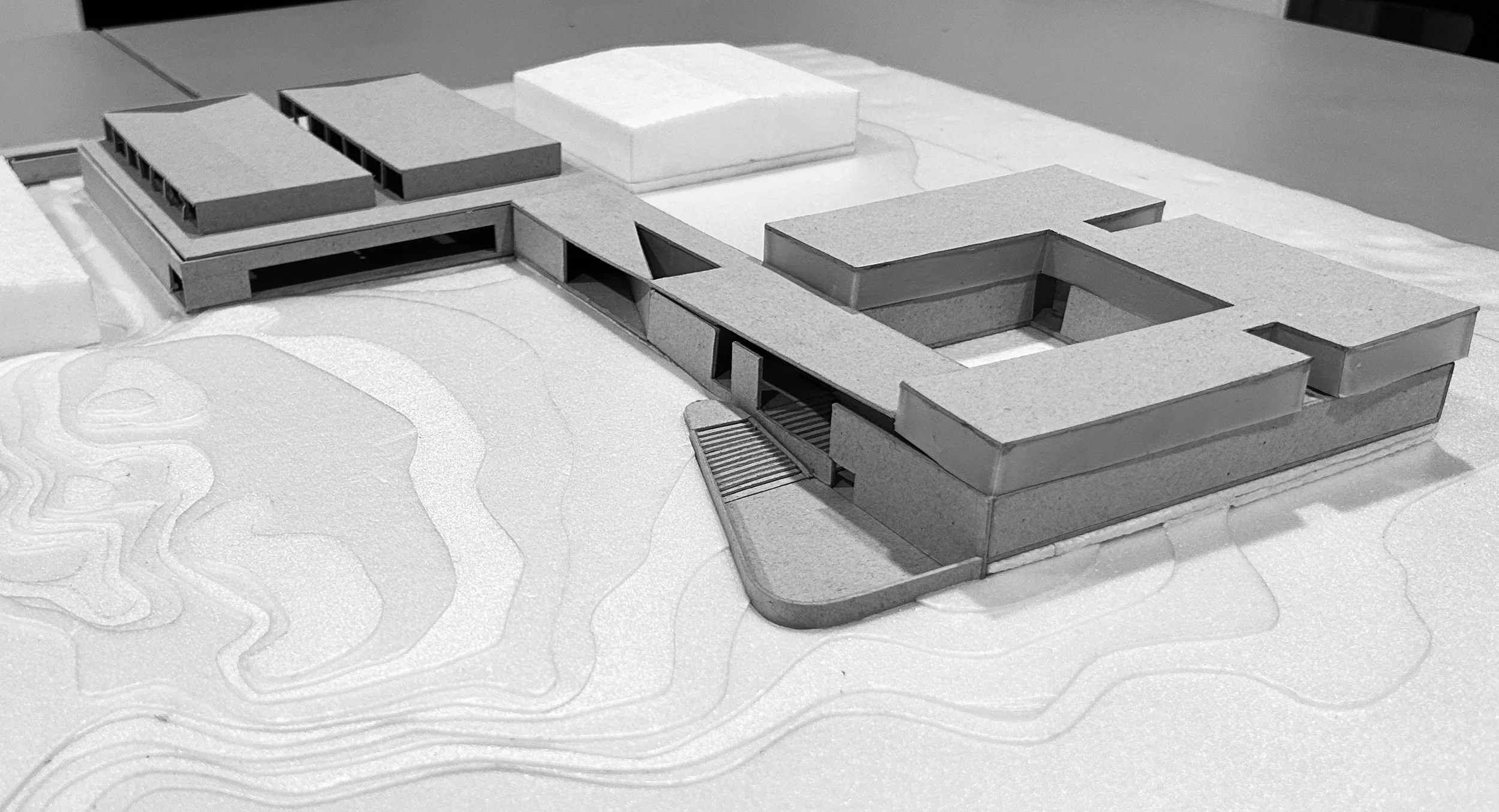
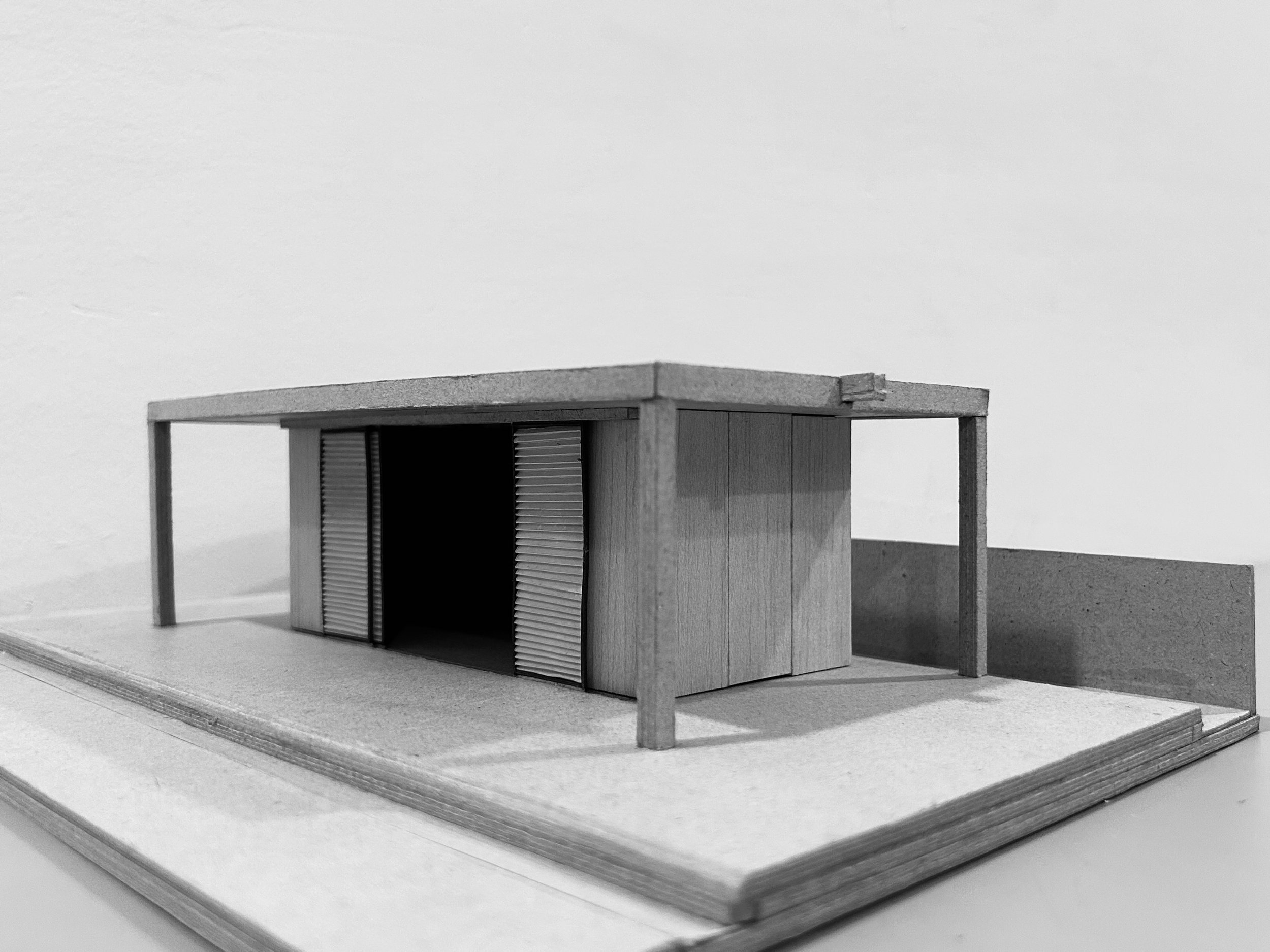
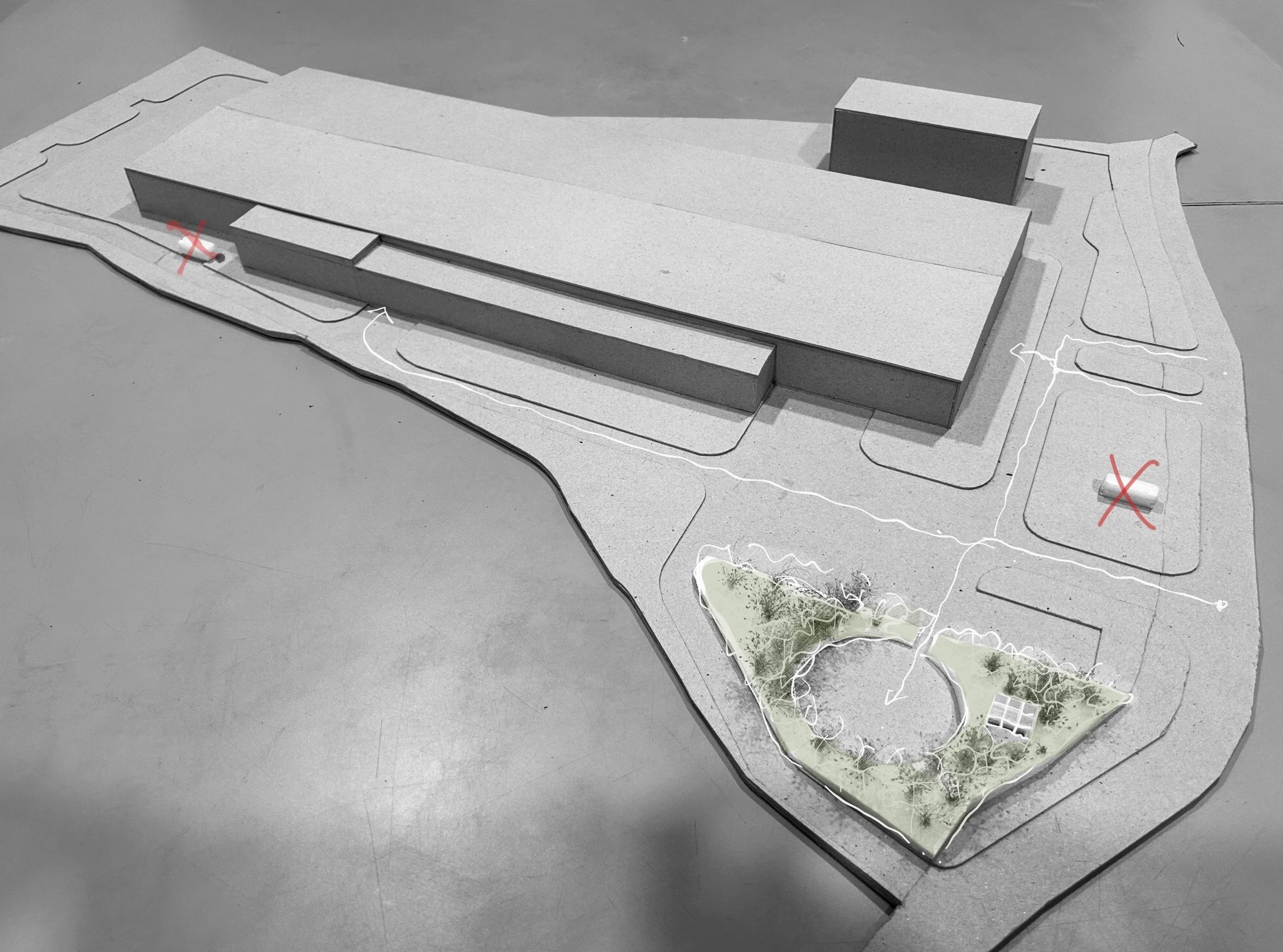
Program: Industrial
Location: Shamshabad, Telangana, India
Surface: 10 acres
Project Team: Hari Krishna.
Collaborators: Simon Peter (Structure), FMT (PEB Structure)
-
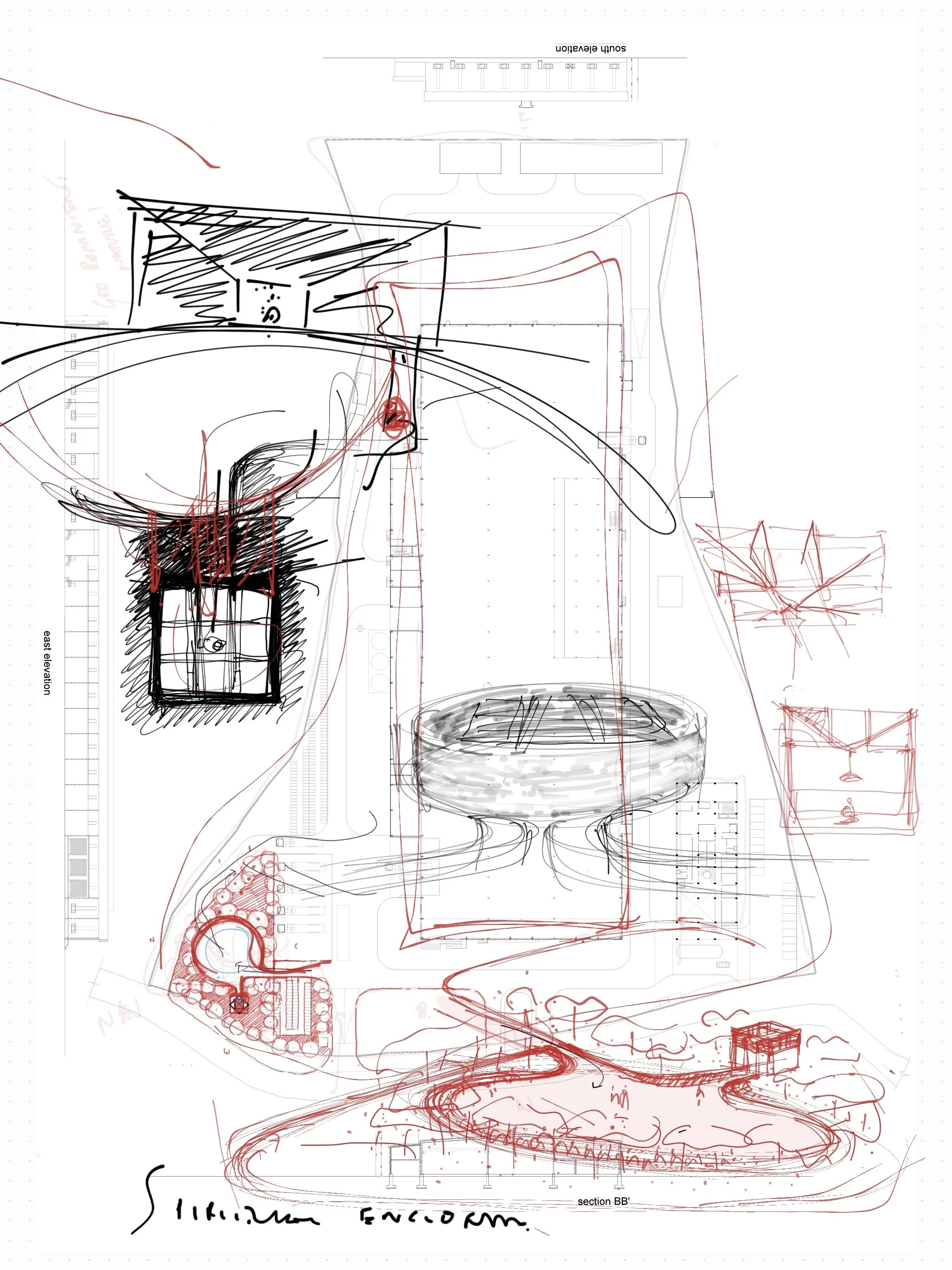
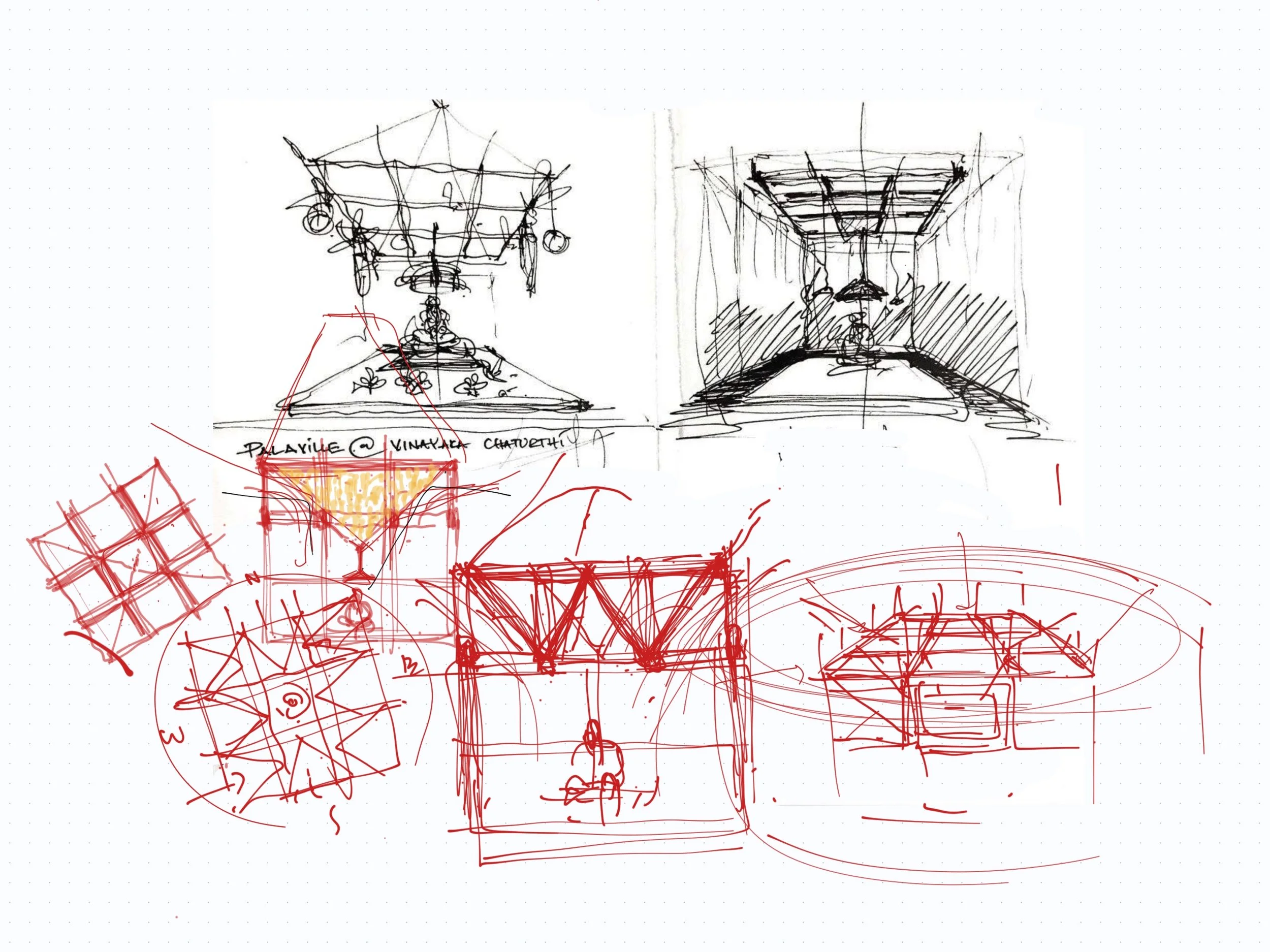
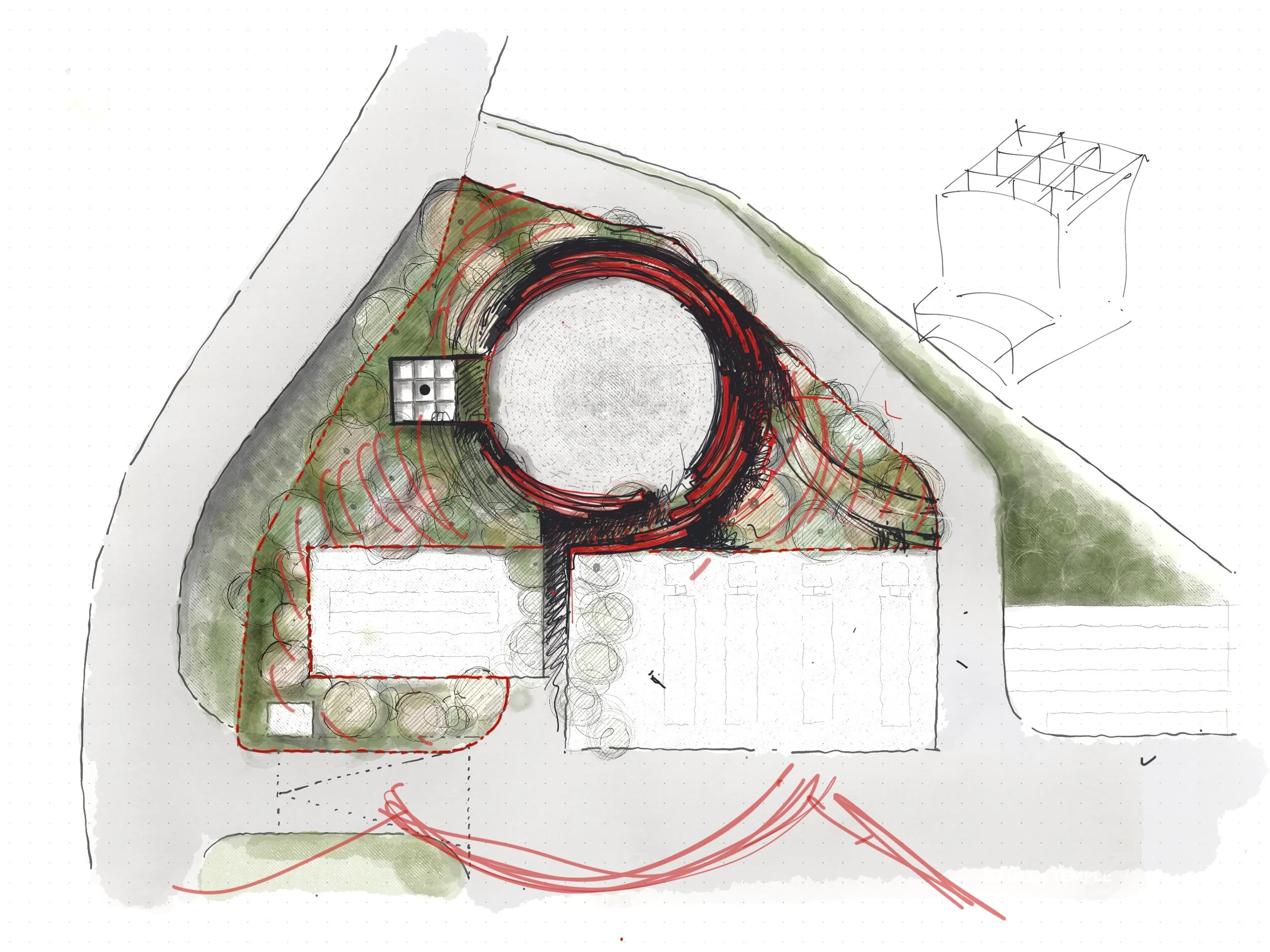
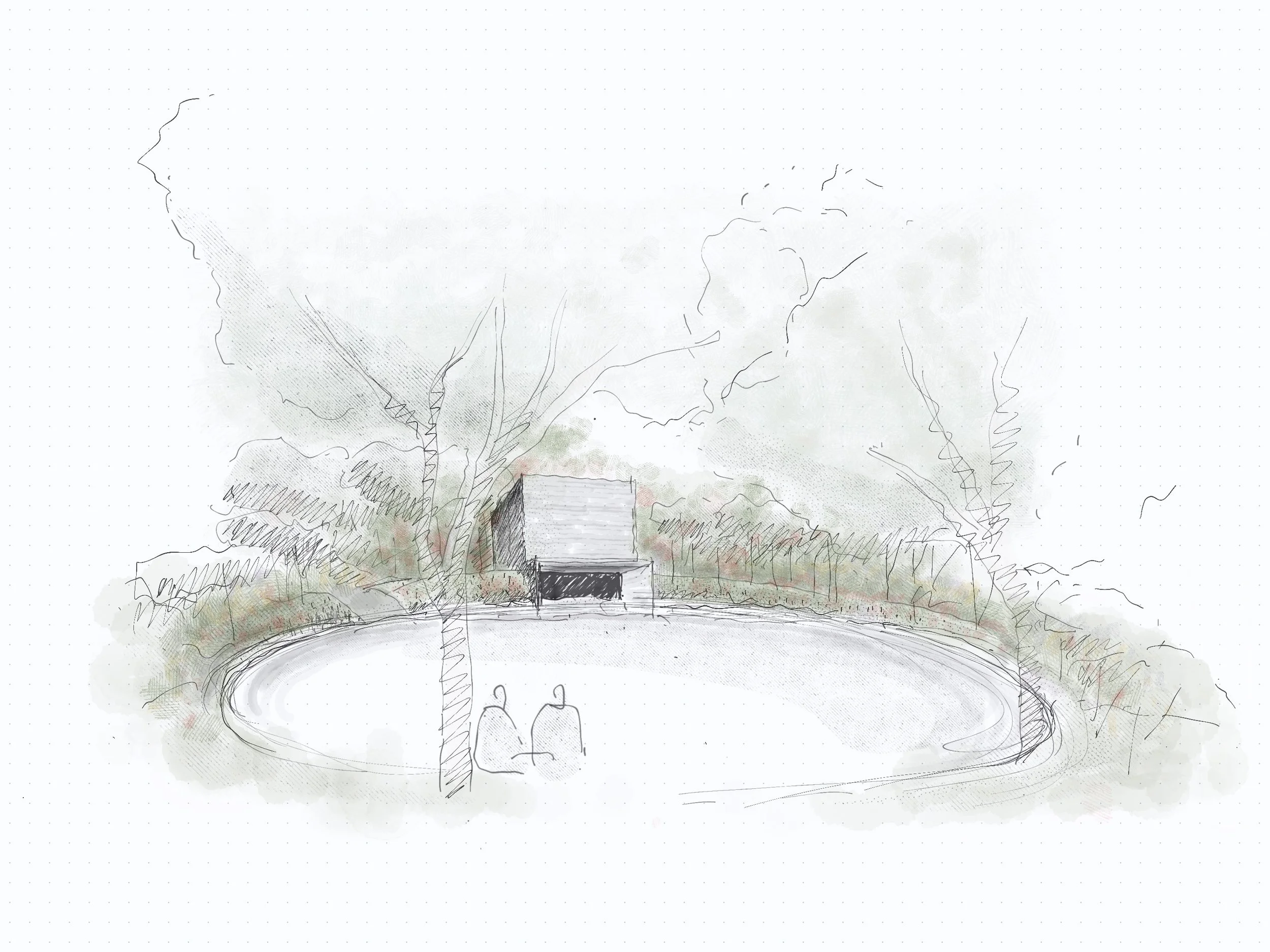
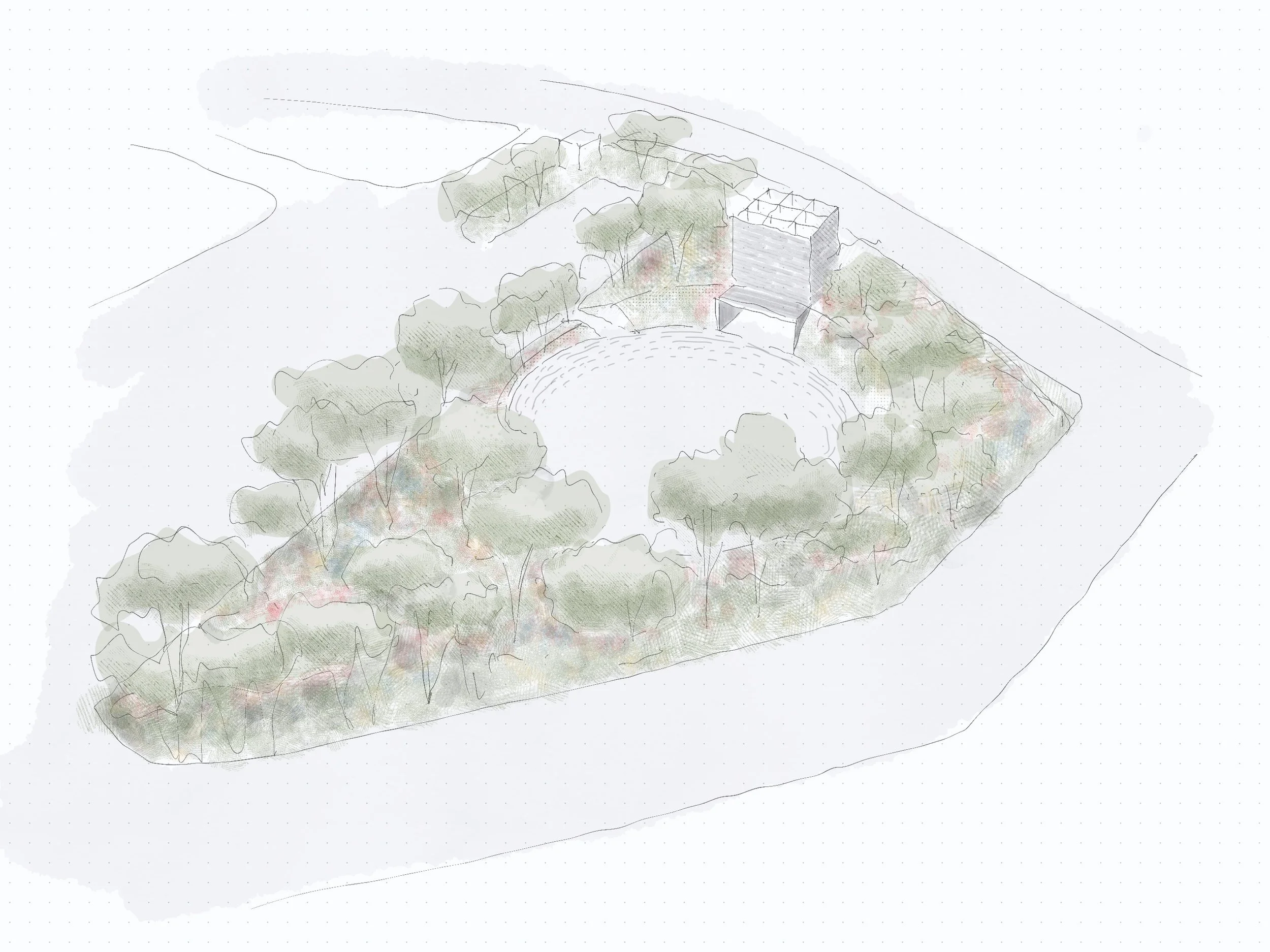
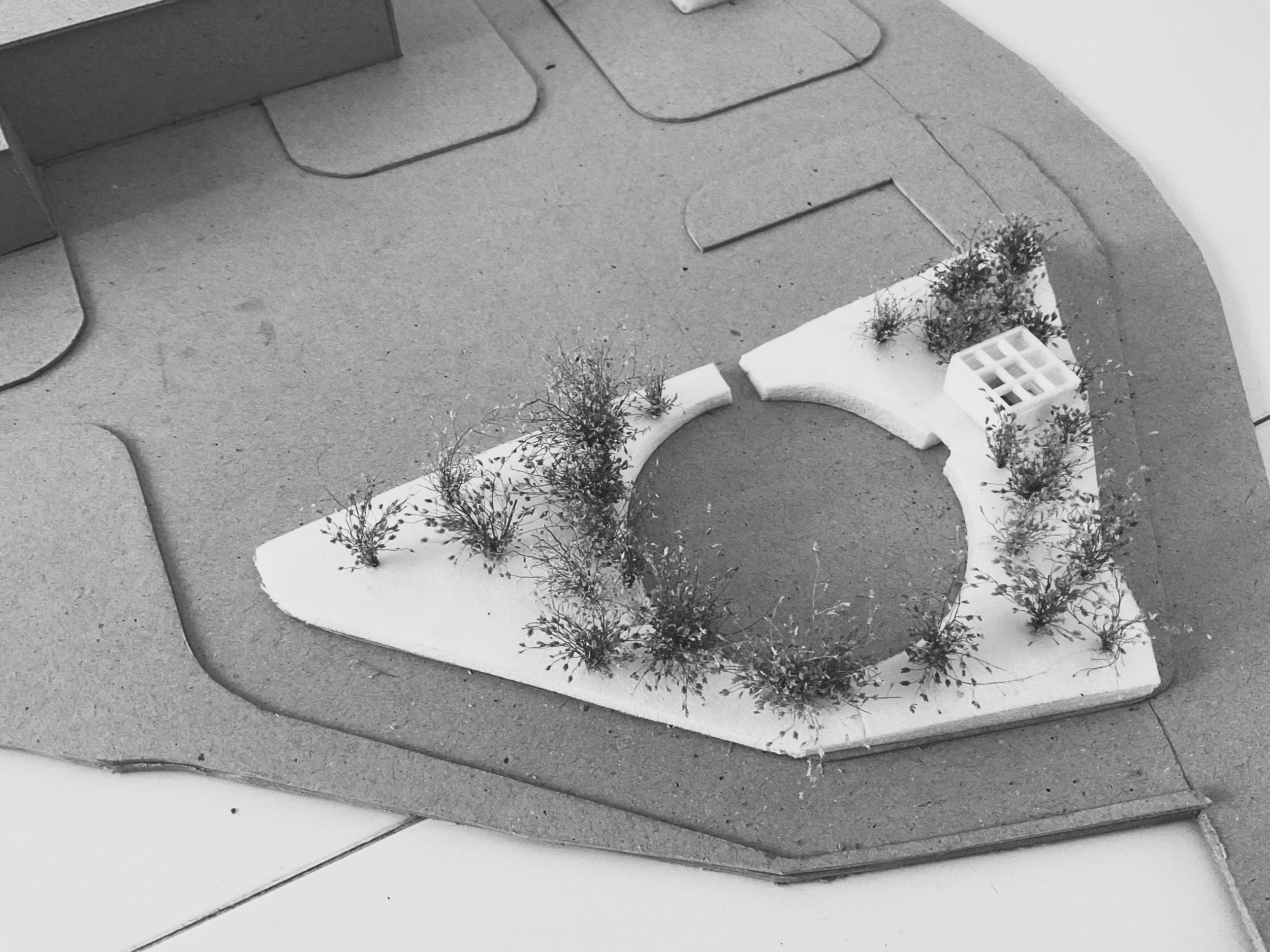
Program: Social Space
Location: Jinnaram, Telangana, India
Surface: 1500 square meters
Project Team: Hari Krishna.